A lucky few go on to second lives as riding horses, but many others end up at slaughterhouses
Snow, a 11-year-old thoroughbred, used to race.
He thundered around Seoul Racecourse Park in Gwacheon, racking up more than 200 million won ($138,000) in prize money. Back then, he was known as Yaho Strong Cat, a name that drew both betting money and cheers from the crowd.
But years of intense training and racing took their toll. Snow developed severe hoof problems and was forced to retire. Then in 2021, several years after leaving the track, he was rescued from the grim fate of a slaughterhouse.
Now living on a vast ranch in Seogwipo, on the southern island of Jeju, Snow is one of some 50 retired racehorses cared for at Mare Forest, a shelter founded and run by Kim Nam-hoon. Kim renamed him after Jon Snow, the character in HBO’s hit series "Game of Thrones" who repeatedly escapes death.
“Snow raced from the age of two and developed problems in his hooves,” Kim, 51, told The Korea Herald. “The damage became so severe that one of his hooves eventually fell off.”
The new name reflects the hope that, like his namesake in the series, he would survive his struggles and thrive in a new life, resilient and strong.
Short life on track, long life afterwards
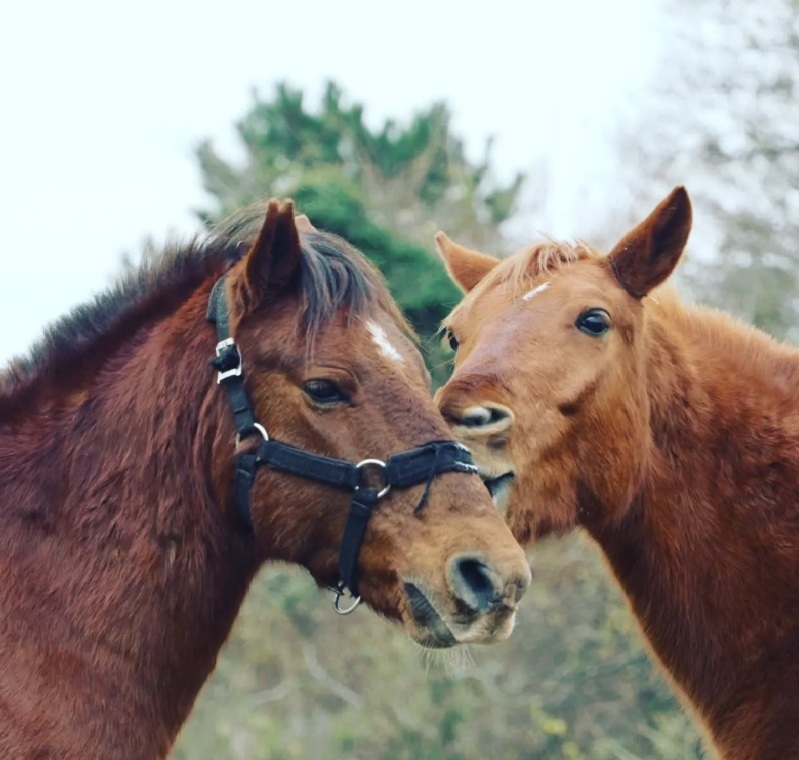
South Korea is not particularly horse-friendly.
Its predominantly urban lifestyle makes horse riding and ownership uncommon, while racing is conducted through a state-affiliated body, the Korea Racing Authority, at three locations nationwide.
According to the KRA, the nation’s horse population stood at 23,165 as of December, with thoroughbreds bred for racing accounting for more than half. Horse racing, one of the few sports where betting is legally permitted in Korea, makes up nearly 80 percent of the country’s horse industry, valued at about 3.2 trillion won in 2023.
Separate government data shows that each year, around 2,000 horses are bred for racing purposes in South Korea. On Jeju Island, traditionally known for its native horses designated as Natural Monument No. 347, nearly all are used for racing, with 514 of the island’s 517 involved on the track.
Racehorses typically begin training at around 18 months to two years old and enter their first races at two or three. Most of them retire at around five years of age, unless major injuries force them off the track earlier.
Considering that horses can live 25 to 30 years on average, this amounts to a remarkably early retirement.
Some retired horses are later used as riding horses at local theme parks, while others appear in historical dramas and films under contracts between their owners and production companies.
However, horses that remain in use for non-racing purposes are the lucky few.
Around 1,300 to 1,400 racehorses retire each year, but only 46 percent are used in commercial activities. The rest are either sent to slaughter or disappear from official records, government data showed.
Shelter for retired racehorses
Snow now roams freely across the grass-covered slopes of Gorin Oreum, one of Jeju's 158 dormant volcanic cones, in Seogwipo’s Andeok-myeon.
Established as a sanctuary for retired horses in 2020, Mare Forest spans about 680,000 square meters.
Horses come to Mare Forest through a range of channels, from former owners and animal welfare groups to individuals who report horses at risk of slaughter, said Kim, its founder and former professional golfer.
“Many retired racehorses are left with physical injuries, chronic pain, or emotional scars, making it difficult for them to start second careers as riding horses,” he said. “Some are passed from owner to owner, while others are simply abandoned.”
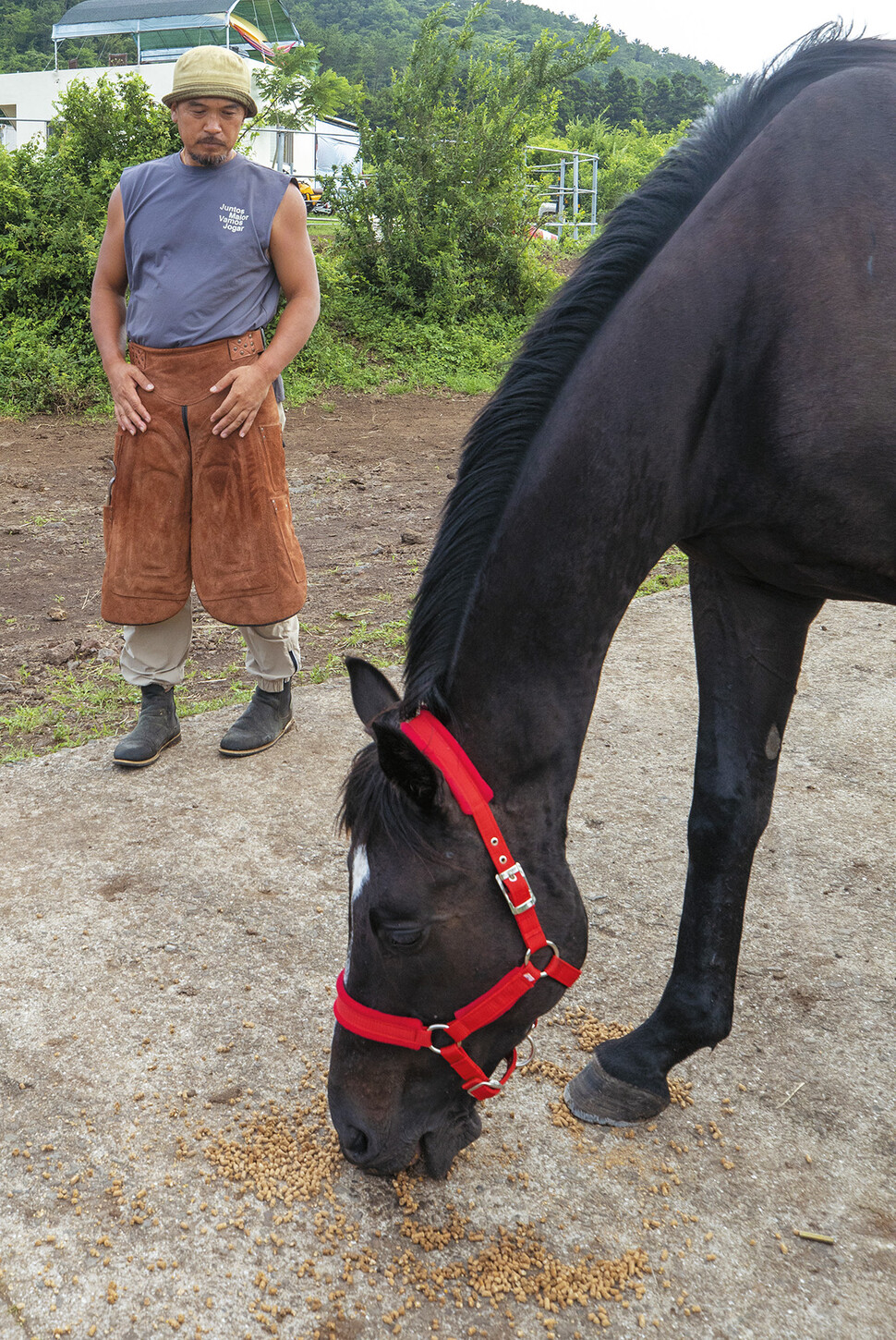
Kim’s day begins with feeding the horses hay and grain in the morning. He trims their hooves and sprays tick repellent on their faces and bodies.
From around 11 a.m. to 2 p.m., the horses lie down to rest, then spend the rest of the day roaming freely across the pasture until bedtime at 10 p.m.
“At first, the horses stood stiffly because they had spent years in narrow stalls at racetracks, where they were expected to stay alert and ready at all times," he said.
At the Seoul Racecourse Park in Gwacheon, the largest of the three run by the KRA, racehorses are typically housed in individual stalls measuring about 3x3 meters.
“Over time, they began to lie down in the grass. For horses, lowering their bodies to the ground is a sign that they feel safe enough to trust their surroundings. That was when I realized they were starting to recover, and it was also the moment I felt rewarded as someone protecting them.”
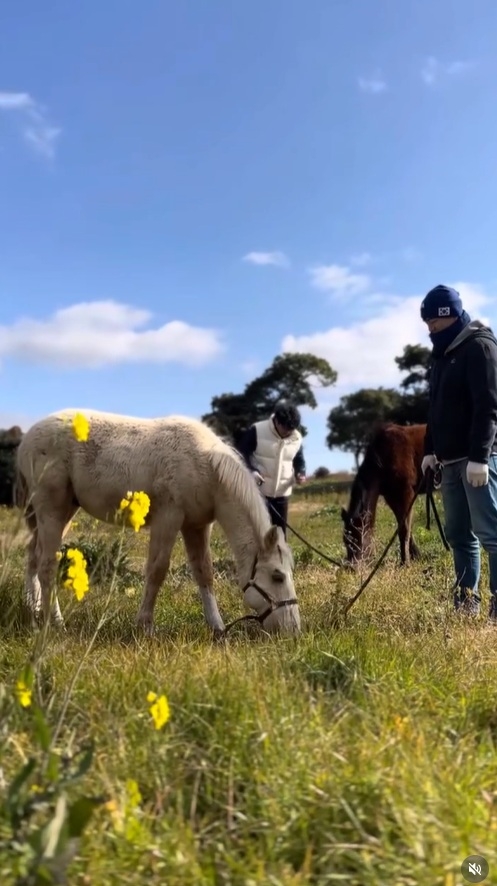
At Mare Forest, only a small number of horses that Kim cares for — those without physical injuries and with minimal psychological trauma — are used for riding experiences for visitors, he added.
Unlike riding programs at theme parks, where horses are kept in confined spaces and made to repeat fixed courses, the experience at the center takes place on the ranch where the horses actually live. Under the guidance of Kim and trained staff, visitors ride along paths the horses normally roam, allowing them to move freely in their everyday environment.
Kim traces his dedication to horse welfare back to 2019, when he received horsemanship training in the United States.
He saw a piece of disturbing video footage, released by an international animal welfare group, showing the illegal slaughter of retired racehorses using electric shock devices. Having long held a deep affection for horses, he decided to open a rescue center for retired racehorses in his hometown of Jeju.
Although his shelter has since gained recognition for its work, Kim stressed that “systemic efforts” are far more important than actions based solely on personal goodwill, such as his own.
As public concern has grown over the welfare of retired racehorses, the Korea Racing Authority recently established a care facility at a ranch in Jangsu County, North Jeolla Province, where retired racehorses can rest in wide open pastures designed to mirror natural living conditions.
From next year, the agriculture ministry plans to introduce a mandatory system requiring horse owners to register their horses, allowing officials to better oversee the treatment of retired racehorses and prevent abuse or illegal slaughter.
“Retired racehorses are created by the horse racing industry as a whole, and that means the industry should also be responsible for what happens to them after they leave the track,” Kim said.
cjh@heraldcorp.com






![[Weekender] Are men with type B blood really womanizers?](https://wimg.heraldcorp.com/content/default/2018/07/26/20180726000649_0.jpg?type=h&h=240)