Humanoid robot to enter production lines at Hyundai’s Georgia Metaplant in 2028
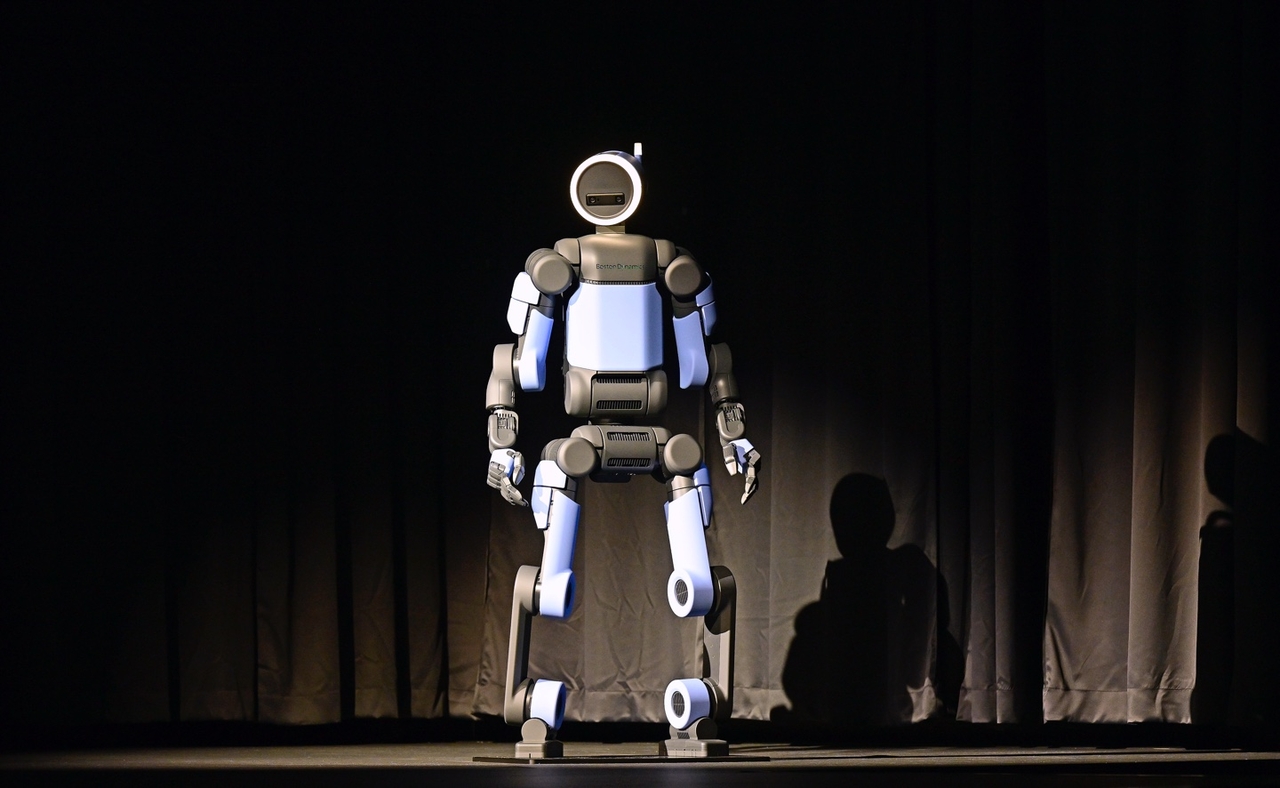
LAS VEGAS — Hyundai Motor Group on Monday put its next-generation humanoid robot Atlas at the center of its physical AI strategy, laying out a concrete plan to deploy AI-powered robots as core production assets inside its factories rather than experimental machines.
At its CES 2026 media day at the Mandalay Bay Convention Center, the automaker framed robotics not as a future add-on, but as a foundational pillar of its shift toward software-defined, AI-driven manufacturing.
The highlight of the showcase was the debut of Boston Dynamics’ Next-Generation Electric Atlas Prototype alongside its production model. On stage, Atlas responded to live commands, walking with a natural gait, rotating its joints a full 360 degrees, and performing simulated factory tasks such as picking up components and reaching elevated shelves — movements designed specifically for industrial environments.
Atlas is equipped with human-like hands featuring tactile sensing, 360-degree vision for spatial awareness and safety, and autonomous navigation. The water-resistant humanoid can carry payloads of up to 50 kilograms, reach heights of up to 2.3 meters and operate in temperatures ranging from minus 20 to 40 degrees Celsius. It can also self-charge and return to work autonomously.
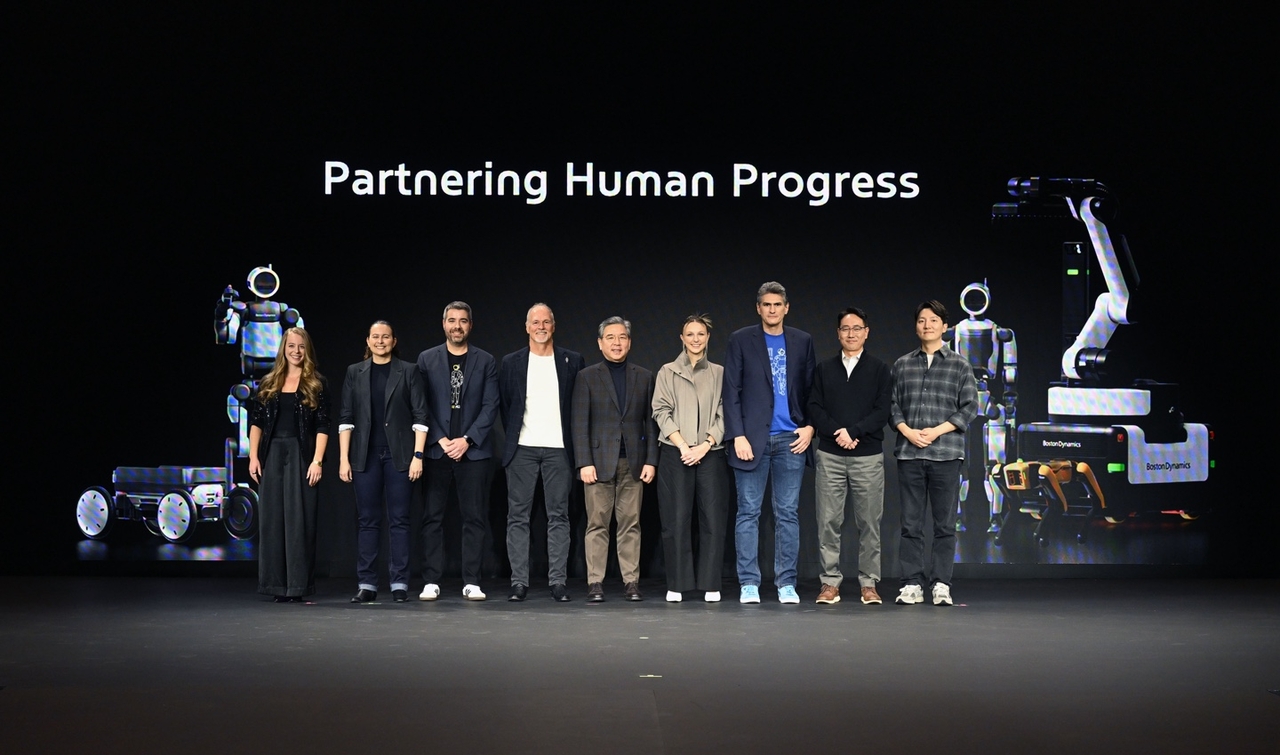
“The way Atlas is differentiated from many competitors is that we are building a ‘superhuman’ robot — stronger than a human, with greater range of motion — and designing it to be modular so parts can be replaced easily in the field,” said Robert Playter, CEO of Boston Dynamics.
Starting in 2028, the Atlas production model will be deployed at Hyundai Motor Group Metaplant America in Georgia, the automaker’s flagship software-defined factory. There, Atlas will initially be assigned to lower-risk tasks such as parts sequencing, where gains in safety and quality can be measured quickly.
From 2030, Hyundai plans to expand Atlas’ role to repetitive, heavy-load and high-risk operations, including parts assembly and precision work that is physically demanding or hazardous for human workers.
Before full deployment, Atlas robots will undergo map-based learning at the Robot Metaplant Application Center, set to open this year in the US. Leveraging Hyundai Motor Group’s manufacturing scale, Boston Dynamics projects production of up to 30,000 Atlas units by 2028, aligning with Hyundai’s target of 9.8 million vehicle sales annually by 2030.
While Atlas represents Hyundai’s humanoid future, the company emphasized that its robotics strategy is already active on factory floors today.
The presentation opened with Spot — Boston Dynamics’ four-legged robot — which performed a choreographed routine to K-pop music as a lighthearted introduction to a machine that has become a workhorse in industrial settings. Spot, Boston Dynamics’ first commercial robot, began sales in 2020 and has since been deployed in thousands of units at hundreds of customer sites across more than 40 countries.
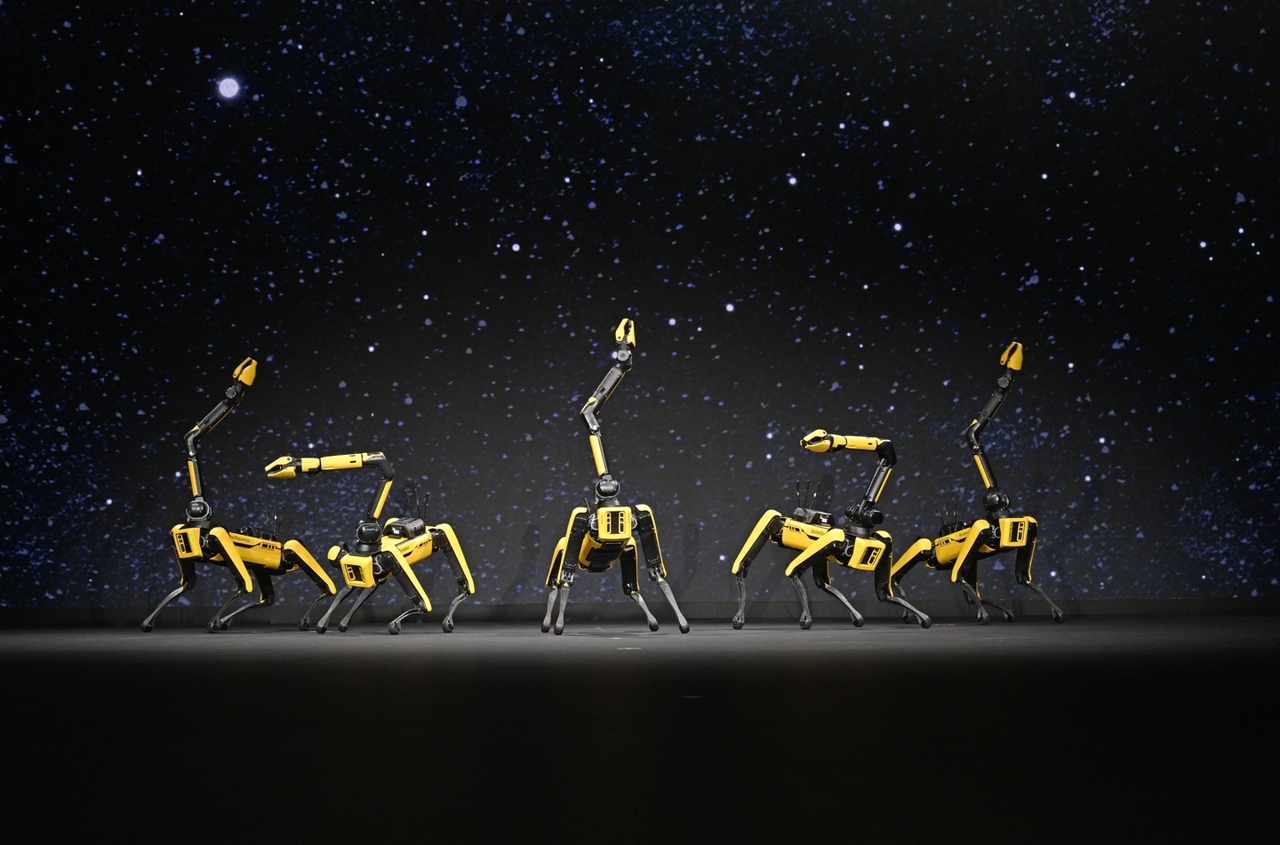
According to Aya Durbin, humanoid application product lead at Boston Dynamics, Spot is already widely used for inspection, data collection and monitoring tasks in construction sites, energy facilities and manufacturing plants — roles that complement Atlas’ upcoming labor-intensive applications.
Hyundai framed Spot, Atlas and other robotics platforms as parts of a single physical AI ecosystem, designed to generate data, learn from real-world environments and continuously improve performance.
Accelerating that push, Hyundai also announced a new partnership with Google DeepMind, following last year’s collaboration with Nvidia on AI-powered factories. Under the agreement, Google DeepMind will use fleets of Atlas robots to collect real-world manufacturing data, tele-operate robots for automotive assembly tasks and train “general humanoids” capable of operating in diverse environments.
This year’s production volume of Atlas humanoids, which has already begun at Boston Dynamics’ Boston facility, has been fully allocated to Hyundai and Google DeepMind.
“Over the past three years, AI has evolved rapidly — from generative AI to agent AI and now physical AI,” Hyundai Motor Group Vice Chairman Chang Jae-hoon said. “Our priority is to anchor that evolution in real factories, real data and real productivity through partnerships.”
hyejin2@heraldcorp.com