Last-minute adjustment fuels scrutiny from doctors and patient groups
A government committee revising South Korea’s long-term doctor shortage estimates has again adjusted its figures just weeks before a politically sensitive decision on medical school enrollment, renewing criticism that the process is being rushed.
The Ministry of Health and Welfare’s Physician Workforce Projection Committee said Tuesday that South Korea was expected to face a shortage of between 5,015 and 11,136 doctors by 2040, lowering the bottom end of its previous estimate by nearly 700.
The revision comes as the government moves toward deciding how many additional medical school places to approve for the 2027 academic year, a decision officials have suggested could come as early as the Lunar New Year.
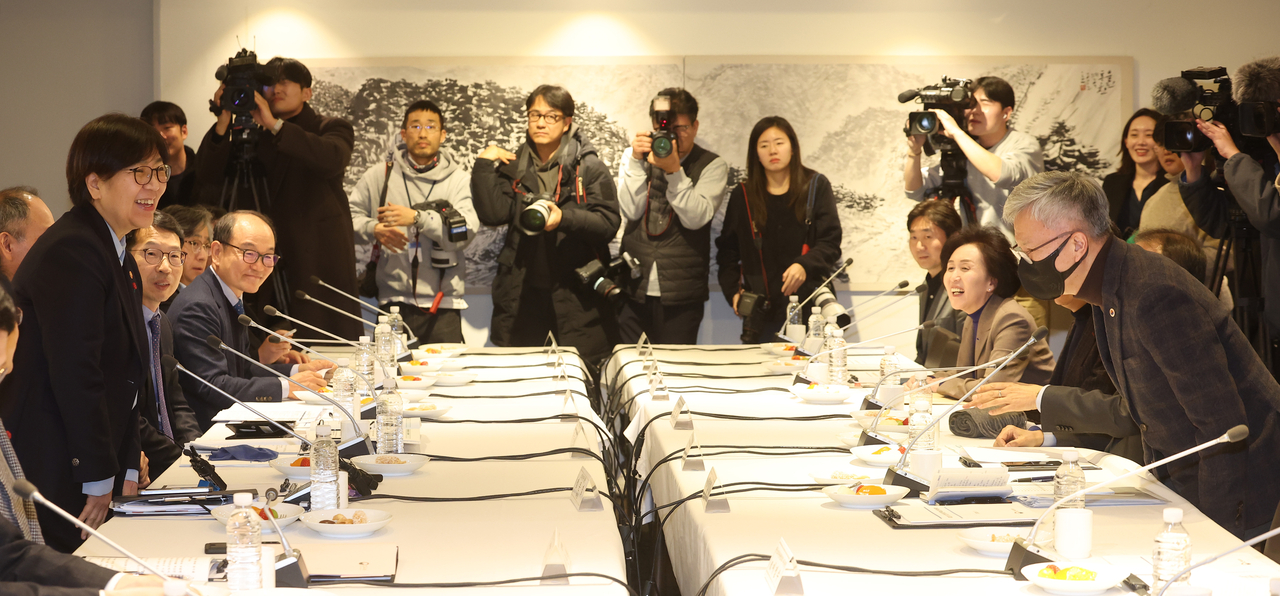
The revised figures were disclosed during a Health and Medical Policy Deliberation Committee meeting, where government officials, medical professionals, experts and patient group representatives gathered to review the physician shortage projections released by the projection committee last month.
The committee’s previous shortfall estimate was based on projected demand of 144,688 to 149,273 physicians and a supply of 138,137 to 138,984.
At Tuesday’s meeting, however, the committee said it raised its upper estimate for physician supply to 139,673, reducing the lower bound of the projected shortage by 689.
Even those figures had already marked a sharp revision from earlier internal estimates that put the potential shortage as high as 36,000 doctors.
“The (projected) proportion of doctors engaged in clinical practice increased after arguments were made to include students admitted to medical schools outside the quota,” said Kim Tae-hyun, head of the projection committee. “As supply increased, the gap with demand narrowed.”
The revision immediately drew criticism from the medical community, which said the sudden adjustment reflected insufficient deliberation.
“They would have produced more accurate projections if they had taken more time and were not being chased by short deadlines,” said Kim Seong-geun, spokesperson for the Korean Medical Association.
“There is no need to decide the enrollment quota for 2027 in such a short period of time,” he added. “It may be more appropriate to discuss quotas for the 2028 academic year.”
Kim also warned that frequent changes to quota projections could create confusion in the field, urging the committee, which operates on a three-year term, to allow more time for thorough deliberation.
Patient groups echoed concerns over the credibility of the revised figures.
“Changing a finalized shortage projection released on Dec. 30, 2025, just before today’s meeting, is an action that could undermine the committee’s credibility,” said Ahn Ki-jong, president of the Korean Alliance of Patient Organizations.
“These revised assumptions should have been reflected in the original report,” he said.
While the government has not set a firm deadline, officials have previously indicated that a decision on 2027 medical school enrollment quotas could come as early as the Lunar New Year.
The issue remains politically sensitive after last year’s unprecedented walkouts by more than 10,000 medical interns and residents and widespread class boycotts by medical students, triggered by the previous Yoon Suk Yeol administration’s plan to sharply expand enrollment.
President Lee Jae Myung has pledged to sharply expand public medical education, though by less than his predecessor. But speculation has grown that the Lee administration may settle on a more modest increase than it previously proposed, reflecting lingering caution over reopening a debate that has already strained trust between the state, doctors and patients.
Once a quota is finalized, it must be allocated among the nation’s 40 medical schools, each of which would need to revise its academic regulations.
seungku99@heraldcorp.com