Million-copy Korean bestseller, loved by BTS, now published in over 25 countries
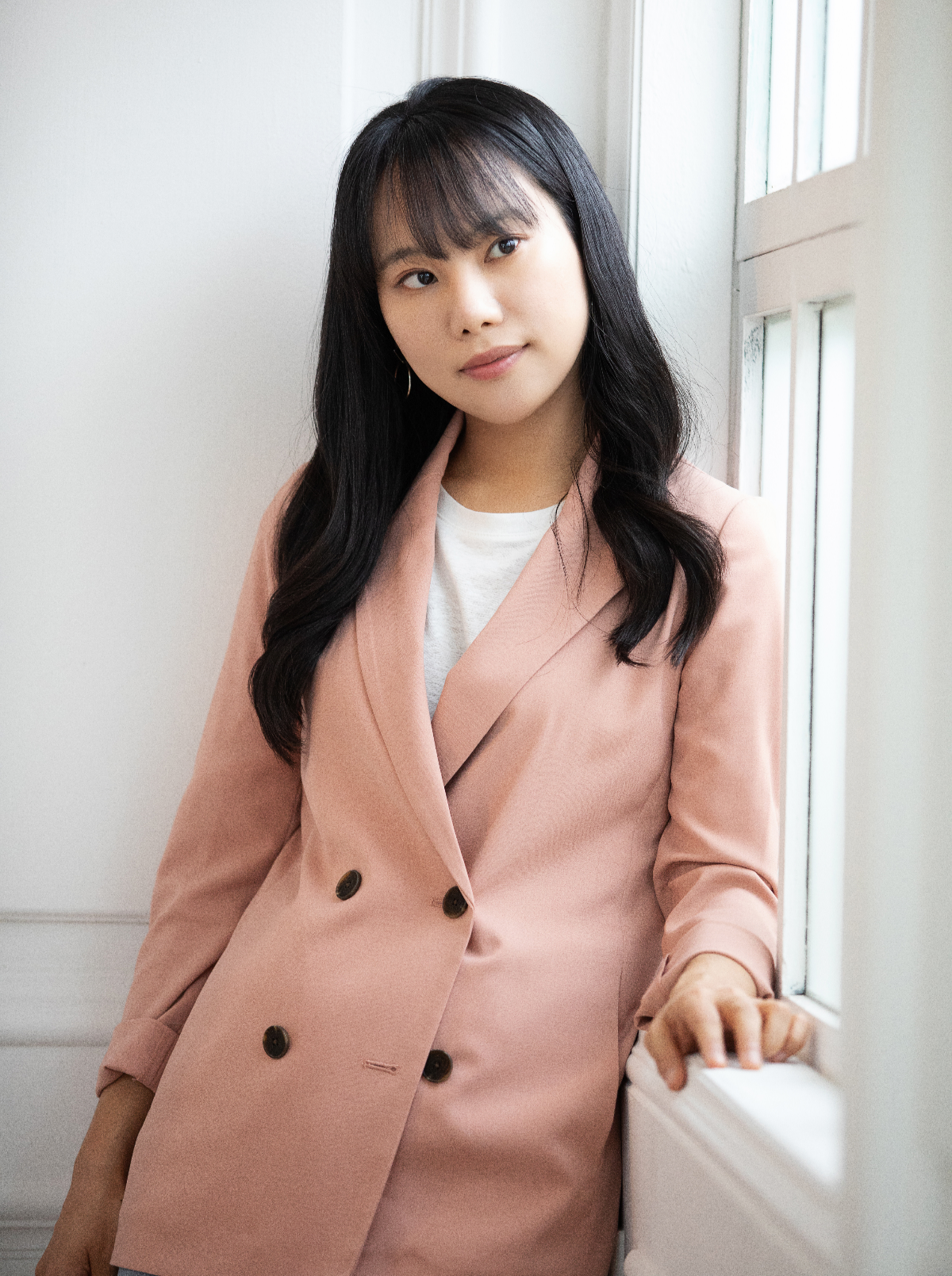
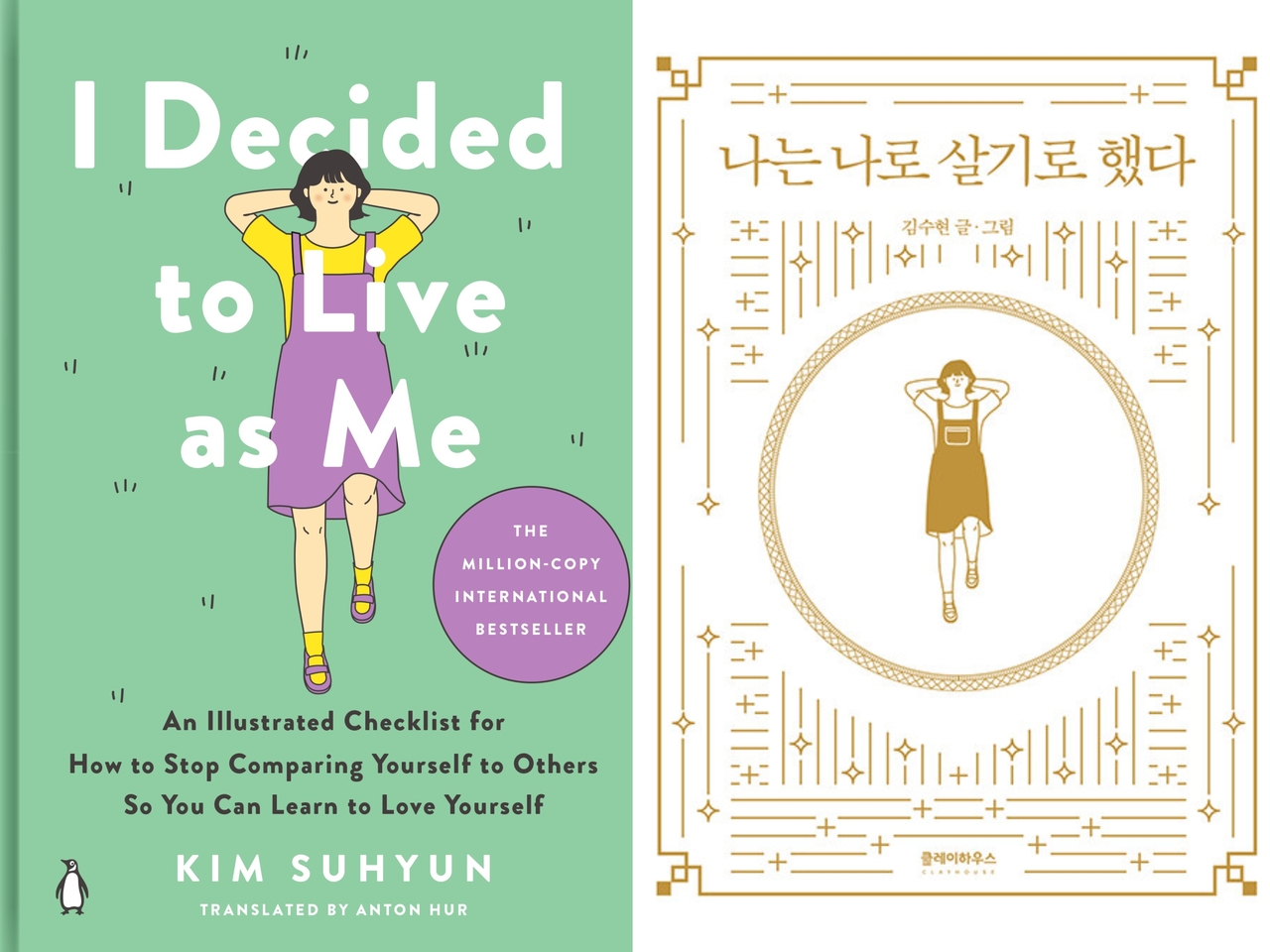
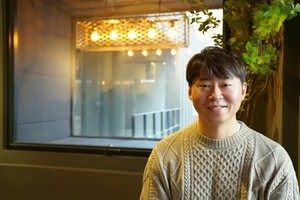
When Kim Su-hyun penned the bestsellers “I Decided to Live as Me” in 2016 she was writing from a position of uncertainty. Plans had not panned out and she was unsure what path to take.
The book, and its 2020 follow-up and “Being Comfortable without Effort,” were like “a manifesto and a promise” to herself.
Nearly a decade later, the 39-year-old writer feels she has largely lived up to that promise and internalized many of their principles. She says she is now psychologically healthier than ever.
“It feels like I’m actually moving in the direction of my book titles,” Kim said in a recent interview with The Korea Herald. “That direction came from my own heart. What I want most is to stay in my best, most comfortable state — to protect my physical and mental well-being. That has become the center of my life, and, I suppose, of everyone else’s interest.”
The first book — part memoir, part gentle self-help checklist — was already a bestseller in Korea before it gained renewed attention after BTS member Jungkook was seen packing it for the reality series “Bon Voyage!” Since then, it has been translated into more than a dozen languages across 25 countries. (Her books have sold over 2 million copies in Korea.)
The English edition, translated by Anton Hur, was published last year by Penguin Random House, bringing Kim’s quiet, reflective voice to a much broader audience.
From struggle to selfhood
Yet the origins of the book were anything but glamorous. When Kim wrote it in her late 20s, she had not landed the job she wanted. After two internships, she found herself at an in-between age, with an uncertain career record and no clear sense of what her future would look like.
She had imagined she would follow the so-called “model life route” — graduate, get a stable job, marry, settle down — only to discover that the path no longer felt accessible or fair.
“I believed that if I worked hard, that ‘model’ life would naturally follow,” Kim recalled. “When that didn’t happen, I kept asking myself: Did I do something wrong? Was I lazy? Did I choose the wrong major? I blamed myself a lot.”
Then, at some point, her thinking shifted. She began to wonder whether her perceived failures were really failures at all, or simply inevitable missteps in a changing world. Seeking clarity, she immersed herself in sociology and social psychology, reading voraciously and gradually feeling more liberated. The book emerged from that process of study and self-reflection.
“Society keeps changing, but the model example of how we’re supposed to live has stayed the same,” Kim said. “Many people feel like failures because they can’t keep up with that outdated script. I kept asking: What does success even mean, and how should one live? In the end, the answer I arrived at was my own uniqueness — my ‘self.’ Time passes and everything changes, but you will always remain you.”
It was such a liberating experience that she wanted to share what she had found. The book became, in effect, a personal to-do list for living with self-love, or a guideline to help readers free themselves from the pressures of living up to other people’s expectations and focus on what truly matters.
Some might assume she can speak this way only because the book succeeded. Kim insists the opposite is true: while writing it, she was often living off part-time work, yet she felt unusually clear-headed, grounded and at ease with herself.
First step: stop comparing
The book lays out roughly 70 to-do items, in six parts, beginning with “Do not be polite to those who are not polite to you.”
But among them, Kim says the very first step is deceptively simple: Stop comparing yourself to others. That idea also appears in the book’s subtitle, “How to Stop Comparing Yourself to Others so You Can Learn to Love Yourself.”
“You don’t have to make it complicated,” Kim said. “So step one is simply not to compare, and in practice, that often means spending less time on social media.”
She explained that when you’re scrolling and suddenly feel uncomfortable — that sinking, anxious sense of “What about me?” — that is the signal that you are comparing yourself to someone else.
“Even when people feel this signal, they often keep scrolling anyway. So the moment you notice that feeling, you need to create distance and remind yourself: This is them. I’m going to focus on my own.”
This is not easy to do so the mind requires training, much like learning to ride a bicycle, according to Kim.
“You can drift for a long time without realizing you’ve been swept along. If you remain unaware, life just carries you, but once you recognize that and set your own direction, and keep reminding yourself of it, you are continually training yourself to live more consciously.”
Let’s be 'generous individualist'
Kim is careful to stress that living with self-respect and confidence does not mean becoming selfish. She devotes two sections to checklists for living well with others and imagining a better world together. Her 2020 follow-up “Being Comfortable without Effort” focuses on human relations and this fine line being an individual and being selfish.
“When I talk about ‘living as yourself,’ I’m not advocating selfishness. It’s about becoming an authentic individual, not an egocentric one.”
She believes much of people’s anxiety stems from a fear of how others will judge them. If that fear could be eased, she said, our life would feel far freer and safer.
One of her checklists is titled “Become a Generous Individualist.” Kim notes that Korea is a highly collectivist society, one that prizes harmony, emphasizes the good of the group, and often exerts control over individuals for the sake of the community — using public shame or humiliation in ways that can make people feel as if they are constantly being watched.
“During my difficult days in my 20s, I kept thinking: If people could respect me as I am, no matter how I look or how I live, how liberating would that be?” Kim said.
“That feeling was so strong that I wanted to write a book, not just keep a private diary. Living as yourself and respecting others are not opposites. They are the foundation for a freer, kinder and more compassionate society. I hoped that if more people embraced this mindset, we might all feel a little safer in the world.”
-----
In this series, The Korea Herald introduces Korean literature through translated works, offering interviews with authors or translators as well as reviews, inviting readers to explore the vibrant literary landscape of Korea. -- Ed.
hwangdh@heraldcorp.com


![[Eye Interview] 'If you live to 100, you might as well be happy,' says 88-year-old bestselling essayist](https://wimg.heraldcorp.com/content/default/2024/05/03/20240503050674_0.jpg?type=h&h=240)