Greetings in neat attire, carefully chosen gifts and new kinship titles signal newlyweds’ official entry into a new family order
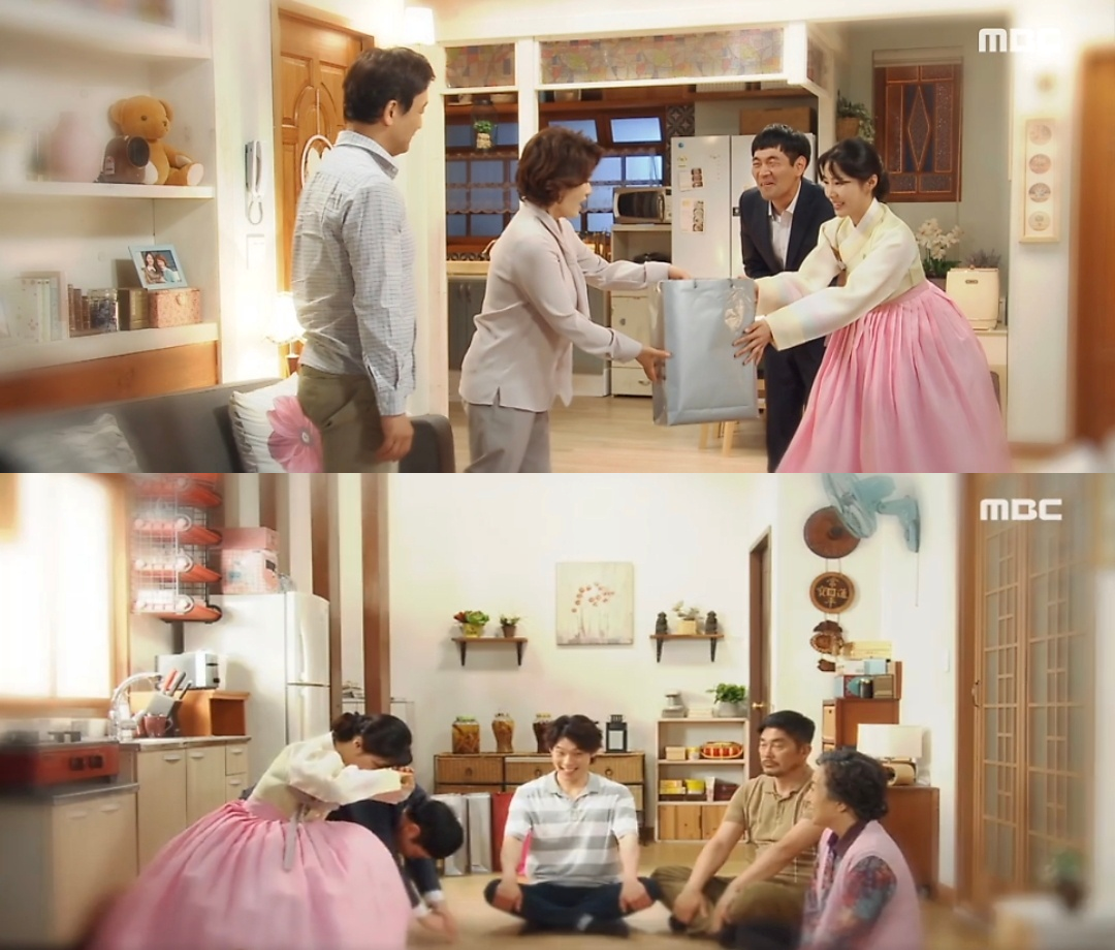
When major traditional holidays approach in Korea, online forums begin filling with practical, and often anxious, questions from newlyweds: What should we wear? What should we bring?
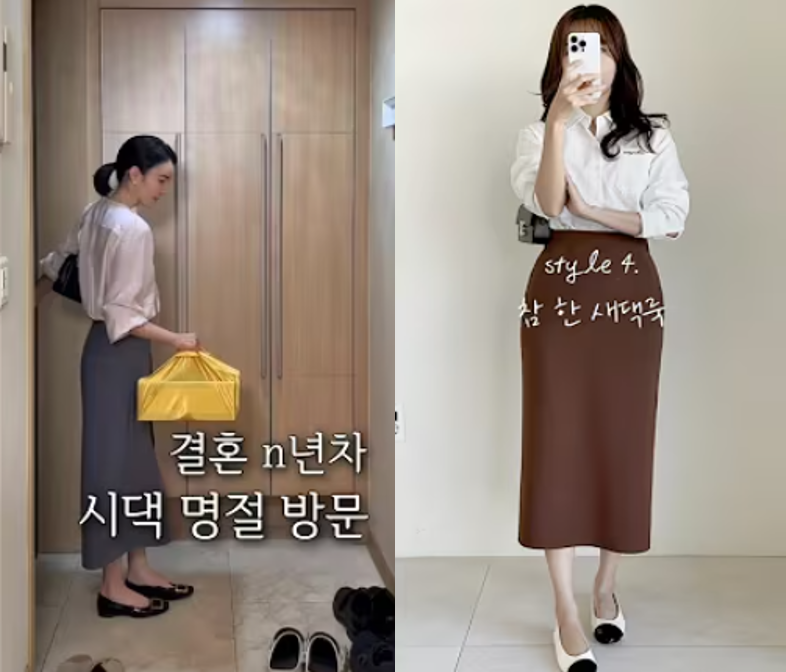
One quirky Korean-English term that occasionally surfaces is the “sidaek look,” referring to what one wears when visiting the in-laws on occasions like traditional holidays or parents’ birthdays.
A search for the hashtag "sidaek look” on Instagram yields more than 5,000 related posts, ranging from photos of women showcasing their outfits to guidance on appropriate attire for family gatherings so as to appear respectful yet not overly formal. Similar discussions can also be found -- though far fewer -- about what husbands should wear when visiting their wives’ parents.
Clothing, however, is only part of the concern. Gift-giving carries its own set of expectations. Social media posts seeking recommendations for presents for both sides of the family increase ahead of holidays.
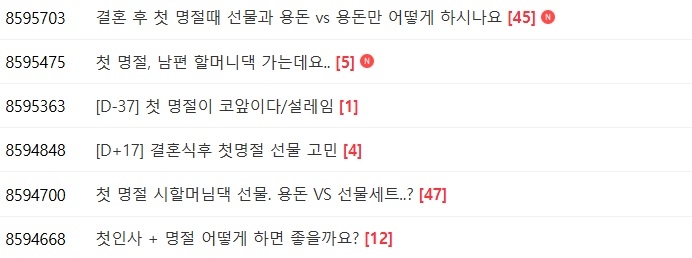
“Red ginseng feels too ordinary, and cash just doesn’t seem thoughtful. I’ve heard that some people are booking health checkups instead. Any suggestions?” one user wrote on Korea's largest online parenting forum, Moms Holic.
Higher expectations for newlyweds
The pressure weighs more heavily on newlyweds celebrating their first holiday after their wedding, an occasion traditionally regarded as more than a simple family gathering.
“During last year’s Chuseok, we ended up spending more than 1 million won on gifts for both sets of parents. For the upcoming Seollal holiday, we chose to scale back and keep things simple with fruit and traditional Korean sweets,” said Lee Hyo-jin, a 31-year-old office worker living in Bundang, Gyeonggi Province, who tied the knot in March last year.
“I understand that first impressions are important. But I don’t quite see why the first holiday carries so much weight. There will be many more holidays ahead, and we’ll be bringing gifts each time, won’t we?”
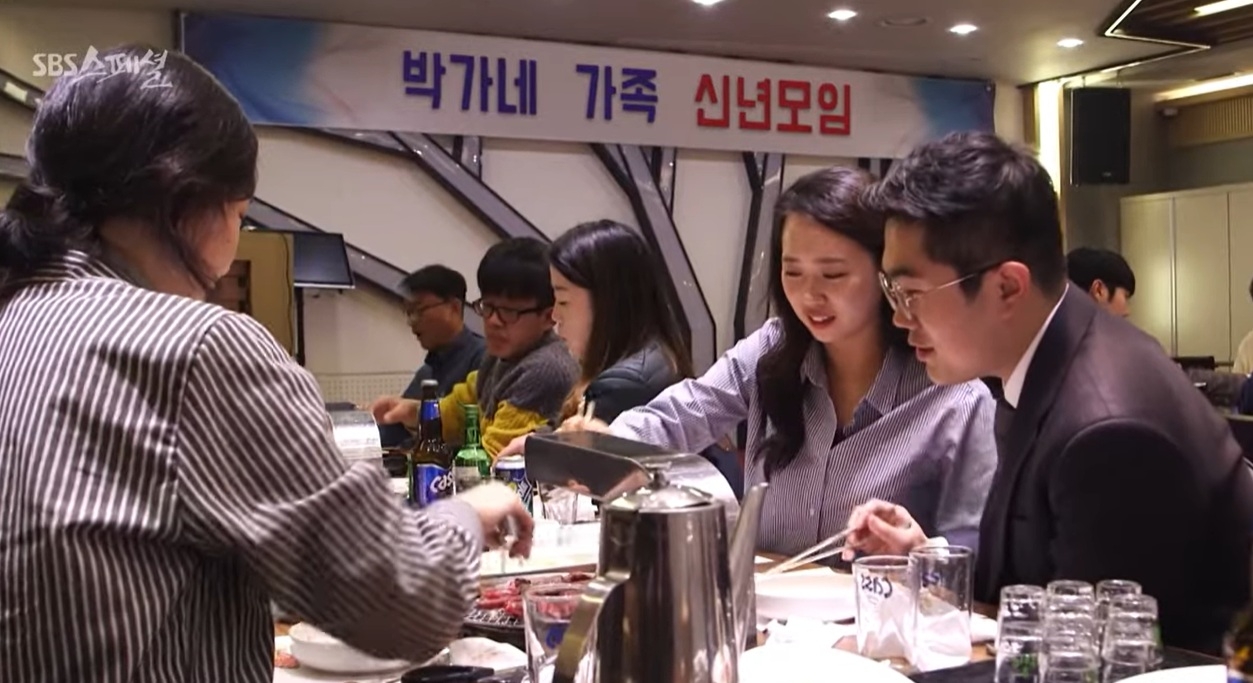
In a society where marriage is widely seen as the union of two families, it marks a symbolic milestone that grants each spouse "new roles and relationships" within an extended family network, according to Jung Heon-mok, a professor at the Academy of Korean Studies.
“Marriage holds profound meaning as a life event worldwide, so holiday family gatherings are not limited to Korea. But in Korea, where holidays have been more strongly preserved as regular family rites, people tend to place greater importance on the first holiday gathering after the wedding," Jung told The Korea Herald.
“So the stress about gifts, what to wear and how to behave is a kind of tension that arises as new family relationships take shape.”
Official stage for new family titles
After the greetings and gift exchanges, newlyweds may think the hardest part is over. Yet a more difficult challenge still awaits: mastering the kinship terminology.
With marriage, they take on a range of new family titles. They become someone’s daughter-in-law or son-in-law and, at the same time, a sister-in-law, brother-in-law, aunt, uncle, niece, nephew or even grandchild by marriage.
In Korea, in-laws are addressed by their titles rather than by their given names. And these titles are far more specific than those of English.
A wife, for instance, calls her husband’s older sister “hyungnim” and his younger sister “agassi,” while a husband addresses his wife’s older sister as “cheohyeong” and her younger sister as “cheoje.” In English, all of these relationships collapse into a single term: “sister-in-law.”
“My husband’s older brother and the husband of his older sister are both addressed as 'ajubeonim,' which can be confusing. His younger brother is called 'doryeonnim' if he is unmarried and 'seobangnim' if he is married. I cannot help but question whether so many titles are really necessary," said Bang Eun-jung, a 28-year-old bride-to-be in Seoul.
“At the wedding, we only exchange quick greetings with many relatives, which makes the first holiday after marriage feel even more important. I am concerned that elders might see it as disrespectful if I use the wrong title. The terms still feel unfamiliar, so I occasionally rehearse them to make sure I get them right.”
Professor Jeong noted that while the social pressure surrounding the first post-wedding holiday continues to influence younger generations, it appears to be weakening in step with broader changes in family structure.
“In the past, Korean society was structured around kinship, with social networks and resources organized along family lines. That’s part of the reason maintaining family relationships continues to be important during holidays and family events," he said.
“But as individualism has grown, people no longer feel the same obligation to gather during the holidays. With generational shifts and more diverse values today, family dynamics have been gradually evolving."
cjh@heraldcorp.com