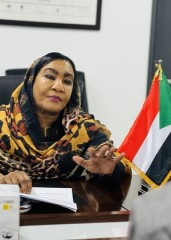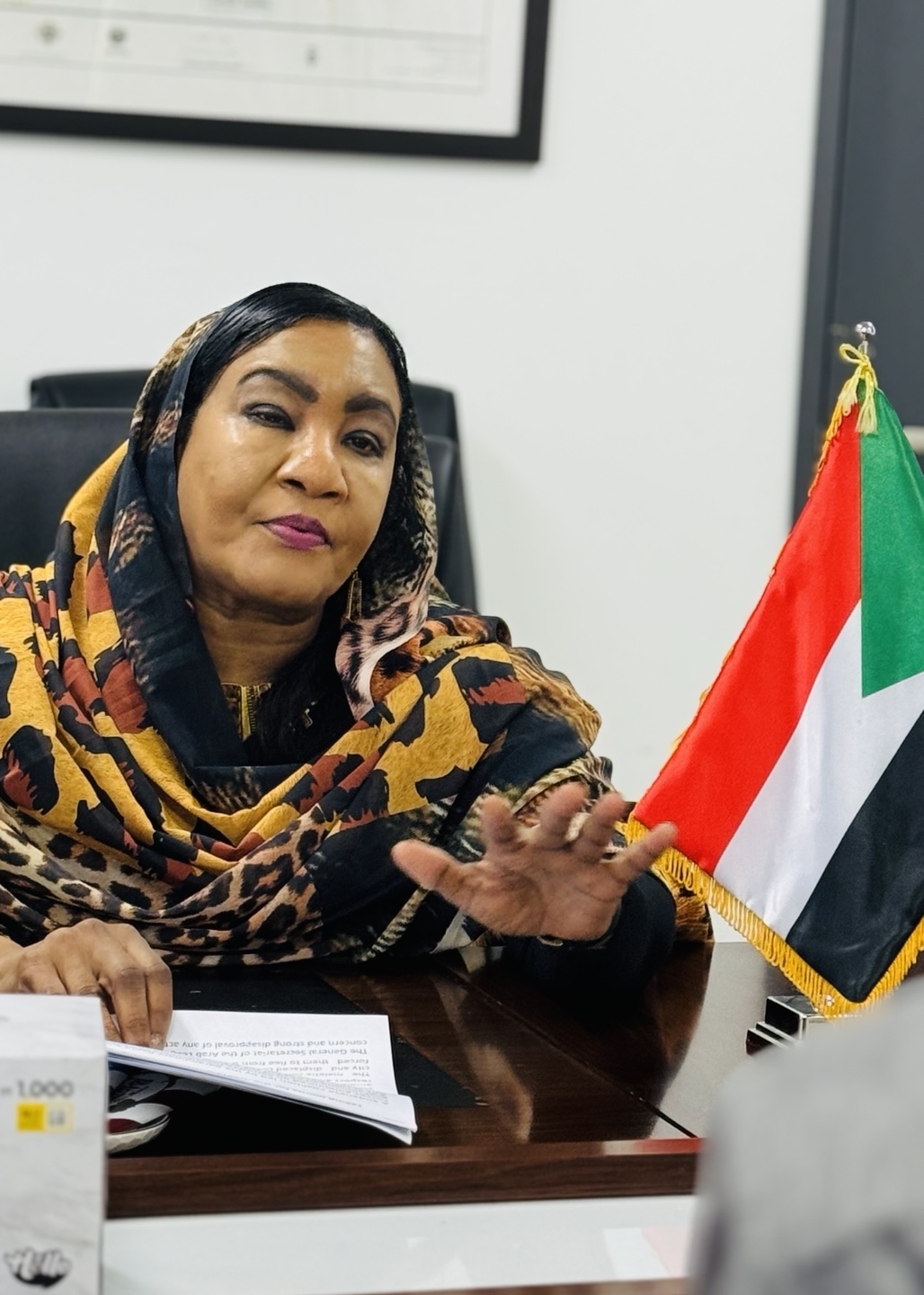
South Korea's rise since the 1950-1953 Korean War is a model for Sudan, and the two countries could build a mutually beneficial partnership as the African nation rebuilds, says Sudan's ambassador to Korea.
Sudan is at a critical turning point, with diplomatic peace efforts advancing even as violence continues on the ground, according to Sudanese Ambassador to Korea Amira Agarib.
Sudan is at a pivotal moment, with the Kamil Idris Peace Initiative offering a Sudanese-led roadmap for a ceasefire and recovery. The initiative was presented to the United Nations Security Council, and 2026 has been designated the “Year of Peace.”
The United Nations has urged the protection of civilians after deadly drone strikes in Sudan, as a 2026 regional plan seeks aid for 5.9 million people, including 470,000 new refugees, amid the army's ongoing conflict with the Rapid Support Forces paramilitary group.
The conflict that began in April 2023 has killed tens of thousands, displaced around 13 million people, and triggered one of the world’s worst humanitarian crises, according to the UN.
However, according to Agarib, violence by the RSF continues, including attacks on World Food Program convoys, worsening a humanitarian crisis in which over 21 million people face acute food insecurity.
"Sudan is not seeking sympathy but partnership for justice. The world must stand on the right side of history,” she said, calling for secure humanitarian corridors and stronger international action.
Korea’s role
Agarib applauded Seoul’s support, calling it meaningful during a time of crisis.
South Korea donated $7 million to the WFP for the project “Emergency Support for Food Vulnerable Populations in Sudan,” carried out in cooperation with UNDP and UNICEF.
She voiced hope that Korea and other partners would sustain assistance amid warnings of funding shortfalls that could disrupt aid operations by March.
“Korea rebuilt from the ashes of war in the 1950s. We see Korea as a model,” she said, noting that Korea’s first major investment in Africa began in Sudan in the 1970s in manufacturing, construction and textiles.
“We can build on that foundation. Korea brings technology and expertise; Sudan offers natural and human potential. It is a mutually beneficial partnership.”
Institutions such as KOICA and the Saemaul Undong initiative have shown interest in supporting Sudan’s development, she added, expressing hope that Sudan could eventually emerge as a model of postwar recovery in Africa.
Meanwhile, Agarib highlighted potential opportunities for Korean companies in Sudan’s postwar reconstruction.
She noted that work has already begun in relatively safe areas, with prospects in infrastructure, agriculture, oil, fisheries, and critical minerals such as lithium, gold, cobalt and chrome.
Sudan also possesses vast arable land and accounts for about 80 percent of global gum Arabic production, she told The Korea Herald.
Underlining regional diplomacy, Agarib referred to Sudan’s return to the Intergovernmental Authority on Development and engagement with the African Union Peace and Security Council, underscoring the importance of collective action for stability.
“Korea can play a meaningful economic role by standing on the right side of history,” said Agarib.
The "right side of history," she added, means supporting peace, legitimate institutions and international law — and rejecting the weaponization of hunger and violence.
sanjaykumar@heraldcorp.com