Student reporters file constitutional complaint, argue age-based restrictions undermine press freedoms, leave youth publications vulnerable
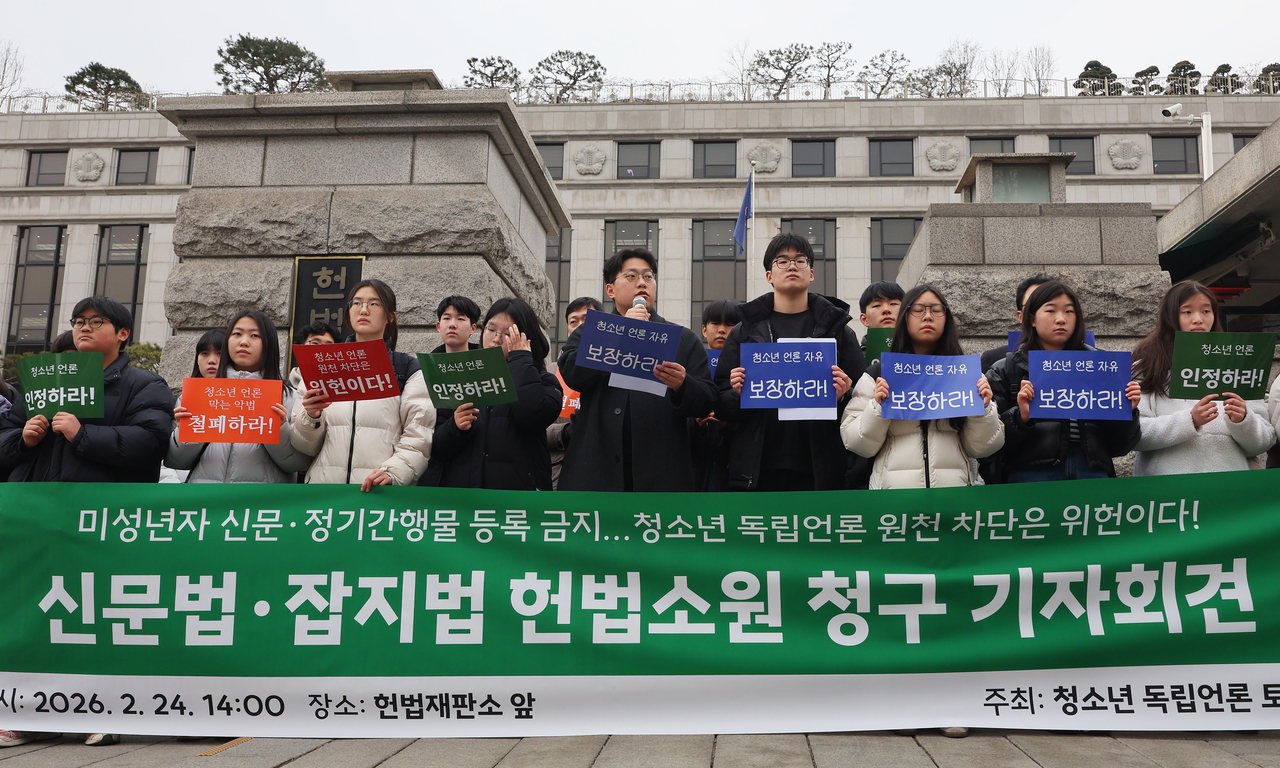
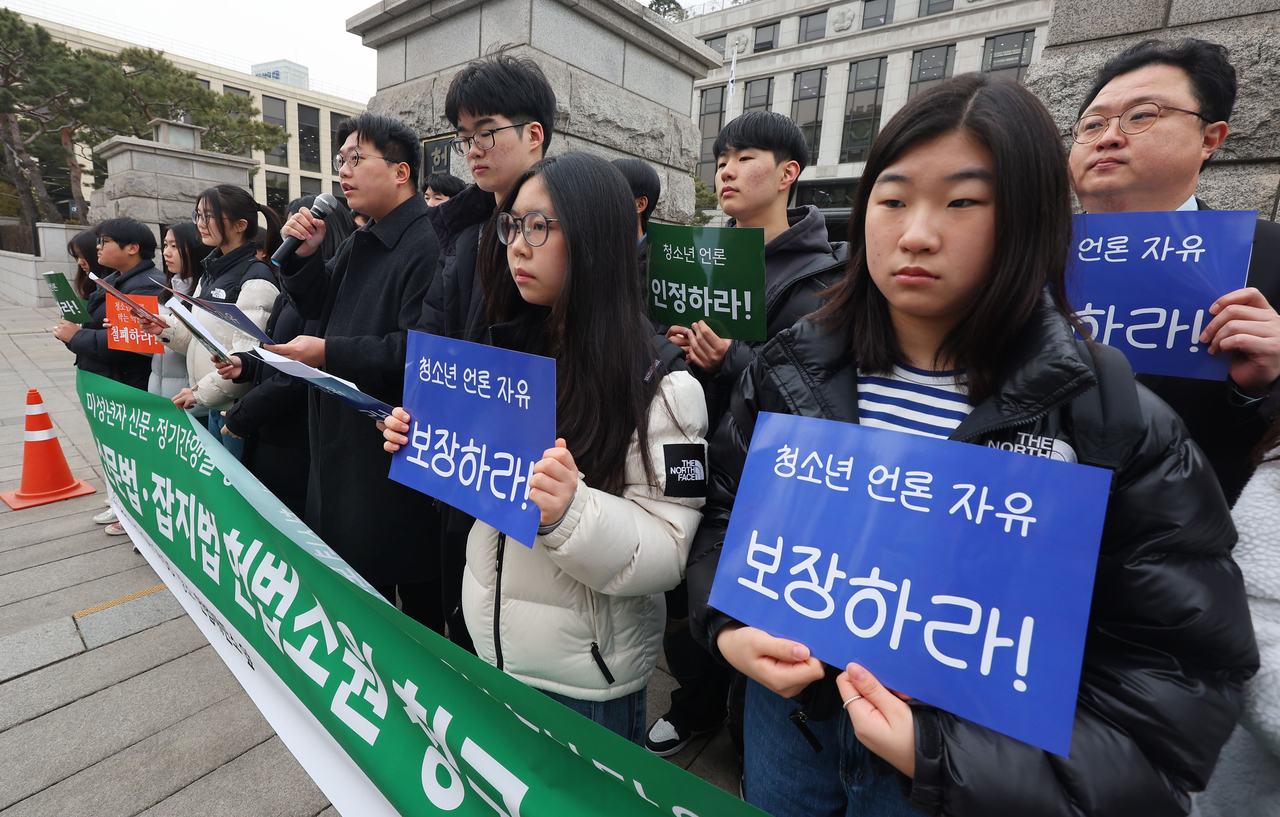
Students braved near-freezing temperatures outside Seoul's Constitutional Court on Tuesday to call for legal recognition of youth-led media and to challenge legal provisions they say restrict press freedoms.
"We had to stand up against oppression from the school with our bare hands," said Moon Sung-ho, a 15-year-old student at Yeonshin Middle School and editor-in-chief of Tokipul, an independent student newspaper.
"Registering our newspaper as an official media outlet would protect us under the Newspaper Act and the Act on the Promotion of Periodicals, giving us grounds to stand up to our schools," Moon added.
The student reporters gathered to file a constitutional complaint against the Act on the Promotion of Periodicals and the Newspaper Act, particularly the stipulation that "minors and persons under adult guardianship" cannot serve as publishers or editors of registered periodicals and both print and online newspapers.
The students argue they are left in a legally unstable position and excluded from benefits granted to registered publications.
"Right now we pay almost 500,000 won ($345) per month in postal fees alone, although we send the newspapers through post much like any other media organization," Moon said in an interview with The Korea Herald a few hours before filing the constitutional complaint.
"We tried registering to cut down on those costs, but the law said minors were not allowed."
Media institutions registered as periodicals and newspapers typically receive a 50 percent discount on postal fees.
"The law feels like a barrier for youth media."
What is Tokipul?
Launched in April 2024, Tokipul is a monthly student newspaper that prints 1,000 copies distributed across four schools in Seoul's Eunpyeong-gu. Operating under the slogan "a media independent of schools," the paper is run mostly with local donations.
"We tried to voice the opinions of teenagers in the form of articles because they are usually marginalized in policy debates," Moon said.
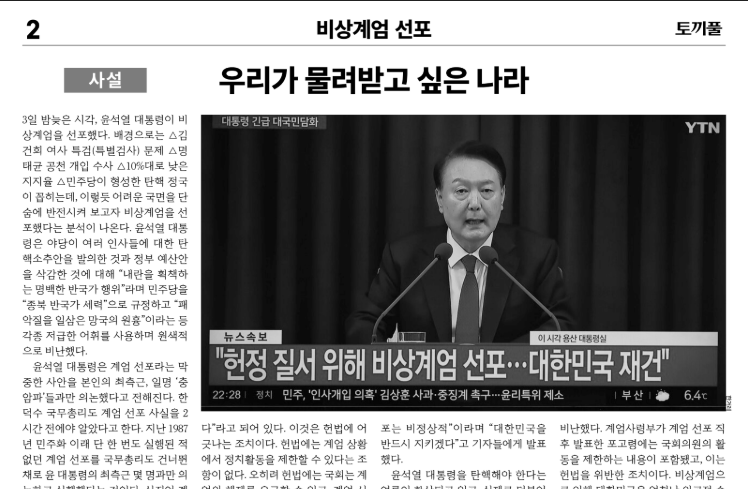
The newspaper has 32 student reporters and covers local affairs, education and school-related issues. In the aftermath of former President Yoon Suk Yeol's controversial martial law declaration, Tokipul drew national attention for publishing the article "Teenagers do not want to inherit a country that no longer has democracy."
The piece was widely shared online and received praise from civic and political groups for articulating social concerns from a student perspective.
The role of youth publications
Moon pointed to increased youth representation and improved media literacy among students as the core functions of youth publications.
"In the last presidential election, there were four candidates who participated in televised debates; only one had policies with the word 'teenager' in them," Moon noted.
He said that because teenagers do not have suffrage, they are underrepresented in policymaking, despite making up nearly 15 percent of Korea's population.
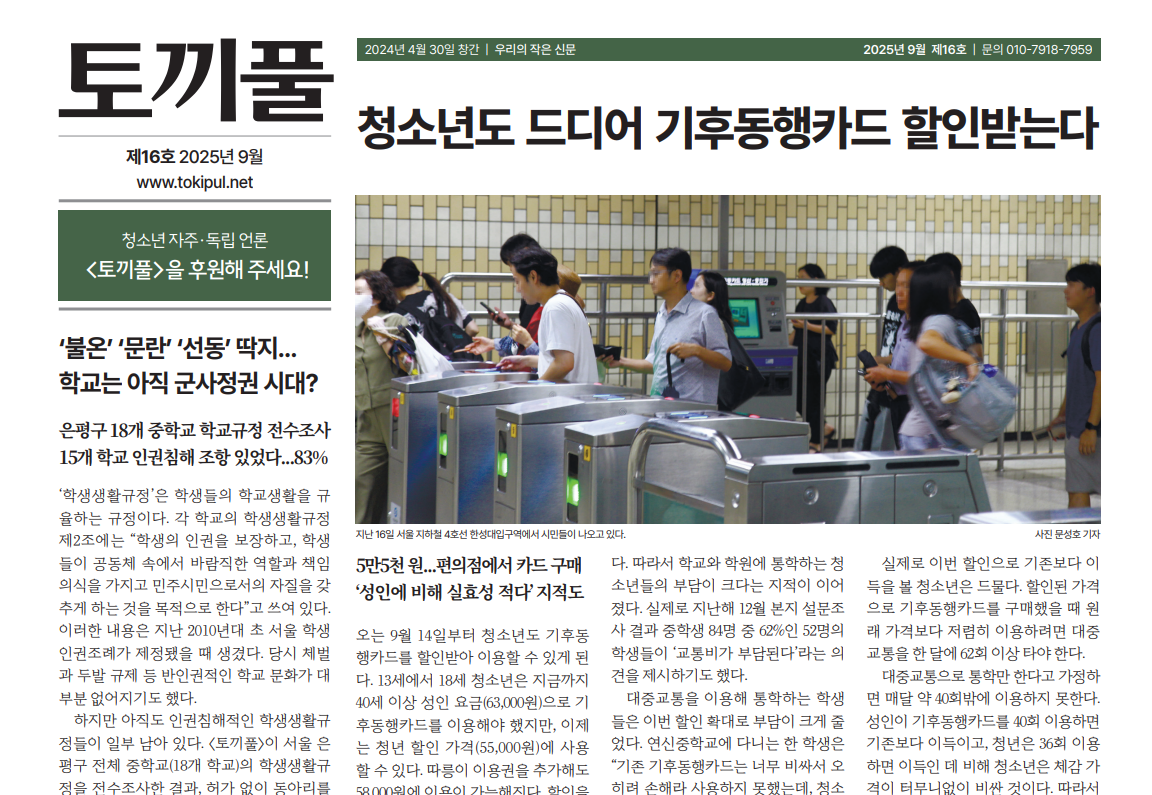
Moon said his publication has reported on policies that marginalized teenagers, including Seoul's Climate Card, which did not offer discounts to teenagers until September, despite providing varying discounts for young adults between 19 and 39.
"By reporting on them and compiling teenagers' opinions, we can make policymakers realize that teenagers are facing these issues," he added.
He also said the article-writing process — from refining opinions to fact-checking and research — has helped enhance media literacy among the student reporters.
Difficulties of running student media
Tokipul has found itself in headlines before.
In August 2025, Shindo Middle School in Eunpyeong-gu confiscated 300 copies of the newspaper along with recruitment posters.
In response to the newspaper's request for an explanation, the school stated it had considered "the constitutional principle of political neutrality in education, potential interference with educational activities and the possibility of civil complaints arising from differences in values."
Tokipul protested by publishing a blank front page, a symbolic gesture that quickly drew media attention and sparked debate in political and educational circles. The Shindo Middle School principal later issued an apology.
Moon said the challenges of running a youth newspaper extend beyond such conflicts.
"When people have a claim against a newspaper, they must go to the Press Arbitration Commission," said Moon. "However, because we are unregistered, people who have a claim on our articles must take us to court."
Moon said that as a student, it is daunting enough to clash with school authorities, but even more burdensome to face potential legal action. He said such pressures sometimes deter risky editorial decisions. "There is real fear and concern about that, and that often intimidates us."
The publication's legal status itself also poses a risk. Under current law, publishing unregistered newspapers and periodicals can result in fines of up to 20 million won or a prison sentence of up to one year.
"If someone takes vengeance on our reporting and files a complaint with the police, I could be investigated or fined," said Moon.
Can ripple make a difference?
Moon argued that current laws infringe on the right to publication and freedom to choose an occupation. However, previous legal challenges on the same provision have failed.
In a 2012 ruling, the Constitutional Court rejected a similar complaint, ruling that the provision served a legitimate legislative purpose: preventing individuals deemed likely to lack sufficient decision-making capacity, including minors, from assuming roles carrying significant social responsibility.
Moon rejected that characterization.
"We are already performing socially impactful activities, including interviewing presidential candidates, criticizing policy failure and pointing out policies that ostracize students," Moon said.
"Moreover, it is discriminatory to say that someone lacks judgment or is immature, just based on their age."
Kim Jung-hwan, the lawyer representing the students, echoed this view, arguing that the young generation's media environment differs fundamentally from the past.
"It cannot be right to simply block it outright. We need a more flexible approach," Kim said. "Potential side effects can be addressed afterward."
Kim argued that constitutional review mechanisms are designed to apply particularly strict scrutiny when fundamental rights are restricted by uniform standards.
"I am convinced that this blanket yardstick, which prevents individuals from becoming publishers solely because they are minors, is clearly unconstitutional," he said.
seungku99@heraldcorp.com