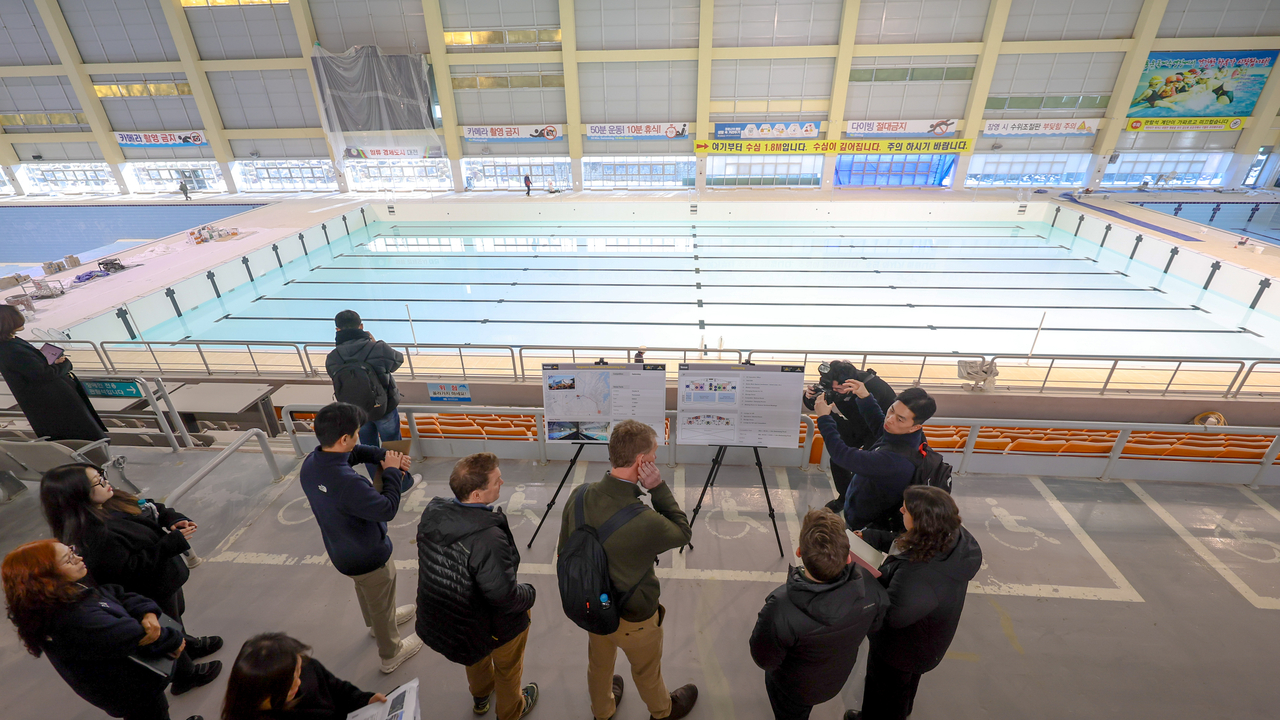
DAEJEON — “I didn’t want these venues to become places where an event simply comes and goes,” said Moon Hyun-kyu, director of rehabilitation sports at the Korea Disabled Veterans Association, as he looked across the spectator stands of Yongun International Swimming Pool on Wednesday.
Gesturing toward the rows of tiered seating, Moon said organizers hope to fill as many as 3,000 seats with local residents during the Games.
Standing beside him, Invictus Games Foundation Chief Executive Rob Owen watched the presentation unfold and smiled.
“That must be cheerful,” Owen said, imagining wounded service members competing before packed stands of community supporters.
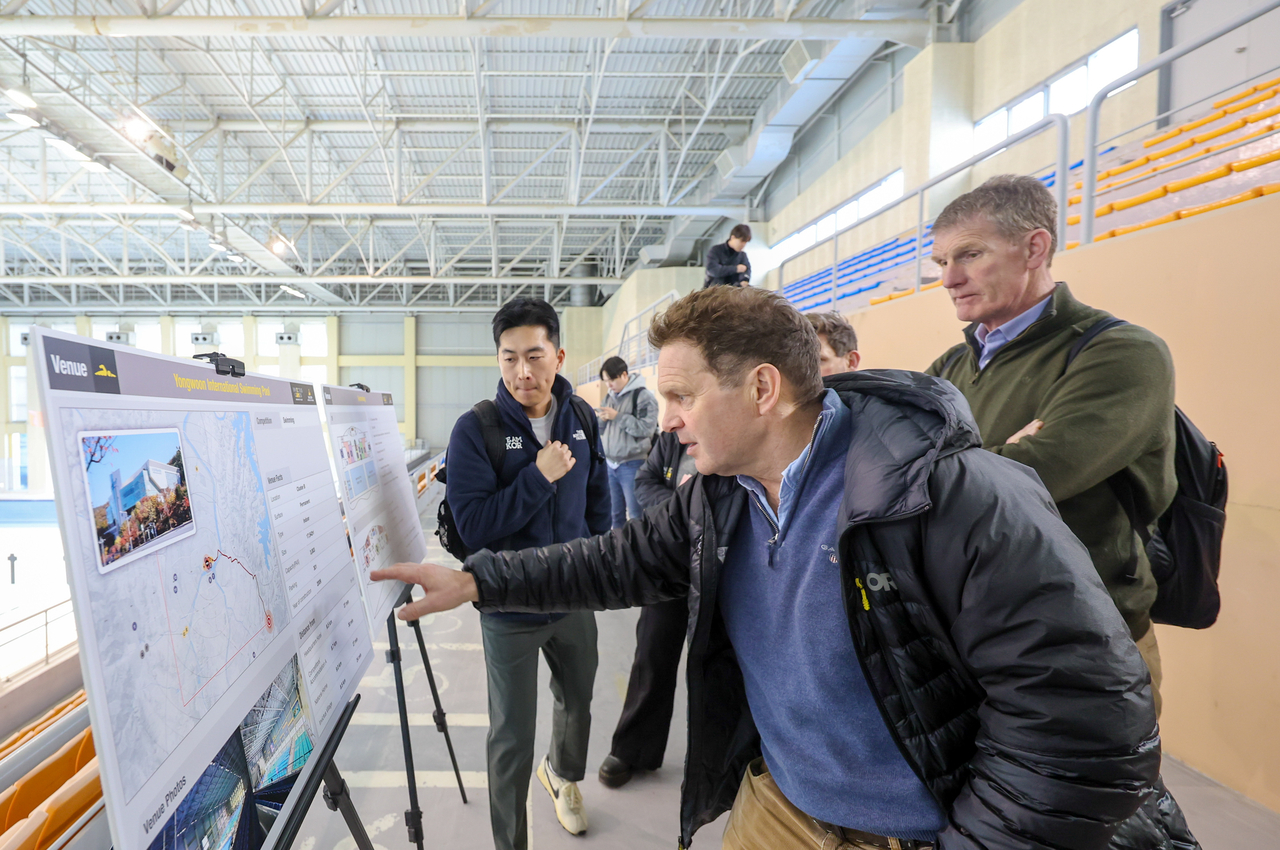
The exchange captured the tone of the foundation’s multiday inspection visit to Daejeon, about 135 kilometers south of Seoul, as South Korea seeks to host the 2029 Invictus Games.
The delegation — including Owen, Deputy Chief Executive Richard Smith, Communications Director Sam Newell and Operations Director Caroline Davis — arrived in Seoul on Monday before traveling to Daejeon the following day. Moving between venues in a convoy of vans, the group spent two days inspecting proposed competition sites across the city. The visit continues through Friday.
South Korea is one of three shortlisted candidates, alongside Aalborg in Denmark and San Diego in the United States. The foundation conducted a site visit to Denmark earlier this month and is scheduled to visit San Diego in April.
A Games built around recovery
Founded in 2014 by Britain’s Prince Harry, the Invictus Games were created as an international sporting event for wounded, injured and sick military personnel and veterans.
Unlike traditional elite competitions centered on medals or rankings, the Games emphasize recovery through sport — helping participants rebuild confidence, physical capability and social connection after service-related injury or illness.
Participation itself, rather than victory, is considered the core achievement.
Throughout the inspection, foundation officials repeatedly focused on how competitors would experience an entire day — from transportation and rest areas to emotional comfort within venues.
Rather than presenting individual stadiums in isolation, Korean organizers framed Daejeon itself as part of a recovery journey extending across the city.
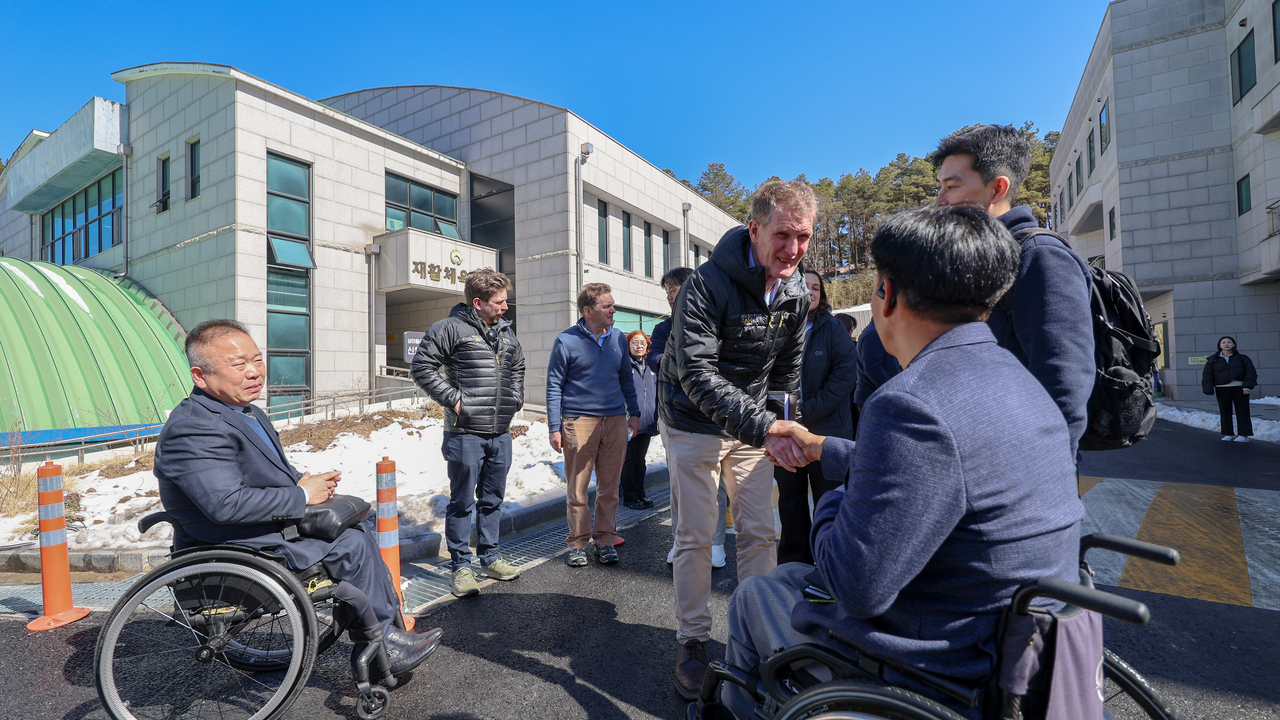
Moon and Ryu Won-shick, an official at the Ministry of Patriots and Veterans Affairs, said planners sought to consider even the smallest details affecting athletes’ daily experiences.
“We wanted competitors not merely to attend, but to feel they were part of a world-class sporting experience,” Ryu told foundation members during the tour.
According to organizers, proposed venues are organized into four thematic clusters built around athlete experience rather than geographic proximity, emphasizing recovery, achievement, community connection and remembrance.
“In Invictus, the question is not how efficiently you run competitions,” Moon told The Korea Herald. “The question we keep asking is how a competitor experiences the entire day — from entering a venue to returning to accommodation. That whole journey must support recovery and become a meaningful memory.”
Inspecting participation, not performance
As the delegation moved across Daejeon, foundation officials examined accessibility routes, travel times between venues, athlete-spectator separation and medical readiness — practical factors viewed as essential to ensuring participation.
“The core of the Games is making sure competitors can take part in the events they want,” Smith said during the inspection.
“If venues are too far apart or competitions overlap, participation can become difficult.”
The comments reflected one of the foundation’s central concerns: whether logistical planning genuinely supports rehabilitation rather than creating additional physical or psychological burdens.
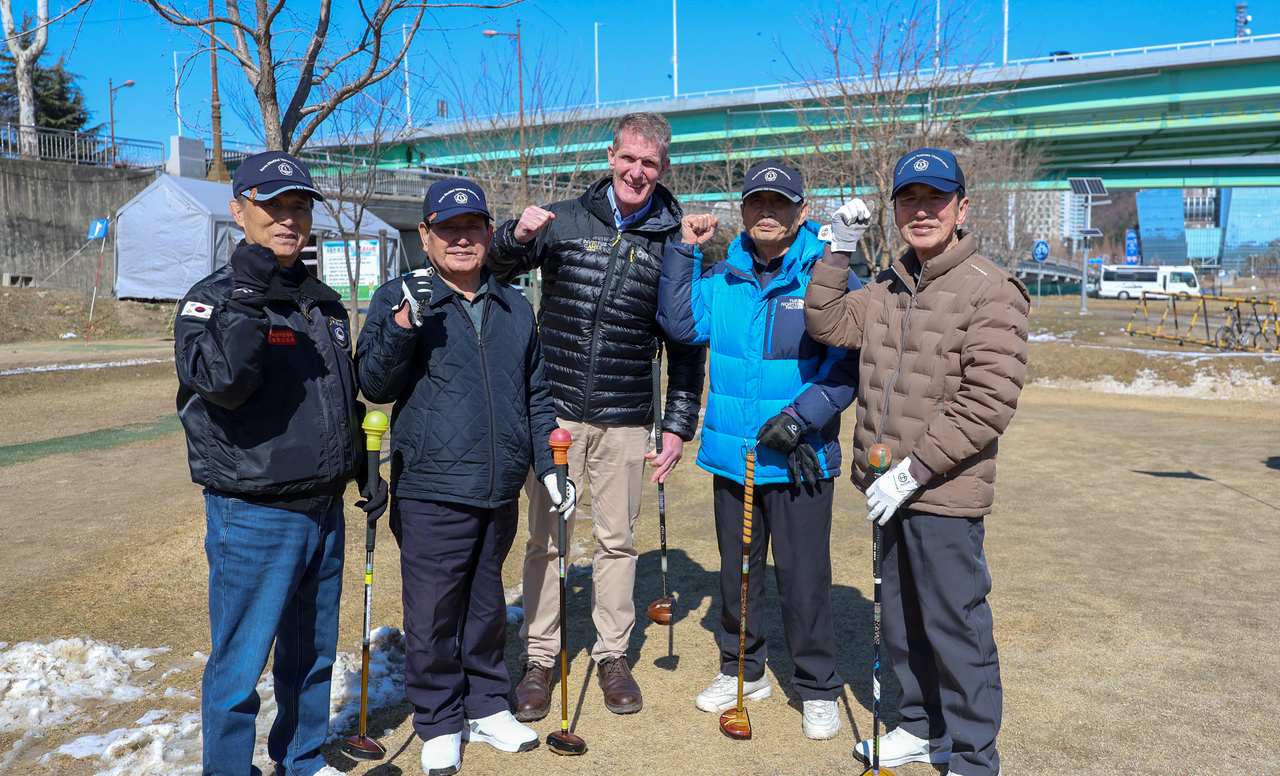
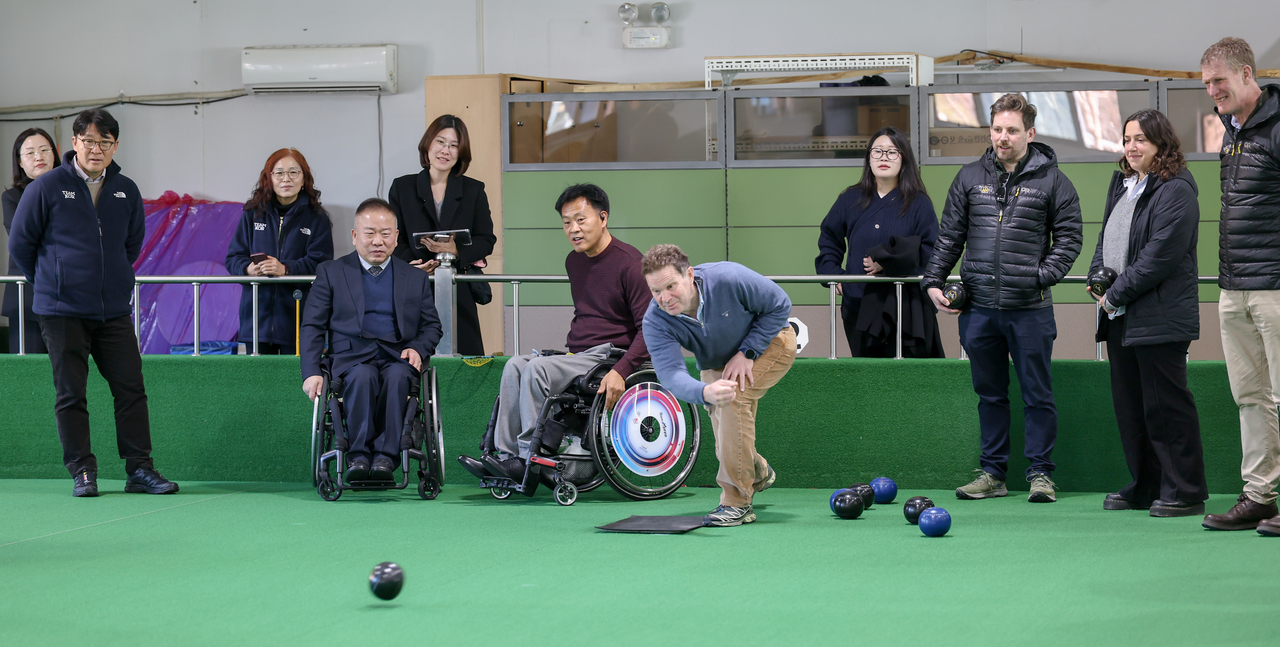
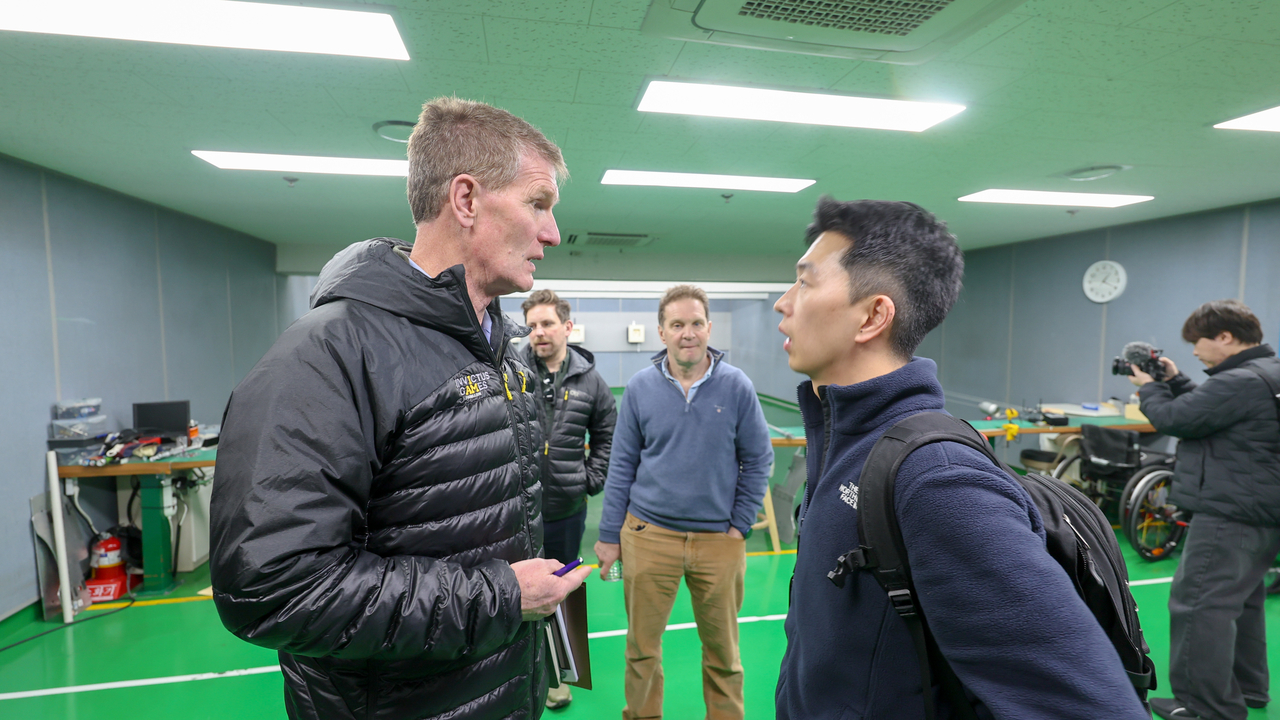
Some of the most detailed discussions unfolded at Daejeon Veterans Hospital, where organizers proposed hosting laser shooting — an additional sport suggested by the Korean bid committee alongside esports and park golf.
Operations Director Caroline Davis asked whether hospital operations would continue uninterrupted during competition days.
“It’s important that other veterans continue receiving care,” she said, emphasizing that medical services must not be disrupted.
Organizers explained that competitions would be held in a gymnasium without affecting clinical treatment areas.
Smith — a retired British Army brigadier general who served in Iraq and Afghanistan — welcomed the proposal.
“The foundation has traditionally avoided live-fire shooting because loud gunshots can trigger difficult memories,” he said. “The laser format is a very good idea.”
Korean officials described the additional sports as low-barrier events designed to maximize participation regardless of disability classification, complementing the nine core Invictus disciplines, including athletics, archery, cycling, swimming, indoor rowing, sitting volleyball and wheelchair basketball.
‘Exemplary’ preparation
Despite operational questions raised during inspections, the overall level of preparation appeared to leave a strong impression on the delegation.
“I have to say the level of professionalism and preparation is exemplary,” Owen told reporters.
“The thinking and planning at such an early stage are truly extraordinary. You can tell a great deal of work has gone into this.”
Owen described Daejeon as “a spectacular city” offering new ideas about integrating local communities into the Games experience.
If selected, South Korea would become the first Asian host of the Invictus Games — a milestone Owen said would significantly expand the movement’s global reach.
“If we have the opportunity to come to Asia for the first time — a completely new continent — that is very exciting for us,” he said.
Throughout the visit, foundation officials emphasized that host selection extends beyond venue readiness, focusing on whether long-term national commitment to supporting wounded veterans can be sustained after the Games conclude.
“What is very clear is there is support and determination at every level — from political leadership downward,” Owen said. “That gives us a huge amount of confidence.”
Hosting the 2029 Invictus Games is being pursued as part of a national veterans policy initiative under the Lee Jae Myung government, whose term runs through 2030.
The bid is jointly backed by the Ministry of Patriots and Veterans Affairs, the Korea Disabled Veterans Association and the Daejeon Metropolitan Government — a multi-institutional partnership Korean officials say demonstrates sustained commitment to the Invictus movement beyond the event itself.
The final host city will be selected following bid submissions in May, presentations in June and a decision expected in July.
flylikekite@heraldcorp.com