Kim Yea-dong, pioneer of polar research in Korea, discusses challenges of Earth's coldest regions
This is one of a series of interviews in which Kim Hoo-ran, editor-at-large at The Korea Herald, speaks with leaders, trailblazers, unsung heroes, and both well- and lesser-known figures who share the stories of their lives and their visions for a better world — Ed.
If you felt the weather this winter was erratic — unseasonably warm days followed by deep freeze — you would not be wrong.
While the average temperature in January was minus 1.6 degrees Celsius, the coldest average January temperature since 2018, the month was marked by significant temperature fluctuations.
The first three days of the month saw a large drop in temperature, followed by unusually warm temperatures from Jan. 15-18, reaching around 20 degrees Celsius in some places. The mercury then plummeted from Jan. 20, the national average daily temperature dropping to minus 6.8 degrees Celsius on Jan. 22.
The sudden cold was precipitated by a negative Arctic oscillation, which allows colder Arctic air masses to move south, according to the weather agency.
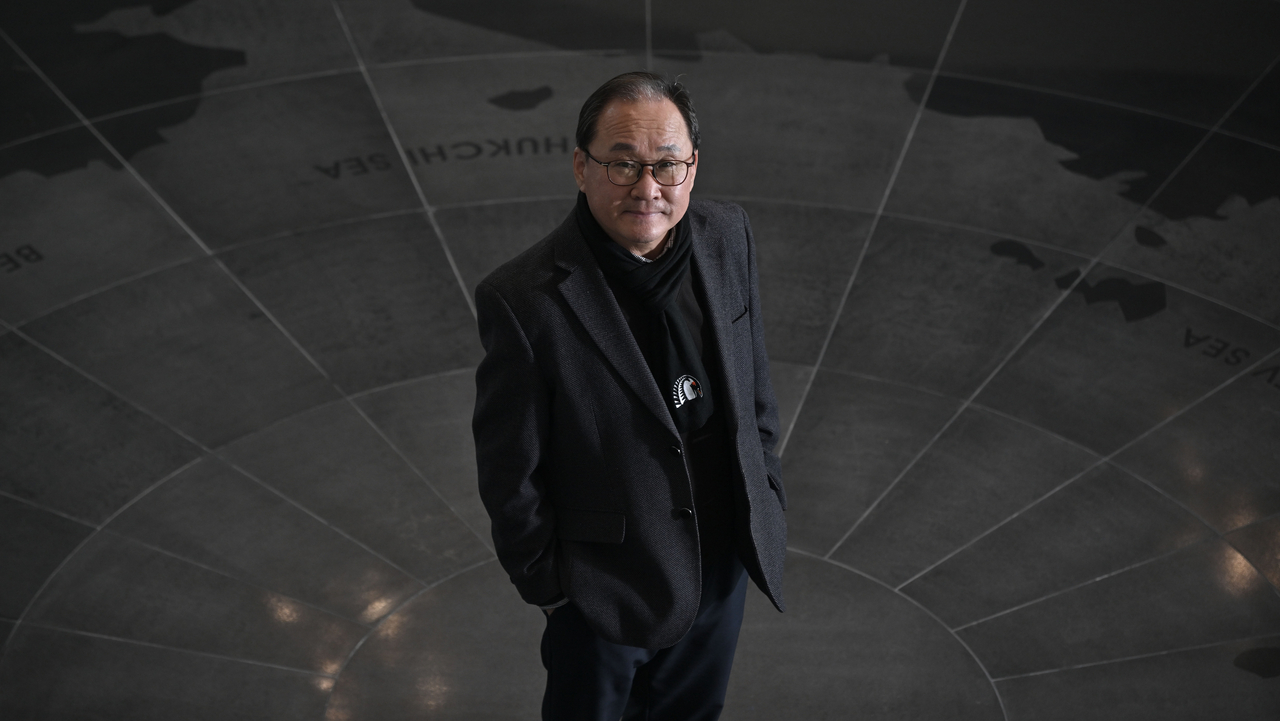
“The melting of the sea ice in the Arctic Ocean influences climate. The sea ice reflects much of the solar heat, sending it back into space. If there is no sea ice, that heat will be absorbed by the ocean, causing warming of the sea water,” Kim Yea-dong, chair of Korea National Committee on Polar Research, said during an interview with The Korea Herald at Korea Polar Research Institute in Songdo, Incheon, on Jan. 14.
“Put simply, there is more heat. This causes several problems. The current extreme cold waves in the US and Europe are a result of the same phenomenon,” he says.
Kim, a pioneer in Korea’s polar research, served twice as the president of KOPRI, from 2004 to 2007 and from 2013 to 2016.
From 2021-2024, he was president of the Scientific Committee on Antarctic Research, an interdisciplinary body of the International Science Council that coordinates international scientific research efforts in Antarctica.
As far as rising sea levels are concerned, the situation is more urgent in Antarctica, he said.
Arctic ice does not directly significantly raise sea levels if it melts as it is already floating, but in Antarctica, a continent surrounded by the Southern Ocean, the melting ice raises sea levels by adding fresh water to the ocean, Kim explained.
The unpredictable melting of the West Antarctic Ice Sheet is of urgent concern. A marine-based ice sheet, its bed lies well below sea level, and its edges flow into floating ice shelves.
“One might think that the rising temperatures cause the melting ice to flow into the sea. But, in fact, the warm current is melting the ice from underneath,” Kim says. “What is worrying is that ice will suddenly collapse into the sea. This is unpredictable. We are most concerned about such a scenario as it is possible for the sea level to abruptly rise by a height (equal to) several tens of stories,” he says.
If the rise in sea levels proceeds at a predictable rate, we would be able to prepare for it, but the possibility of a sudden, unpredictable rise that could mean calamity for mankind lends a sense of greater urgency to those studying Antarctica, including Kim.
First Korean on Antarctica
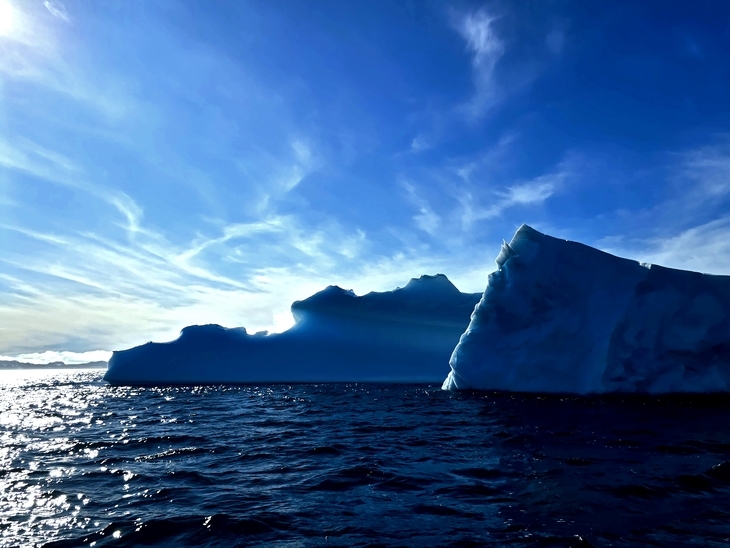
Kim became the first Korean to set foot on Antarctica in 1983 as part of a research expedition while a graduate student at Louisiana State University studying geophysics. He has since been to Antarctica on more than 20 occasions, twice spending a year there as the chief of the overwintering team at King Sejong Station in 1989 and 1996.
“Everywhere I looked, it was blue and white,” he recalls about landing on Antarctica in his memoir “A Polar Scientist’s Recollection: Sowing Future in the Arctic and Antarctica,” (unofficial translation) published in December.
On his most recent visit in December 2020, the melting of ice was starkly noticeable, especially at the Antarctic Peninsula, where the King Sejong Station is located.
“The coast of the Ross Sea, where the Jang Bogo Station is located, has not changed much. But if you visit there during summer, you will notice that the temperature rises above freezing point. That is a big change,” he says.
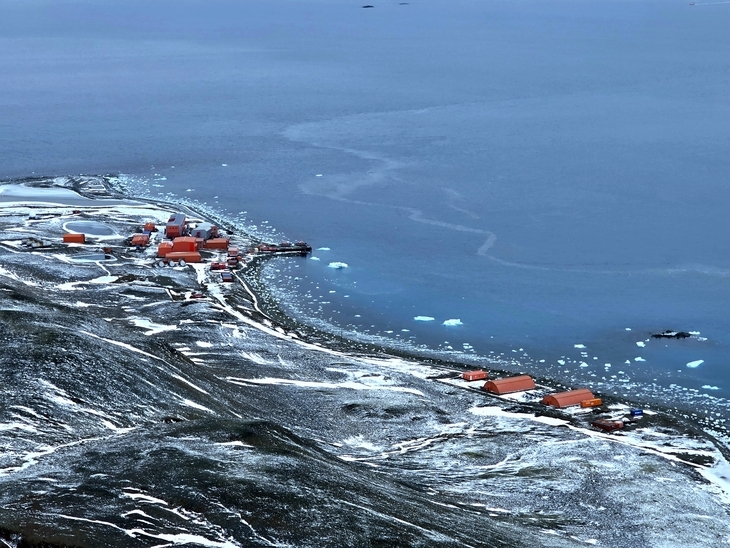
Upon returning to Korea following his studies in the US, Kim played a pivotal role in establishing the King Sejong Station on King George Island in February 1988, achieving the record-breaking feat of building and opening an Antarctic science station in just a year.
With his experience in Arctic research, Kim spearheaded the opening of Korea’s first Arctic science station, the Dasan Station, in April 2002. Korea’s first ice-breaking research vessel project was launched in 2005, during Kim’s tenure as the inaugural president of KOPRI. The vessel, named Araon, set sail for Antarctica in November 2009 and the Arctic in July 2010.
Korea’s second Antarctic science station, the Jang Bogo Station, officially opened in April 2014, during Kim’s second tenure as head of KOPRI. Unlike the King Sejong Station, the Jang Bogo Station, completed over three austral summers, is located on the Antarctic continent.
Korea is now working on building a second science station in the interior of the Antarctic continent that requires developing what is being called the “K-Route.” An approximate location for the station has been identified about 1,000 kilometers inland of the Jang Bogo Station, with a plan to build an observatory.
Arctic issues
International cooperation and focus on scientific research, commensurate with the Antarctic Treaty System, which took effect in 1961 at the height of the Cold War, prevails in Antarctica. Korea joined the treaty as a consultative party in 1989.
However, the Arctic is a different story, as borne out by US President Trump’s desire to annex Greenland, a semi-autonomous territory of Denmark, claiming security reasons.
Added to the geopolitical importance of the Arctic is its rich resources and the possibility of their exploitation opened up by climate change, Kim points out.
“Commercial exploitation looms large as the melting of sea ice allows for ships to pass through the Arctic. The rich underground resources are much coveted as well. Russia and China are making a dash for it, so the US is concerned,” he says.
Competition for the vast natural resources of the Arctic is already playing out in Svalbard, a Norwegian archipelago.
According to the 1920 Svalbard Treaty, of which Korea is a signatory, Norway has full sovereignty over Svalbard while all signatory states have equal rights to economic activity, scientific research and residency.
“Svalbard has become an issue because of the near depletion of the North Sea oil after 40 to 50 years of extraction by Norway and the UK. Now they are looking farther North for oil, and Svalbard is where they are most interested,” says Kim.
The possibility is very high that the vast Svalbard Continental Shelf contains oil, and this has made Norway suspicious of Russian and Chinese activities in the region.
“Last August and September, China sent five ice-breaking research vessels to the Bering Strait, which alarmed many. With China touting the so-called ‘Icicle Road’ to the Arctic,’ concerned countries became alarmed,” Kim says.
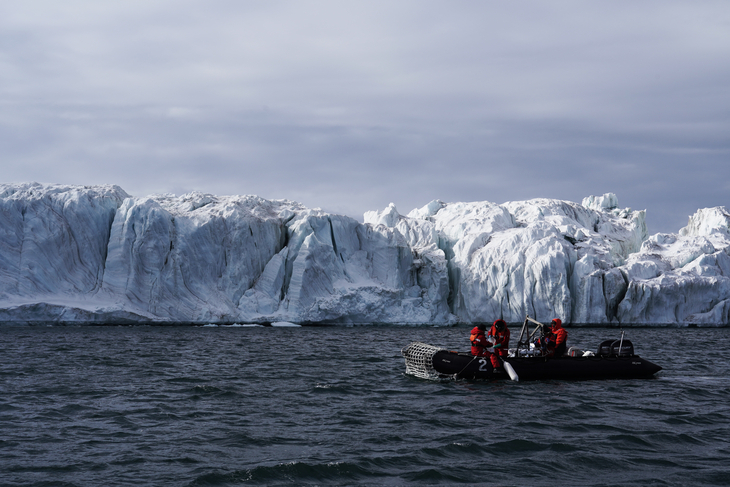
Korea needs to pay more attention to the Arctic, Kim points out.
“As a country with no natural resources, we need to participate more actively in the new world or new market and stake a claim long-term,” he says
Kim also urged Korea to look into the Northern Sea Route.
“What Korea should look into is the natural gas from the Arctic region of Siberia. Natural gas stored in the Yamal Peninsula, a very small region (in northwest Siberia), is enough to supply Europe for the next 30-50 years,” he says. “And there is even more under the sea.”
“When we look at the Northern Sea Route, we should view it from the perspective of energy security, securing natural gas produced in Siberia, rather than shipping of cargo to Europe through the shorter Arctic route. We should take an interest in natural gas produced in the Siberian Arctic,” Kim says.
khooran@heraldcorp.com