Machines rarely announce themselves as labor disputes. Atlas did.
기계가 노사간 분쟁에서 존재를 드러내는 경우는 거의 없다. 그러나 아틀라스가 그러했다.
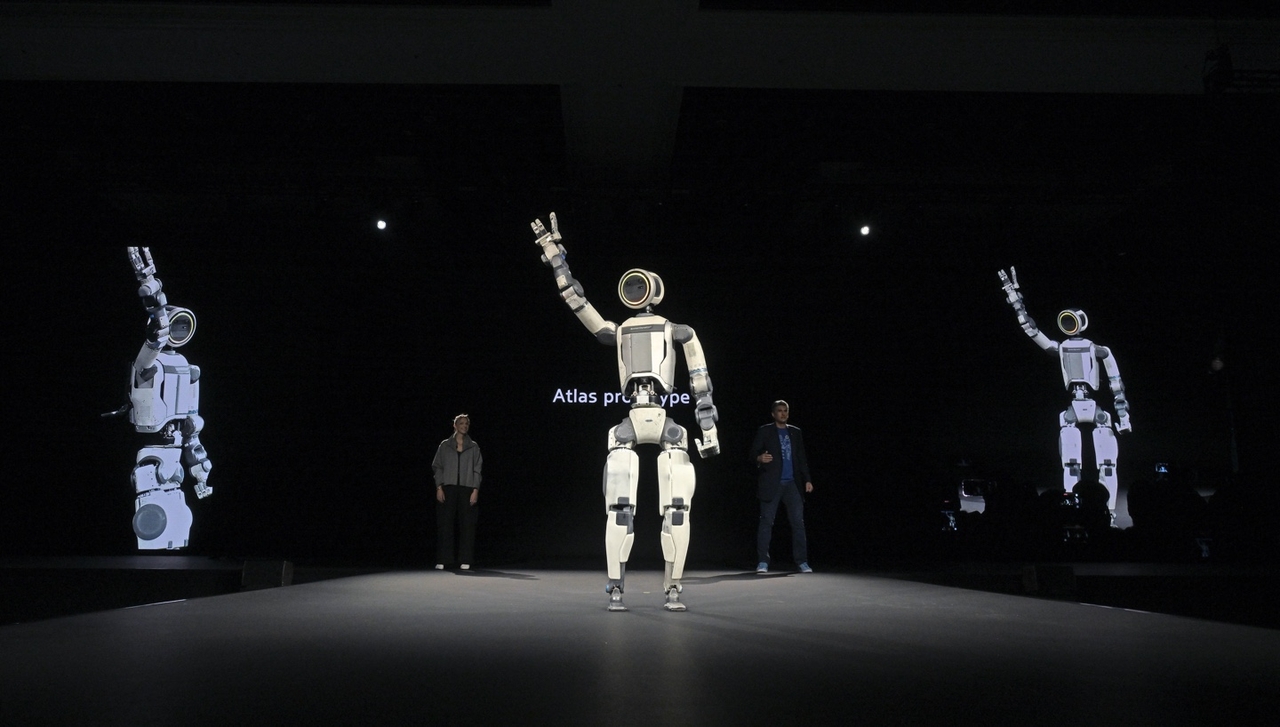
Hyundai Motor unveiled its humanoid robot at CES 2026 in Las Vegas on Jan. 6, a Boston Dynamics-built humanoid positioned as the company’s flagship entry into “physical AI.”
현대자동차는 1월 6일 라스베가스에서 열린 CES 2026에서 휴머노이드 로봇을 공개했다. "피지컬 AI"로 진입하는 대표 모델로 내세워진, 보스턴다이내믹스가 만든 휴머노이드다.
Investors saw a breakthrough, but the rank and file saw a threat. By Jan. 22, the automaker’s Korean union had issued a blunt ultimatum: No robot enters the production line without a labor-management agreement.
투자자들은 새로운 돌파구라고 여겼지만 일반 사원들은 위협을 느꼈다. 1월 22일자로 현대차의 한국 노조는 노사 합의 없이는 생산라인에 로봇 한대도 들일 수 없다는 직설적인 최후통첩을 선언했다.
The declaration was blunt, preemptive and revealing. It signaled not resistance to one machine, but strain in the industrial bargain underpinning Korean manufacturing.
이 선언은 직설적이고 선제적이며 많은 것을 드러냈다. 기계 한 대에 반하는 저항이 아니라 한국의 제조업을 뒷받침하는 산업 협상에 드리운 갈등의 신호였다.
There is no mistaking the scale of Hyundai’s industrial pivot. By 2028, the group plans to manufacture up to 30,000 humanoid robots a year at a US-based facility, starting deployment at its Georgia plant before expanding to other sites.
현대차 공정상 변화의 규모가 클 것은 분명하다. 2028년까지 현대차 그룹은 미국의 생산시설에서 연 최대 3만대의 휴머노이드 로봇을 생산할 계획이며 조지아주 공장에 이를 투입하는 것을 시작으로 여타 공장으로 늘려갈 예정이다.
Hyundai aimed to showcase Atlas as evidence of its confidence in physical AI; instead, it exposed a widening gap between corporate strategy and labor expectations.
현대차는 피지컬 AI 분야에서의 자신감의 증거로 아틀라스를 선보일 목적이었다. 그러나 대신 회사 차원의 전략과 노조의 기대치가 점차 벌어지고 있다는 것을 드러냈다.
The arithmetic of the humanoid shift is uncompromising. An Atlas unit is estimated to cost about 200 million won ($138,000) upfront, with annual maintenance of about 14 million won. A Hyundai worker earns roughly 130 million won a year, works fixed shifts and requires extensive safety protections. Robots operate continuously. For a country facing rapid aging and a shrinking labor pool, round-the-clock automation looks less like ambition than necessity.
휴머노이드 전환의 비용은 타협의 여지가 없다. 아틀라스 한대당 초기 제조에는 2억원이, 연 유지보수에는 1400만원이 들 것으로 예상된다. 현대차 직원의 연봉은 대략 1억3천만원으로 여기에 지정 교대 근무제와 광범위한 안전보호 조치가 수반된다. 로봇은 쉬지않고 작업할 수 있다. 노동력 집단이 급격히 고령화되고 축소되고 있는 나라에서 24시간 자동화는 야심찬 계획이라기보다는 필수로 보인다.
Markets have responded accordingly. Hyundai Motor’s market capitalization crossed 100 trillion won on Tuesday, driven largely by optimism around robotics and autonomous driving rather than vehicle assembly. Investors are signaling where they see future value. It lies not in producing cars more cheaply, but in controlling the systems that define next-generation manufacturing.
시장은 이에 상응하는 반응을 보였다. 현대차의 시가총액은 자동차 생산라인보다는 로봇과 자율주행에 대한 낙관적인 기대에 힘입어 화요일 100조를 넘었다. 투자자들이 미래의 가치가 어디에서 찾는지를 시사하는 것이다. 자동차를 좀더 싸게 만들어내는 것이 아니라 차세대 제조업을 판가름할 시스템 제어라고 보는 것이다.
The union is defending its political leverage. Collective bargaining rests on the premise that labor must be hired, paid and retained. A workforce of machines fundamentally alters that balance. Once capital substitutes labor at scale, the worker’s seat at the negotiating table begins to contract.
노조는 정치적 영향력을 지켜내려 한다. 집단교섭은 노동자가 고용되어 임금을 받고 고용상태를 유지해야 한다는 전제 하에 놓여있다. 기계라는 노동력은 그 균형을 근본적으로 바꾸어 놓는다. 자본이 대규모로 노동자원을 대체한다면 협상테이블에서의 노동자들의 자리는 줄어들기 시작할 것이다.
Geography sharpens the anxiety. Hyundai’s Georgia Metaplant aims to reach 500,000 vehicles in annual output by 2028, even as domestic plants report declining volumes. To Korean workers, overseas expansion and humanoid deployment appear intertwined. High-tech investment flows outward. Local factories risk becoming legacy sites, protected but sidelined.
지리적 요건들로 그 우려는 더 커진다. 현대차의 국내 공장은 생산량이 감소하고 있는 가운데 조지아주 메타플랜트는 2028년까지 연 생산량을 50만대까지 늘릴 계획이다. 국내 직원들에게 있어 해외 확장과 휴머노이드 투입은 같은 맥락으로 읽히는 듯하다. 첨단기술 투자는 해외로 향하고 있다. 국내 공장들은 보호는 받으나 주역이 되지 못하는, 명맥을 이어가는 곳이 되어갈 위험이 있다.
Global competitors will not wait for a consensus in Seoul. While Hyundai’s domestic lines stall over negotiations, Tesla and state-backed Chinese firms are treating physical AI as a mandatory race to the bottom on costs.
해외의 경쟁자들은 한국이 합의에 이르기를 기다려주지 않을 것이다. 현대차의 국내 생산 라인이 협상으로 멈추어 있는 사이 테슬라와 국가적 지원을 받는 중국 기업들은 피지컬 AI를 필수적인 비용 절감 경쟁으로 삼고 있다.
History offers little reassurance to countries that chose protection over adaptation. Britain slowed early automobile adoption to shield existing interests and lost industrial leadership as a result. Korea’s more recent bans on ride-hailing platforms followed a similar logic, with similar outcomes.
역사적으로 적응보다 지키기를 택한 나라들의 결과는 좋지 않았다. 영국은 기존의 이익을 보호하기 위해 초기 자동차 산업에서 변화를 늦추었고 그 결과 업계 선두 자리를 잃었다. 좀더 최근에는 한국이 유사한 논리에 따라 차량 공유 플랫폼을 금지했고 비슷한 결과를 낳았다.
Hyundai’s executives argue that robots will handle dull, dirty and dangerous tasks, freeing humans for higher-value work. The claim is plausible, but unproven. Such transitions require planning, retraining and institutional support that few firms have executed at scale. Without them, the gap between promise and practice widens fast.
현대차 경영진은 로봇이 이른바 3D 작업을 담당해 인간이 더욱 고부가가치 작업을 할 수 있도록 해준다고 주장한다. 이 주장은 그럴 듯하나 아직 증명되지는 않았다. 그러한 전환에는 계획, 재교육, 제도적 지원이 필요하고 이를 대규모로 실행한 기업은 거의 없다. 이를 실행하지 않는다면 이론과 실제 간 차이는 빠르게 벌어질 것이다.
Korea’s policy framework remains ill-prepared. Labor law was not written for an era in which a “worker” might consist of steel and code. An all-or-nothing confrontation serves neither side.
한국의 정책 체계는 아직 미비한 상태다. 노동법은 "노동자"가 쇠와 코딩으로 만들어질 수도 있는 시대에 맞게 쓰여진 것이 아니다. 죽기살기식의 대립은 어느 쪽에도 도움이 되지 않는다.
A viable path forward requires tying robot integration to natural attrition and phased adoption. Government must treat workforce transition as vital social infrastructure rather than a private corporate adjustment.
앞으로 나아갈 방향이 실행 가능하려면 자연스러운 감원에 로봇 도입을 연동시켜 단계적인 도입을 해가는 것이 필요하다. 정부는 노동자원 전환을 사기업의 적응이라기보다는 필수적인 사회 기반으로 바라봐야 한다.
The Atlas dispute is not about whether robots will enter factories. They will. The real contest lies between societies that adapt and those that resist. If the standoff hardens, innovation will not pause. It will move elsewhere, leaving behind factories that preserved existing jobs while forfeiting the future that sustained them.
아틀라스를 둘러싼 논쟁은 로봇의 현장 투입 여부에 대한 것이 아니다. 이는 분명 일어날 일이다. 이에 적응하는 사회와 이를 거부하는 사회 간에 진정한 경쟁이 벌어질 것이다. 대치상태가 공고화하더라도 혁신은 멈추지 않을 것이다. 기존의 일자리는 지켜주었지만 이를 지탱해온 미래를 버린 공장들을 뒤로 하고 다른 곳으로 옮겨갈 것이다.
rank and file 평직원
ultimatum 최후통첩
preemptive 선제의
underpin 뒷받침하다
arithmetic 계산
automation 자동화
premise 전제
retain 유지하다
viable 실행 가능한
attrition 소모, 자연 감소
khnews@heraldcorp.com