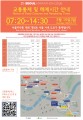
“On March 21, the world’s biggest band is back!” Netflix’s teaser announces BTS’ upcoming live event at Gwanghwamun Square. The concert will follow the release of the group’s first studio album in more than three years, which drops a day earlier. The 14-track album — as well as the comeback show — is titled “Arirang.”
The concert is expected to be viewed worldwide through Netflix’s exclusive live streaming to more than 190 countries. Hundreds of thousands of Armys, as BTS fans are known, from around the globe, including the 15,000 fortunate fans who secured official tickets, are likely to flock to the historic heart of Seoul. Many will be eager to see their idols perform together in person for the first time since all seven members completed their mandatory military service. Authorities have raised security concerns as some fans are expected to camp outdoors.
This blockbuster event may well mark another milestone in Korea’s rise as a global cultural powerhouse. In that sense, the significance of the title “Arirang” — arguably Korea’s most beloved traditional folk song — becomes especially meaningful.
The group’s label, BigHit Music, describes “Arirang” as a symbolic expression of the emotions BTS seeks to convey in the new album and performance, “the longing and deep love that lie within their hearts,” together with their identity as a global sensation that began in Korea.
Whether intentional or not, invoking “Arirang” imbues the event with deeper cultural resonance. The song carries immense emotional and historical significance for Koreans. Though its origins remain uncertain, “Arirang” has been sung from generation to generation, accompanying the Korean people through the many ups and downs of their history. Hundreds of regional variants exist across the country, their lyrics and melodies differing slightly and their titles often prefixed by the names of the regions from which they originated. Koreans abroad also sing the song during moments of unity and remembrance, which is why it is often called Korea’s “second national anthem.”
“Arirang” is widely regarded as a musical embodiment of Korean identity. Musicologist Hahn Myung-hee writes in his 2017 book “Korean Music, Korean Culture”: “Like a pebble washed again and again by a flowing river, the song crystallizes the emotional sensibility of the Korean people, honed by the joys and sorrows of the ages. It rings with delight when life is joyous and aches when life grows dark.”
Among the many versions, “Standard Arirang” (Bonjo Arirang) — believed to have originated in the Seoul region — is the most widely known. Beginning with the familiar refrain “Arirang, arirang, arariyo,” the song’s simple lyrics can be summarized in two brief lines: “Over Arirang Hill you go; Leaving me, my beloved, you will go lame before three miles.”
The singer must let go of a departing lover. Yet the lyrics express an innocent wish: “May your feet grow sore before you have gone three miles, so that you may return.” Beneath this sentiment lies a deeper message — a yearning for healing and the strength to endure. In this way the lyrics become a quiet aphorism about life itself, an endless cycle of meetings and partings that demands resilience and wisdom.
If the seven members of BTS — with their remarkable musical talent, powerful performances and visual appeal — singing “Arirang” for audiences around the world symbolize Korea’s self-confidence and pride today, the same song once echoed in a far more tragic context. Only a few generations ago, countless young Koreans sang “Arirang” in sorrow as they struggled for the independence of their impoverished homeland.
The song was particularly widespread from the late 19th to the mid-20th century, when Korea lost its sovereignty and endured Japanese colonial rule. A landmark example is the 1926 silent film “Arirang.” The film portrays a student who becomes mentally unstable after being imprisoned and tortured by Japanese authorities for participating in the March 1 Independence Movement. In a moment of delirium, he kills a pro-Japanese collaborator and is taken back to prison over Arirang Hill, while villagers weep and sing the song “Arirang.”
Directed by and starring Na Woon-gyu, the film became a powerful symbol of anti-colonial resistance. Audiences at the end of each screening joined together in tears, singing “Arirang.”
Another poignant reference appears in the 1941 biographical reportage “The Song of Ariran,” written jointly by Nym Wales — the pen name of Helen Foster Snow — and Kim San. In the book, the protagonist is escorted by a Japanese police officer on a train from China to a prison in Korea and is asked to sing a song. He replies:
“There is only one song I can sing on a day like this. It is an old, old Korean song of death and defeat — the Song of Ariran.”
He then explains the meaning of the song and quietly sings it while gazing out over the barren brown fields.
Kim San’s real name was Jang Ji-rak. A fervent communist revolutionary, he believed that participating in the Chinese communist revolution would ultimately contribute to Korea’s independence. In 1938, he was executed by Chinese Communist Party security forces on suspicion of being both a “Trotskyist” and a “Japanese spy.” In 1983, 45 years after his death at the age of 33, he was posthumously cleared of all charges and recognized as an upright revolutionary.
Lee Kyong-hee
Lee Kyong-hee is a former editor-in-chief of The Korea Herald. The views expressed here are the writer's own. — Ed.
khnews@heraldcorp.com