Over 800 students from 37 schools across Korea gathered Saturday at Seoul International School to participate in the National History Day Korea competition
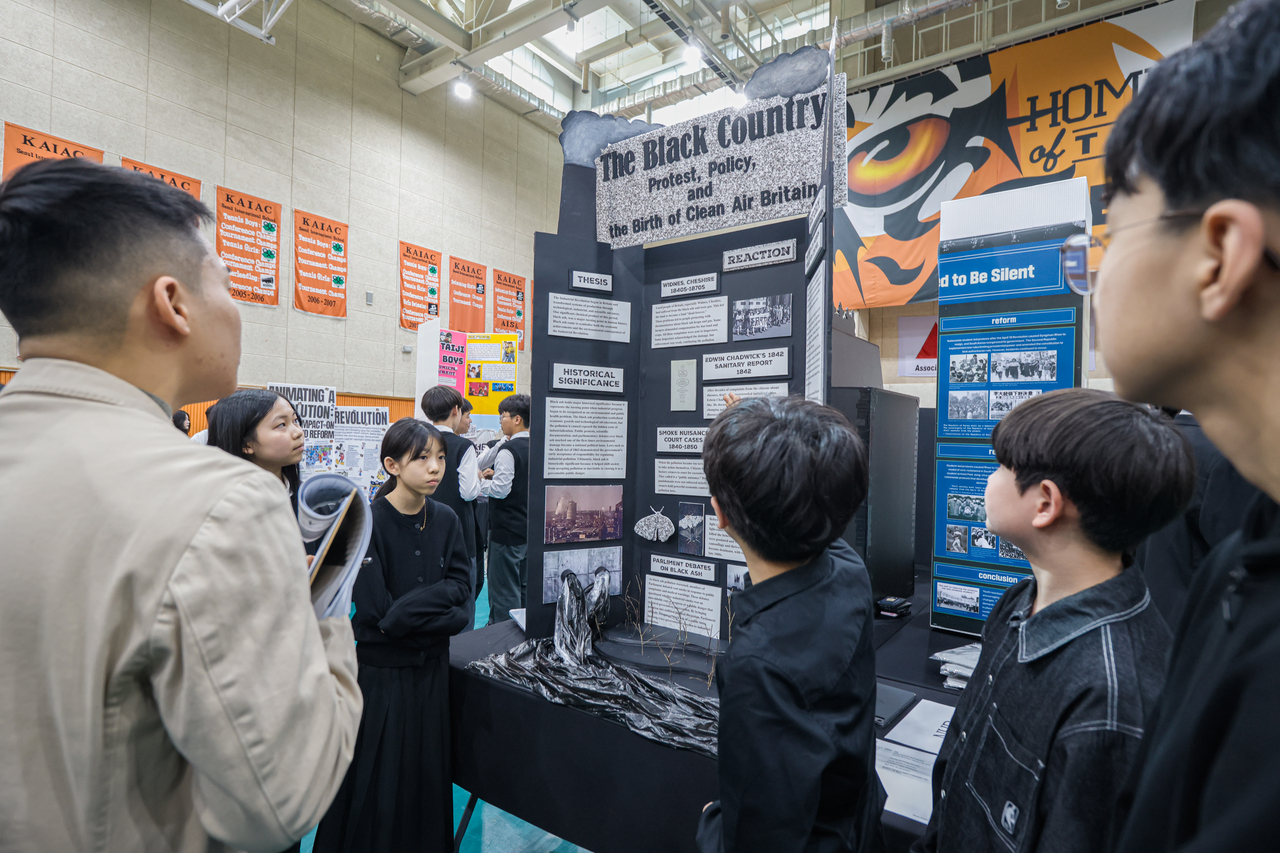
Hallways at Seoul International School in Seongnam, Gyeonggi Province, were packed as more than 800 students from 37 schools across South Korea gathered for National History Day Korea — an international competition promoting historical research among middle and high school students.
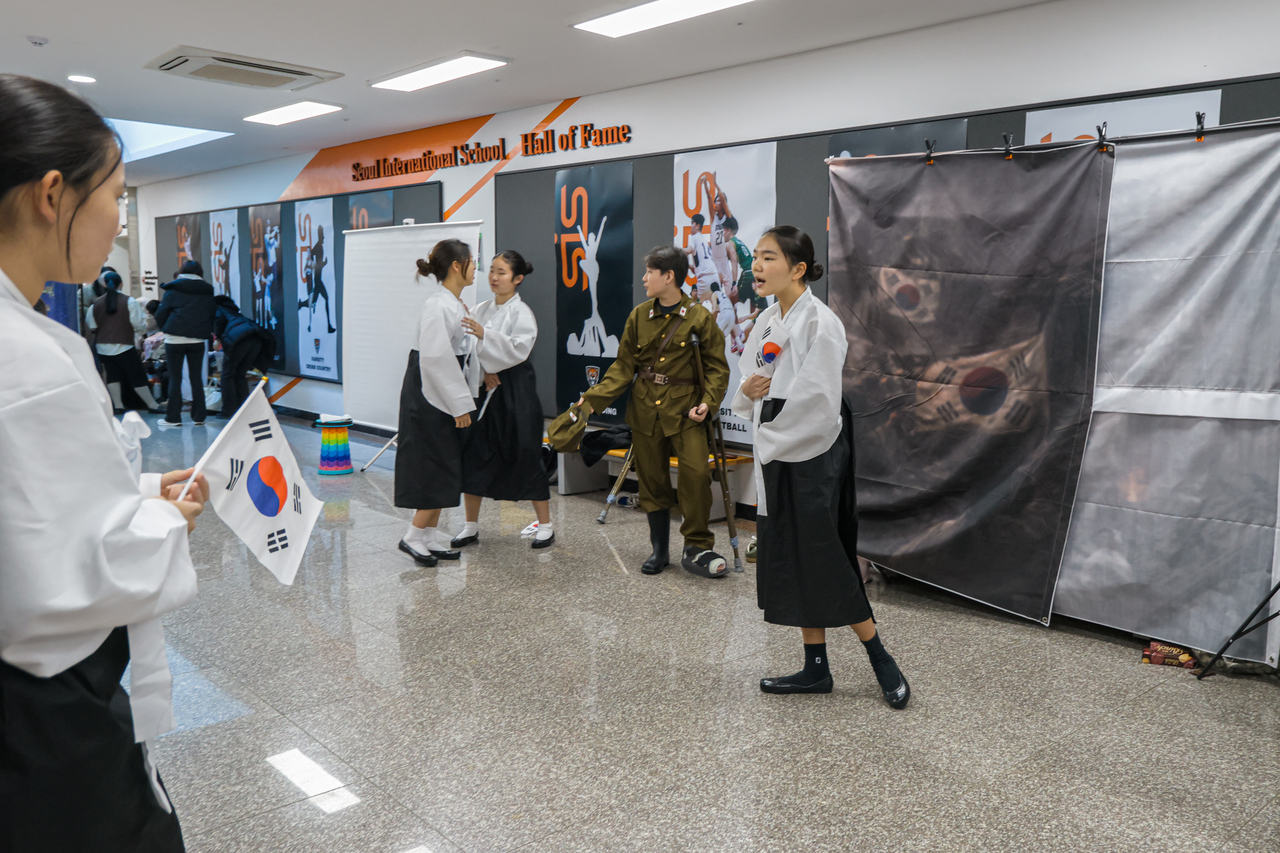
Under this year’s theme, “Revolution, Reaction and Reform,” students presented projects ranging from short documentaries and research papers to websites and theatrical performances during the event Saturday.
Topics ranged from light and quirky subjects, such as the invention of modern toilets, to more serious issues such as the 1923 massacres of Koreans in Japan following the Great Kanto Earthquake.
Sixty-nine students were selected to advance to the global competition scheduled for June at the University of Maryland.
“National History Day is a three-quarter-year program where students choose a topic within a given theme and spend months developing a thesis and conducting research, examining both primary and secondary sources,” said James Kowalski, a history teacher at Lahore American School and former SIS teacher who first introduced the contest to the school.
According to Kowalski, South Korea is one of the few international affiliates that host the competition, alongside China, Guam, Puerto Rico, and a South Asian and a Central American division.
The contest was founded in 1974 in Ohio with the mission of improving the teaching and learning of history. Over half a million students participate each year.
Throughout the day, students in Korea explained why their chosen topic constituted a revolution and how it reshaped people’s daily lives. Judges also asked students to consider broader implications and offered feedback on how to improve their research design.
“History is a rigorous social science that requires students to approach it methodically,” Kowalski said. “Students who are interested in history can enter NHD and develop a deeper appreciation for the research process.”
Teachers also offered practical advice throughout the competition, ranging from suggestions on website color schemes to guidance on improving sources and analytical frameworks.
Students, meanwhile, said studying history could offer lessons for the future.
“After reading my essay, I hope people don’t see this simply as something in the past, but as something we can learn from when facing the future,” said a student surnamed Kim who wrote a paper on "comfort women" — the women and girls subjected to sexual slavery by Japan before and during World War II.
“NHD helps us realize how history has a big impact on the world,” said another student surnamed Kim, a SIS middle schooler who qualified for the global competition in June. “You never know if history will repeat itself, so we must learn it well and try our best.”
seungku99@heraldcorp.com