From group dynamics to honorifics, foreign residents open up about challenges in connecting with Koreans
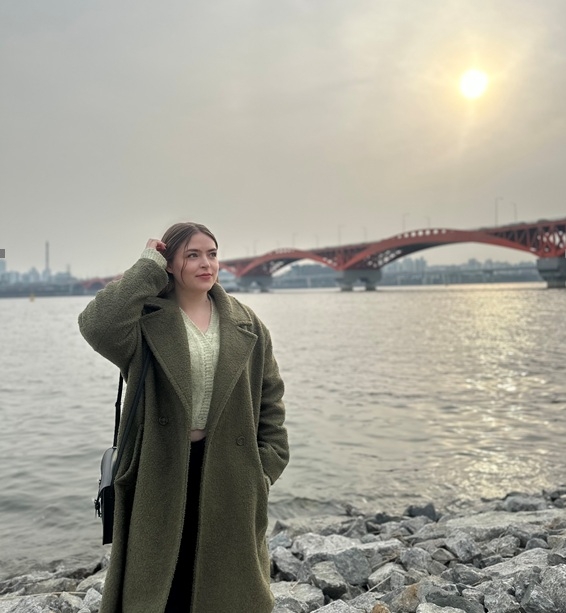
Most friends of Lena Smit, a 25-year-old psychology major from the Netherlands studying at Ewha Womans University, are Koreans she met at school. She doubts those relationships would have formed as naturally off campus.
“Being part of the same school, department or company seems to naturally create opportunities to connect in Korea. Making friends here feels less random and more structured,” said Smit, who has been living in Korea for seven years.
“I would be very hesitant to approach a Korean in the street to chat or try to start a friendship.”
Smit is not alone in feeling this way.
As the once homogenous South Korea grows more diverse -- with more than 2.6 million foreign residents nationwide and about 260,000 in Seoul alone -- many expats still say they struggle to feel a sense of belonging.
A recent survey of 2,500 registered foreign residents aged 20 and older in Seoul, released last month by the city government, offers a glimpse into that challenge. On a 10-point scale where 10 means “strongly agree” and 0 “not at all,” respondents gave an average score of 4.05 when asked whether they know their neighbors, down 0.36 points from the previous year.
They scored 3.90 for discussing local issues with others in the community and 3.81 for participating in neighborhood events, both also down year-on-year.
What challenges stand in the way of expats forming connections with Koreans? Here’s what they say.
Less spontaneous friendships
Friendship is essentially a personal connection between two individuals. In Korea, however, it often begins within a group.
Erica Scorohod, a 22-year-old Moldovan who moved to Korea last year and now works as a freelancer in the entertainment industry, has experienced this firsthand. Her advice to those hoping to befriend locals is to find a way into an existing social circle.
"I felt like Koreans prefer hanging out in groups. At the parties I went to, every Korean showed up with someone, while foreigners sometimes came alone," she said.
“So if you want to get close to Koreans, it’s much easier if one Korean introduces you to their existing group or if you go to clubs or networking events yourself."
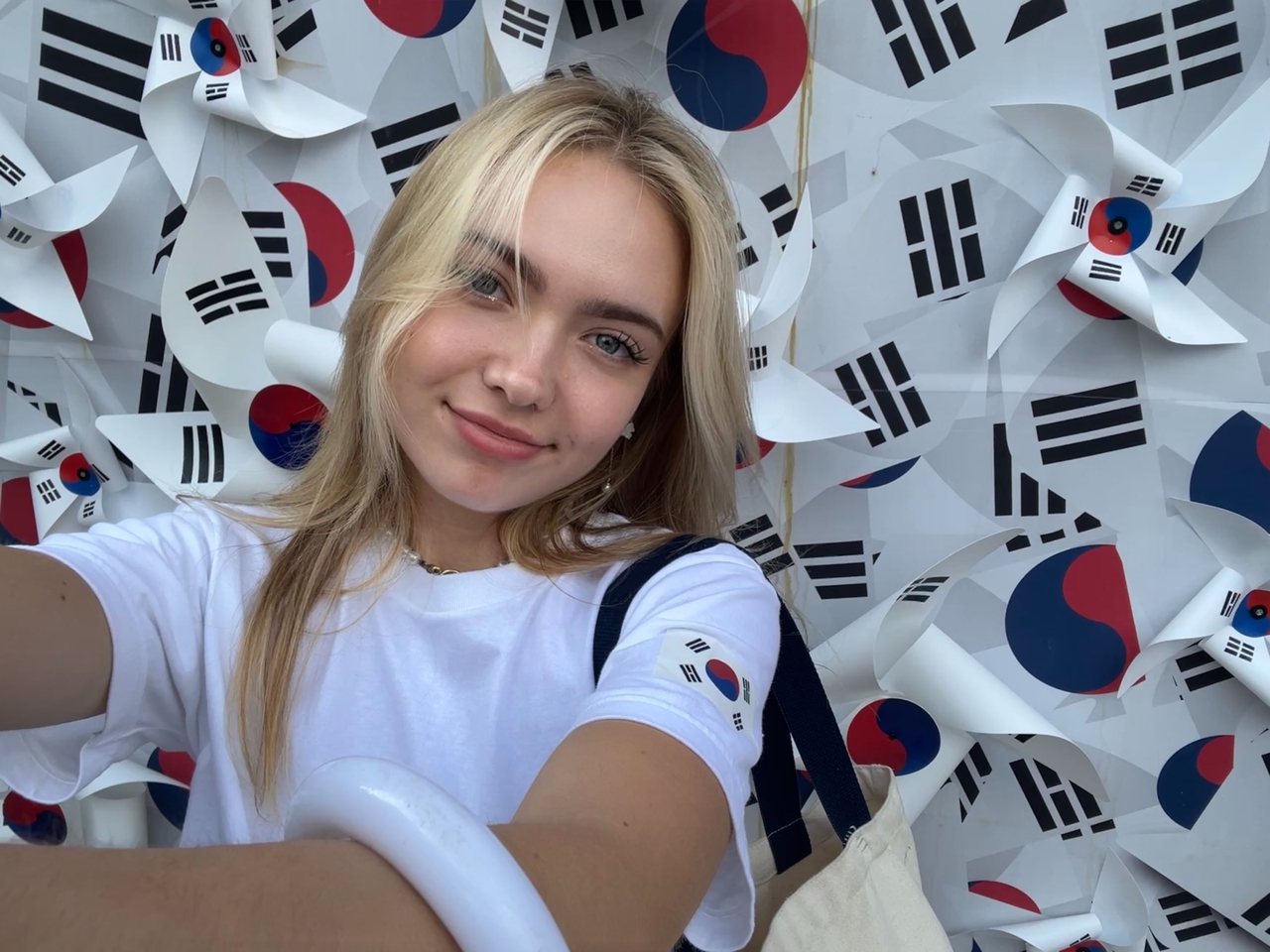
The lack of a small-talk culture also makes it hard, Scorohod added.
“It seems Koreans don’t tend to approach strangers or make small talk. Back home, friendships often begin with something as simple as a conversation in an elevator or a park. But here, you either need to already know someone or deliberately place yourself in certain social settings. If you approach someone out of the blue, they might find it suspicious," she said.
Smit said being a student at a local university has been a major boost in making Korean friends. She said campus was an ideal place to form connections, as shared coursework sparked conversations and spontaneous meals after class deepened them.
For Paul Ruff, a 23-year-old English instructor from the US, friendships with Koreans might develop more quickly if people were more open to meeting casually in relaxed settings such as each other’s homes, without much planning.
"Most of my meetups with my Korean friends are usually structured with a plan made weeks in advance. I have noticed it is not very common for people to hang out at each other's houses or apartments much," he said.
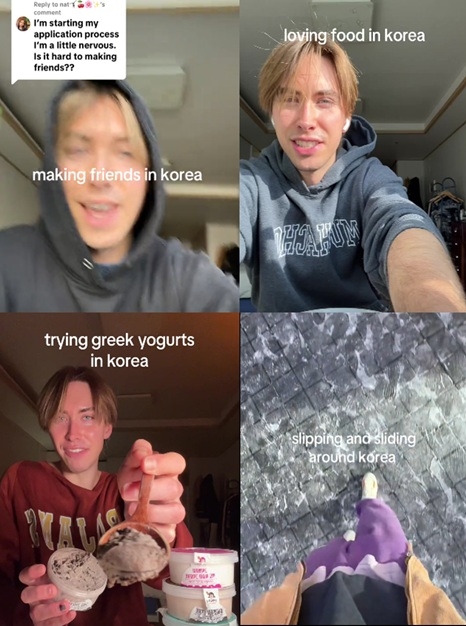
"Even my foreigner friends and I don't seem to hang out at each other's houses, although it is very common in the US. I have less opportunity to share my private or internal world with others."
Ruff, who arrived in Korea in July last year, has been working at a private English academy in Anyang, Gyeonggi Province. He has made two Korean friends, one through social media and the other through a foreign friend’s introduction, but the rest of his social circle is made up of foreigners, mostly fellow English teachers from overseas.
He felt that Koreans tend to maintain personal boundaries, which may explain their reluctance toward spontaneous gatherings.
"The only parts that make building deeper relationships difficult are the slow pace at which they move and the greater personal boundaries that seem to exist here. Of course, work and family are at the forefront of many people's schedules and time, so this does not bother me," he said.
Language barriers go both ways
Lachlan, a 25-year-old Australian student at Yonsei University’s Korean Language Institute, has been attending local gatherings such as running crews over the past year in hopes of meeting Korean friends and improving his speaking skills.
But it has not been as easy as expected, as many Koreans seem to feel pressured to speak English well.
“Even when I approach Koreans in Korean, many members at the gatherings try to mix Korean and English,” he said.
“I feel like I should be the one facing the language barrier, but some people seem uncomfortable speaking English and don’t really want to meet one-on-one or talk for too long."
What further confuses him, he said, is that Koreans do not seem to feel the same pressure in language exchange meetings or online English conversation programs, where the goal is to practice English. Yet when they encounter English-speaking people in more casual social settings, many appear to feel more nervous.
“Just like I don’t speak Korean well, it’s natural that they don’t speak English well. But I sometimes get the feeling that people worry they’ll look uneducated or not very smart if their English isn’t good, which I found interesting,” he added.
After exchanging names, Koreans often move quickly to asking each other’s age. Once titles such as unnie, oppa or maknae are determined, the dynamics of the relationship begin to take shape.
For some foreigners, the honorific language tied to these age distinctions can make it harder to feel close to locals.
“One of my friends is a bit younger than me, and even though I told her she could speak casually, she still uses honorifics. This sometimes creates a sense of distance between us,” said Carina Schimmel, a 27-year-old German living in Gwangju.
The honorific culture also makes Lena more cautious when interacting with Koreans.
"I sometimes find myself being more careful in how I speak if someone is older than me, just because I’m aware that age carries meaning here. Coming from the Netherlands, where hierarchy plays a much smaller role socially, that can feel a bit unnatural at first. Not in a bad way, but it does make me more conscious of how I present myself," she said.
"At the same time, once you get comfortable with someone, that distance becomes much smaller. But in the beginning stages, it can definitely influence how relaxed the interaction feels."
Slow to connect, strong once bonded
Karen Lau, a 24-year-old international student from Canada at Hankuk University of Foreign Studies, first encountered the Korean concept of “jeong,” meaning warm-hearted affection, when she received homemade side dishes from the parents of one of her few Korean friends.
“I live alone in a one-room apartment near campus, and one day the parents of a Korean friend I met through a volunteer club sent me some homemade side dishes they thought I might like. I had never even met them before, so it felt really unexpected but really heartwarming,” she said.
She and the friend had been part of the same club for a year, but only recently became close enough to travel together.
“When I joined the club, everyone was really welcoming, but the relationships still felt a little superficial. I sometimes wondered if it was because people thought I would eventually leave Korea,” she said.
“It takes quite a while, but once Koreans open up, they really open their hearts.”
Lau also noted that gift-giving becomes common among Koreans once friendships deepen.
“My Korean friends almost always bring a small gift when they come over to my place. I also realized that people send each other gifts through KakaoTalk on birthdays or special occasions. Once you become close, they really take good care of each other," she added.
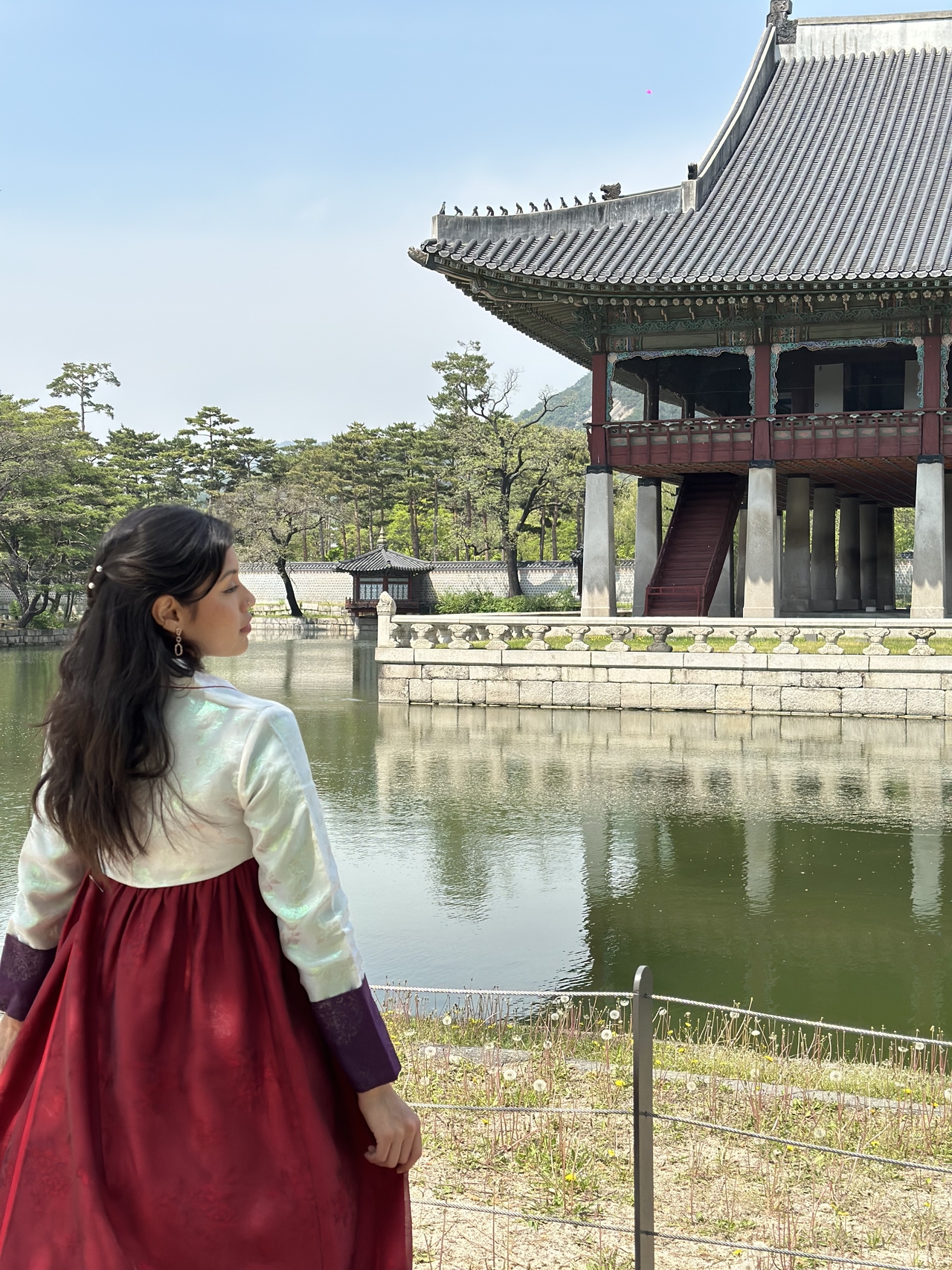
Angela Nario Villanueva, a 29-year-old Italian living in Milan, also formed deep relationships with Koreans despite visiting the country only a few times for vacation, thanks to their warm gestures.
"While I was in Korea, I often found that Koreans were friendly and interested in getting to know me, which made socializing quite easy," she said.
She visited Korea in April 2023, again in October 2023 and most recently in May 2025, staying for about three weeks each time.
"Many of them have even met my family, which shows how close and genuine these relationships are. They are always willing to help and support me, and they are very respectful, which makes these friendships very special to me. I truly value and keep these people close because of their sincerity and kindness," she said.
cjh@heraldcorp.com