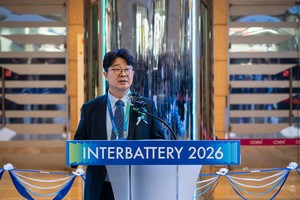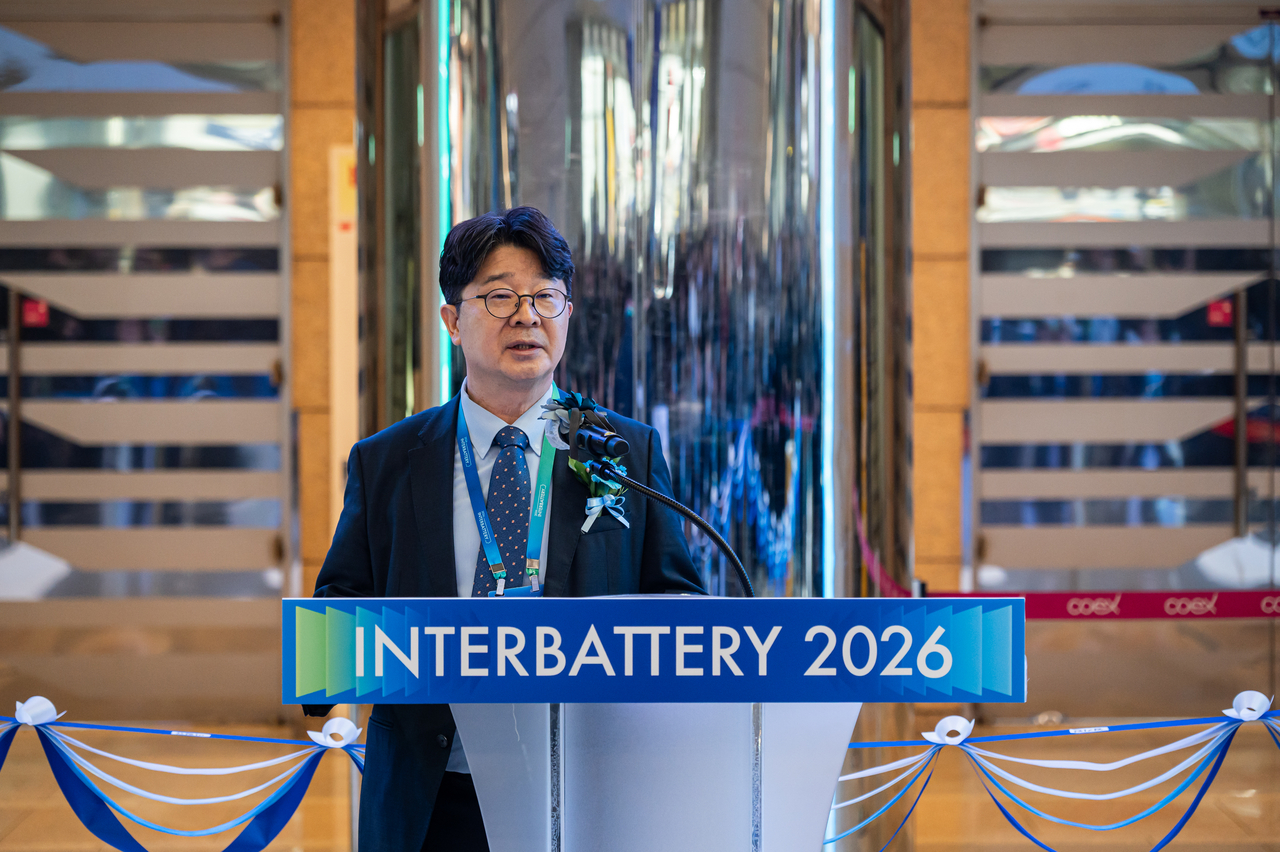
Posco Future M President and CEO Eom Gi-chen said the company plans to begin mass production of cathode materials for lithium iron phosphate (LFP) batteries, aiming to challenge Chinese dominance in the low-cost battery segment.
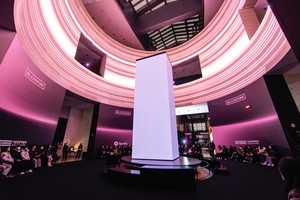
“The three major Korean battery companies — LG Energy Solution, Samsung SDI and SK On — are all planning to release LFP products within this year,” Eom said during a press briefing at InterBattery 2026 in Seoul, which opened Wednesday. Eom was recently appointed chairman of the Korea Battery Industry Association.
As Korean battery makers expand into the LFP segment — currently dominated by Chinese suppliers — Posco Future M plans to convert an existing nickel-based cathode production line to LFP by July or August. After roughly three months of certification, the company expects to begin supplying mass-produced materials to domestic battery makers by the end of the year.
The company also plans to break ground this year on a new LFP cathode plant with an annual capacity of 50,000 tons.
On next-generation all-solid-state batteries, which are gaining attention amid rising demand from AI-driven technologies such as humanoid robots, Eom said the technology could provide an opportunity for Korea’s battery industry to catch up with China.
“The technology could allow Korea’s battery industry to surpass China in the future,” he said.
Eom highlighted Posco Future M’s strategic partnership with US-based all-solid-state battery startup Factorial Energy, in which the company made an equity investment in January.
Factorial Energy is working with major automakers including Mercedes-Benz, Hyundai Motor Group and Stellantis to develop solid-state batteries for electric vehicles.
“According to Factorial’s plan, its solid-state batteries are expected to be installed in supercars produced by one European OEM and one US OEM,” Eom said, adding that Posco Future M’s cathode materials are expected to be used in those battery products.
Facing intensifying competition from Chinese battery manufacturers — many of which benefit from significant government subsidies — Eom called for expanded policy support for Korea’s battery industry.
He noted that Posco Future M received production subsidies last year for its natural graphite business, marking the first such support aimed at stabilizing the graphite supply chain, which is heavily dominated by China.
During a media booth tour, Nam Sang-cheol, head of Posco Future M’s cathode materials research center, said the company is also developing a new LFP cathode manufacturing process designed to produce batteries faster and at lower cost than Chinese rivals.
While acknowledging the current cost advantage of Chinese LFP materials, Nam said Posco Future M’s approach — using internally sourced precursors — could become competitive once development is completed. Commercialization is targeted for 2028.
Beyond electric vehicles, the company is also targeting emerging applications such as drones and humanoid robots. Nam said Factorial Energy is developing batteries for those sectors using Posco Future M’s cathode and anode materials, with commercialization also expected around 2028.
hyejin2@heraldcorp.com