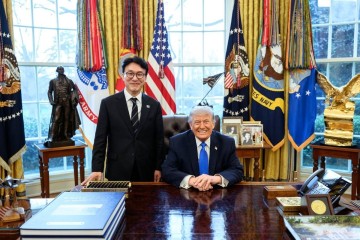
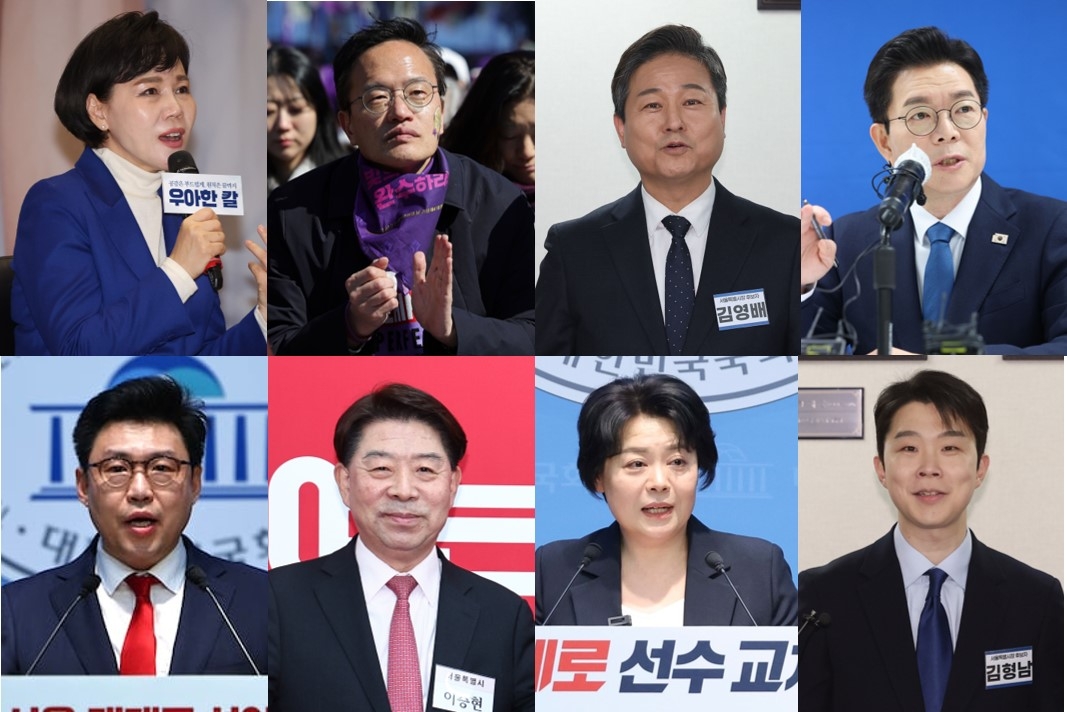
The race for Seoul mayor, the most high-profile of local government posts, remains clouded less than three months before the election. From the ruling bloc, several big names as well as relative unknowns have declared their bids, while the incumbent Seoul mayor and other conservative heavyweights are still weighing their options.
From the ruling Democratic Party, five have made their bids official and will now have to go through primaries to enter the local election on June 3.
One of the hopefuls, Rep. Park Ju-min, has been serving three terms in the Eunpyeong A constituency in northern Seoul since 2016. Park, 52, was previously a human rights lawyer before entering politics. A prominent supporter of the bereaved families of the 2014 Sewol ferry disaster and vocal advocate of liberal agenda items such as prosecutorial reform, Park now chairs the National Assembly's Health and Welfare Committee.
Rep. Kim Young-bae, a two-term lawmaker representing the Seongbuk A electoral district in northern Seoul, is another liberal hopeful. Kim, 59, was formerly the district office chief of Seongbuk-gu in Seoul, and presidential secretary for former liberal President Moon Jae-in, before winning his seat in the 2020 general election.
Another three-term lawmaker, Rep. Jeon Hyun-heui, is the only woman in the group of liberal competitors. Before entering politics in 2004, the 61-year-old was previously a licensed attorney and dentist. Serving her first four years as a lawmaker from 2008 to 2012, Jeon became the first liberal lawmaker in 2016 in 24 years to be elected in a constituency of Seoul's affluent Gangnam-gu district, considered a conservative stronghold. Jeon led the Anticorruption and Civil Rights Commission from 2020 to 2023, and is now representing the Jung-Seongdong A constituency in Seoul after her 2024 win brought her back to the National Assembly.
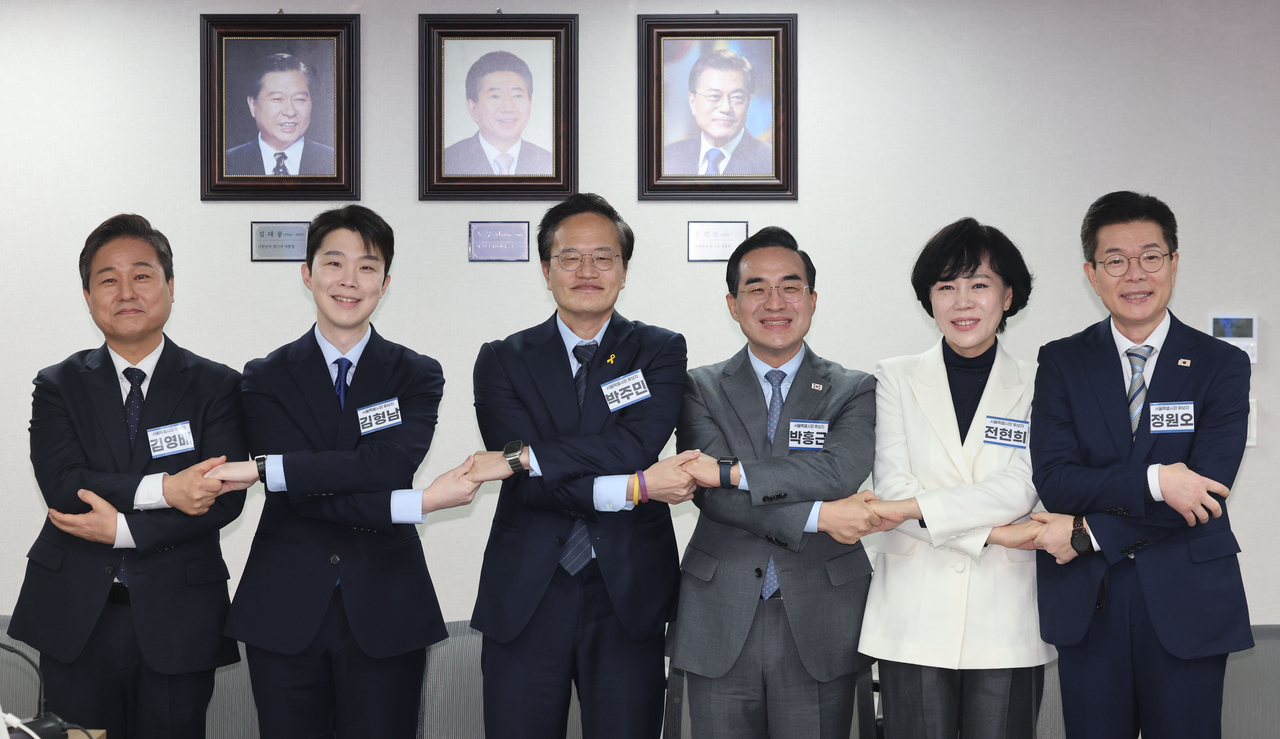
These three, however, appear to be overshadowed by Chong Won-o, despite their time in the National Assembly.
Chong is a former head of Seongdong-gu, a post he held for 12 years until he stepped down earlier this year to run for Seoul mayor. Chong was brought into the spotlight after President Lee Jae Myung's X post in December saying that Chong "must be good at his job." The social media post was widely taken as the president's endorsement.
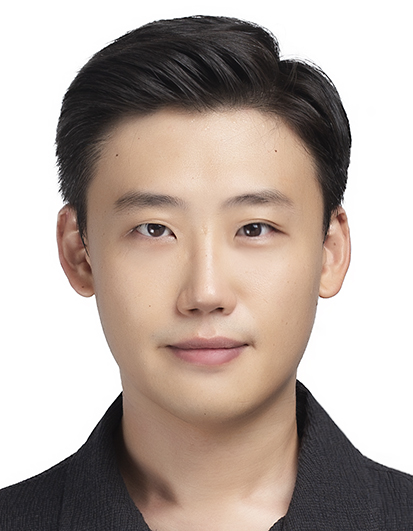
With Kim Hyung-nam, director at the Center for Military Human Rights Korea, thought to be an underdog in the race, the five liberal hopefuls will be narrowed down to three in a vote of dues-paying party members from March 23-24.
The Democratic Party candidate could be finalized if one of the contenders wins a majority of votes from the dues-paying members and public polling combined, open from April 7-9. Otherwise, the party will hold one more round of voting from April 17-19, in which the one who earns the highest number of votes will be selected.
Attention is being paid to the number of debates the party will host. According to the Democratic Party, it was considering up to two debates that would be livestreamed online, a plan the contenders trailing Chong say is insufficient.
Seoul city-backed broadcaster TBS had sought to host a debate among the liberal contenders, but Chong declined to take part, citing his campaign's internal regulations, drawing a backlash from Park, Kim and Jeon on Wednesday.
In contrast, the conservative opposition People Power Party has so far seen no major developments.
Whether incumbent Seoul Mayor Oh Se-hoon will run again remains undecided, and no incumbent lawmakers or other heavyweights have registered to run.
The People Power Party's decision Wednesday to keep the door open only for the registration of two posts -- Seoul mayor and South Chungcheong Province governor, where incumbent conservative figures did not file to participate in the intraparty contest -- is fanning confusion, with Seoul mayor Oh remaining silent as of Wednesday as to whether he will run in the election following his 10 years in office.
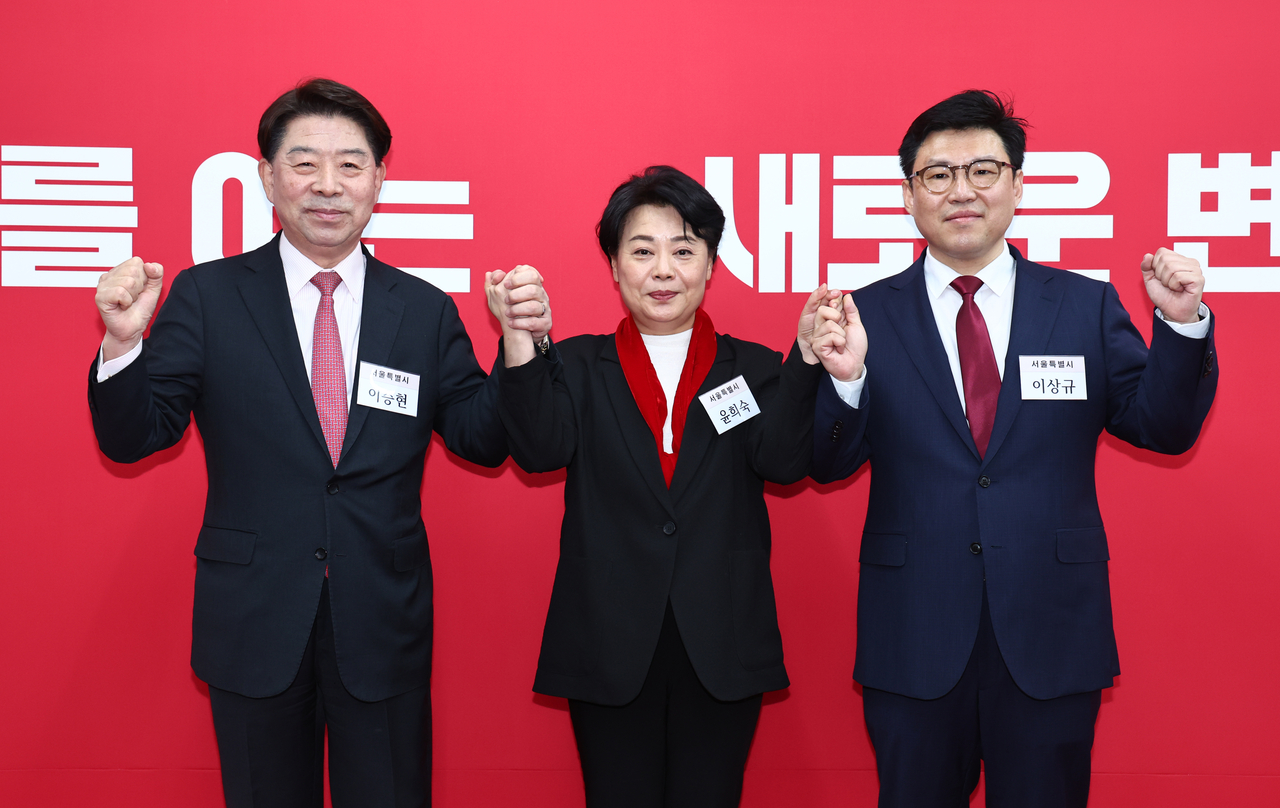
Those who registered to run for Seoul mayor by the People Power Party's deadline Sunday were Yun Hee-suk, former lawmaker; Lee Sang-kyu, professor of business administration at Kyung Hee University; and Lee Seung-hyun, chief executive officer of electronic goods component maker Inpaq Korea.
Lawmakers who were rumored to be interested in the mayoral election, Reps. Na Kyung-won, Ahn Cheol-soo and Shin Dong-uk, announced their intention not to run for the upcoming local election before the deadline.
Oh, who has long called for his party to sever ties with ex-President Yoon Suk Yeol, who was sentenced to life in prison for his short-lived declaration of martial law in 2024, has yet to clarify his stance on his future path, even after the party's 107 lawmakers adopted a resolution opposing Yoon's return to politics.
consnow@heraldcorp.com