Mahama’s attendance at ship-naming ceremony at HD Hyundai’ Ulsan shipyard highlights closer maritime cooperation
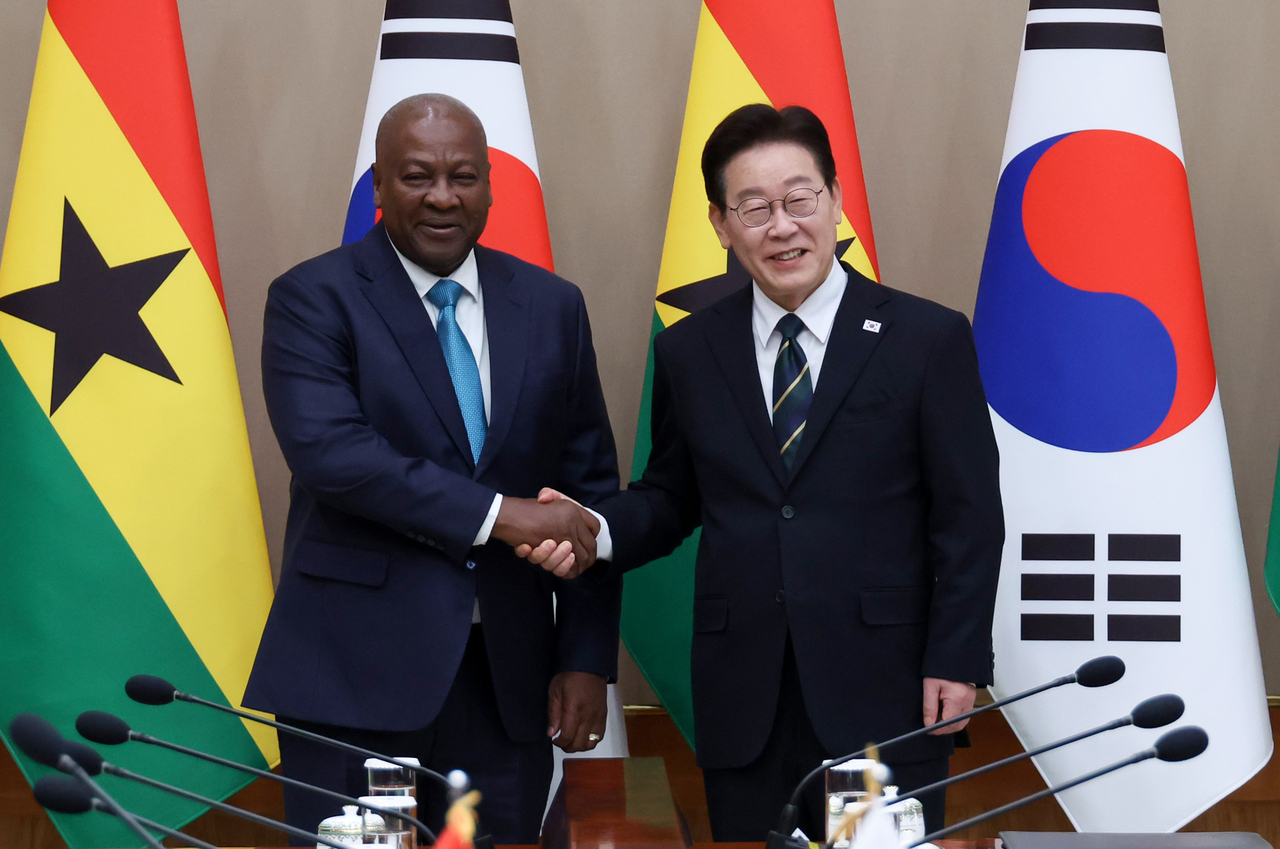
The leaders of South Korea and Ghana met in Seoul to expand cooperation in the areas of the economy, maritime security and climate change, among others.
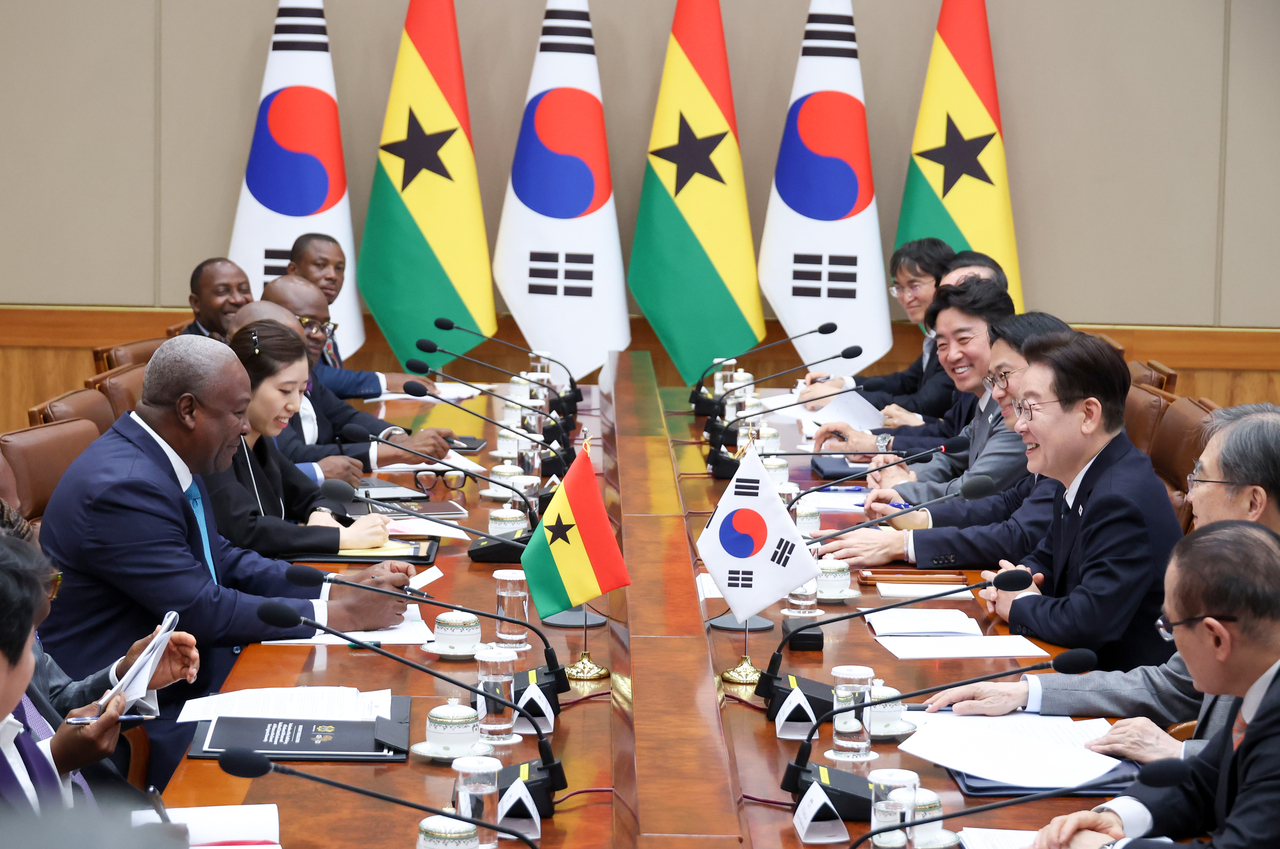
South Korean President Lee Jae Myung and Ghanaian President John Dramani Mahama held a summit at Cheong Wa Dae on Wednesday afternoon during Mahama’s working visit to South Korea.
As the outcome of the summit, the two sides also signed a series of agreements aimed at broadening cooperation in maritime security, climate change and digital innovation.
The Korea Coast Guard and the Ghana Navy notably signed a memorandum of understanding on maritime safety and security cooperation.
The agreement calls for closer collaboration in training, education and seminars to strengthen maritime security capabilities, as well as information-sharing on transnational maritime crimes such as piracy, arms trafficking and drug smuggling. The MOU also includes cooperation in search-and-rescue operations involving distressed vessels, aircraft and personnel.
The agreement is expected to “enhance stability in the Gulf of Guinea by strengthening the Ghana Navy’s maritime security capabilities and improving conditions for preventing accidents involving South Korean nationals and vessels and for crisis response,” according to Cheong Wa Dae.
The Gulf of Guinea has long been one of the world’s most piracy-prone regions, making maritime security a matter of direct concern for Seoul, as South Korean merchant ships, deep-sea fishing vessels and energy carriers operate in the area.
In 2018, after three South Korean nationals were kidnapped by armed pirates in waters near Ghana, Seoul dispatched the Cheonghae Unit from the Gulf of Aden in an emergency response. South Korea had already signaled defense cooperation with Ghana in 2010 by transferring a decommissioned Chamsuri-class patrol boat.
Seoul and Accra also concluded a framework agreement on climate change cooperation, laying out a broad structure for collaboration that includes joint climate initiatives, the promotion of key cooperative activities, the use of carbon reduction outcomes under Article 6 of the Paris Agreement, scientific and technological cooperation, and the establishment of a joint committee to oversee implementation.
Cheong Wa Dae said the agreement “provides a legal foundation to strengthen bilateral cooperation on climate change and contribute to the achievement of both countries’ nationally determined contributions (NDCs).”
Article 6.2 of the Paris Agreement allows countries to cooperate on emissions reductions by transferring carbon reduction outcomes — known as Internationally Transferred Mitigation Outcomes, or ITMOs — between parties.
In addition, the two governments signed an MOU on technology, digital and innovation development cooperation, aimed at strengthening cooperation in future-oriented sectors such as AI and digital technology.
The symbolism of maritime cooperation was also reflected in the gifts prepared for the Ghanaian leader during his working visit to South Korea running from Tuesday to Saturday.
Among the gifts was a traditional Korean folding screen depicting “Sugun Joryeondo,” a folk painting that portrays warships arranged in formation during a naval drill during the era of Joseon dynasty.
“The gift reflects the symbolism of his visit to attend the ship-naming ceremony, while also highlighting the two countries’ commitment to maritime security cooperation and President Mahama’s interest in history,” Cheong Wa Dae said.
During his visit to South Korea, Mahama is scheduled to visit HD Hyundai Heavy Industries’ Ulsan shipyard to attend the naming ceremony of a vessel, according to Ghana’s presidential office. The vessel is believed to be intended for transporting liquefied petroleum gas supplies to Ghana.
Mahama was also presented with a Galaxy S26 Ultra smartphone, which Cheong Wa Dae described as “a smartphone released in February that serves as a symbolic gift demonstrating our country’s technological level and industrial competitiveness, while also being a practical gift that can be used immediately.”
“It also encapsulates a message that, while promoting our national image and brand, Korea will be a partner in the goals President Mahama is pursuing to foster manufacturing and advance industrial development,” Cheong Wa Dae said.
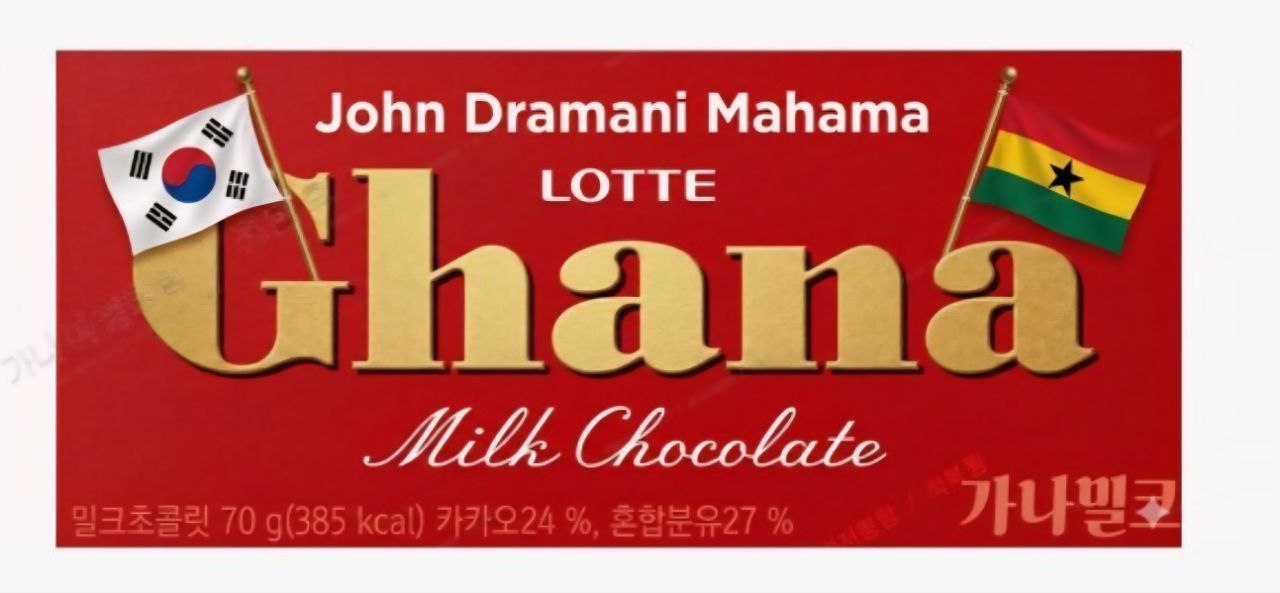
Adding a lighter cultural touch, the presidential office in Seoul also chose Lotte’s well-known "Ghana Chocolate" as part of the welcome gifts. The product is widely familiar in Korea and uses cocoa beans sourced largely from Ghana, with more than 80 percent of its cocoa originating from the country.
Specially produced chocolates marked with the national flags of South Korea and Ghana, along with the name of the Ghanaian president were placed at the Ghanaian leader’s accommodation, according to Cheong Wa Dae.
dagyumji@heraldcorp.com