South Korea’s two leading battery makers — LG Energy Solution and Samsung SDI — highlighted their patent strength at InterBattery 2026, signaling an intensifying race to secure next-generation battery technologies for emerging sectors such as energy storage systems and robotics.
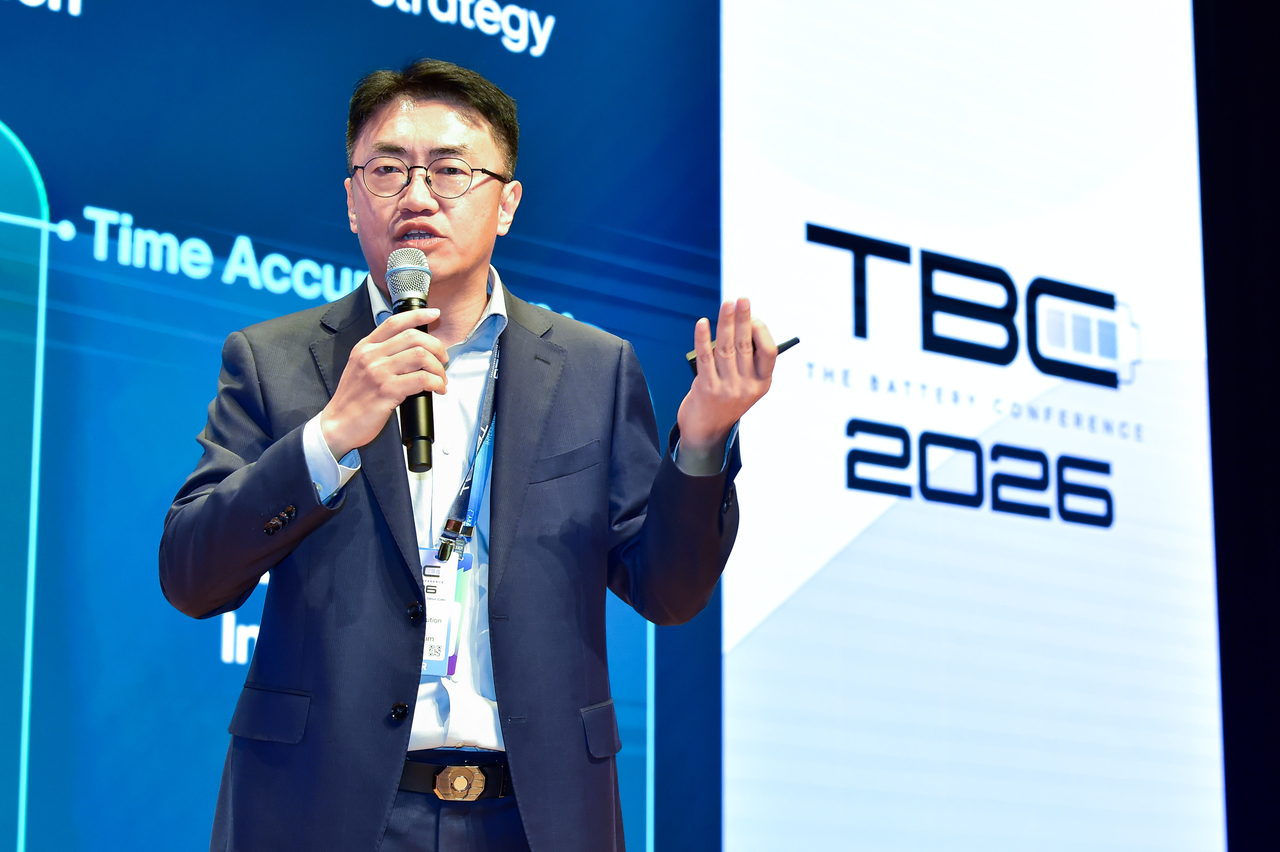
Speaking at The Battery Conference, a side event of the industry exhibition held at Coex in Seoul on Wednesday, Joo Yong-lak, head of Samsung SDI’s R&D center, warned that the company would take action against patent infringement or technology theft involving its prismatic battery cells — a message widely interpreted as directed at competitors.
Joo said prismatic cell technology has high entry barriers, requiring extensive expertise across materials, components, design, manufacturing and production processes, making it difficult for latecomers to replicate quickly.
Citing US patent data, he said Samsung SDI holds about 1,200 registered patents related to prismatic batteries, far ahead of Chinese and Japanese rivals with roughly 600 each. Domestic competitors such as LG Energy Solution and SK On hold around 30 to 40 patents in the category.
Samsung SDI filed its first US patent for prismatic batteries in 1997 and has since expanded the technology across applications, including electric vehicles and energy storage systems.
Concerns over technology leaks have also grown. Last year, KMTECH, a battery equipment supplier based in Gyeonggi Province, was accused of stealing Samsung SDI’s prismatic can and cap assembly designs and sharing them with China’s AESC, according to industry sources.
At the exhibition, Samsung SDI also introduced “PrismStack,” a new brand name for its prismatic battery lineup. The move is widely seen as part of its strategy to reinforce its leadership in the segment.
Prismatic batteries feature a metal-cased structure with electrodes layered inside the cell, maximizing space utilization and improving energy density.
The company also unveiled “SolidStack,” its prismatic all-solid-state battery platform, which it aims to mass-produce next year.
Joo said Samsung SDI holds around 1,100 patents related to all-solid-state battery technology, giving it a significant advantage over rivals.
LG Energy Solution also stressed the importance of intellectual property protection.
Kim Je-young, chief technology officer at LG Energy Solution, said some companies spend decades developing technologies. Others attempt to replicate them within a few years by copying designs or recruiting talent.
“Latecomers should pay their dues and use technology legitimately,” Kim said.
While he did not name specific companies, BMS Innovations, LG Energy Solution’s patent management unit, recently filed a lawsuit at the European Unified Patent Court in The Hague, accusing Chinese electric vehicle maker BYD of infringing its battery management technology.
Kim also highlighted Tulip Innovation, a joint patent licensing company established by LG Energy Solution and Panasonic, which allows other firms to access their battery technologies legally through royalty payments.
He said LG Energy Solution maintains strong patent leadership across the entire battery value chain, including materials, cells, battery packs and battery management systems.
According to the company, LG holds three times as many patents as competitors in 46-series cylindrical batteries, more than twice as many patents in high-voltage mid-nickel gas-free electrolytes, and four times as many patents in dry electrode technology.
hyejin2@heraldcorp.com