Affluent investors add semiconductor and AI-linked stocks while keeping bonds and cash as buffers against volatility
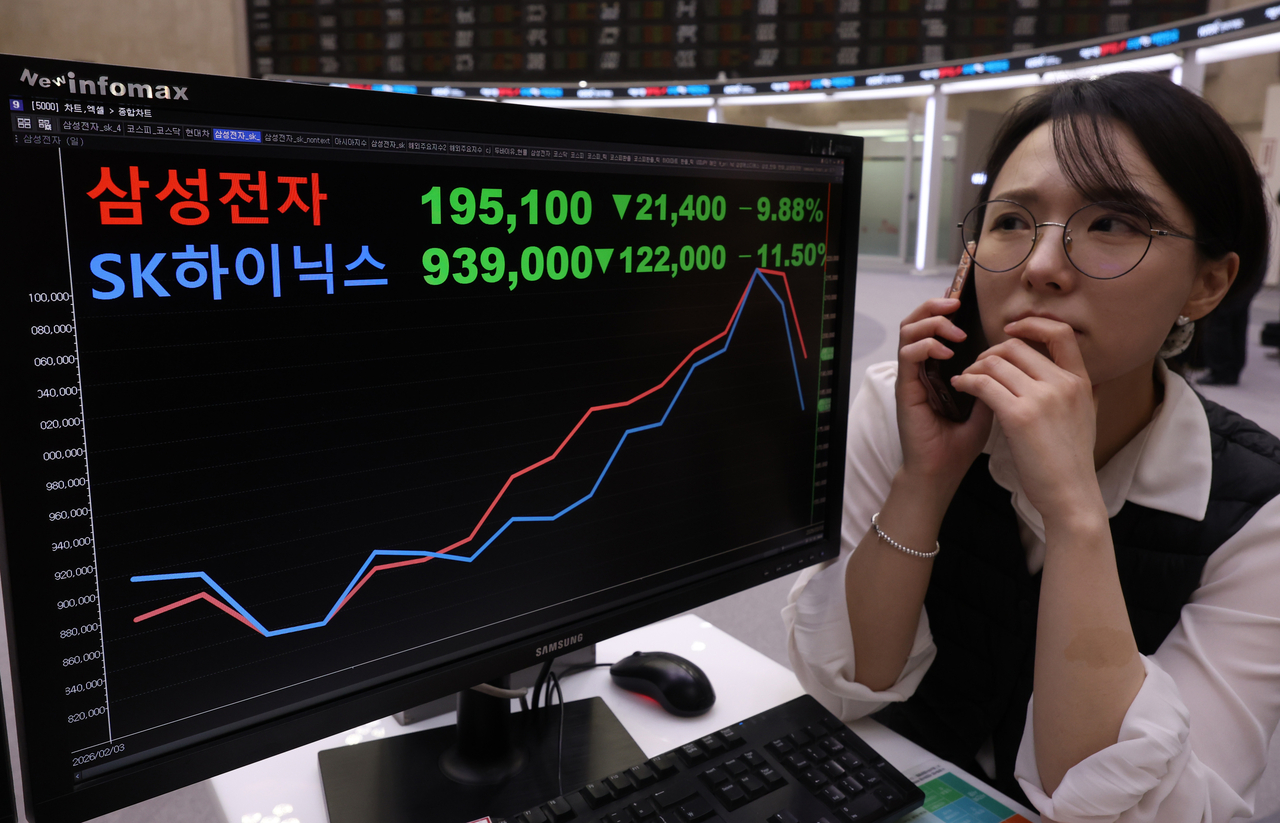
Recent weeks have shown once again how quickly geopolitical shocks can ripple through global markets.
Tensions in the Middle East pushed oil prices sharply higher and rattled global equities. South Korea’s benchmark Kospi was no exception, suffering a steep pullback that dampened investor sentiment. Although the market has since staged a partial rebound, it has yet to fully regain previous levels.
But periods of market turbulence often reveal a clearer picture of investor behavior — especially among high-net-worth individuals.
Rather than rushing to exit positions during the selloff, many wealthy investors have been looking for opportunities.
Private bankers who work closely with affluent clients say the prevailing mood is less about fear and more about identifying entry points. Instead of liquidating assets, many investors are holding existing positions or even adding selectively to certain stocks.
A recurring question: Should I buy Samsung Electronics?
One notable shift in recent months has been the growing willingness among investors to take on risk assets.
Where conversations once focused on uncertainty around interest rates and economic growth, investors are now asking a different set of questions: Which stocks should be accumulated during corrections? Is it time to buy Samsung Electronics?
At the center of this renewed interest is the semiconductor sector.
Expectations of a recovery in the chip cycle — led by Samsung Electronics and SK hynix — are strengthening as global investment in artificial intelligence infrastructure accelerates. Major tech companies continue expanding data centers, driving demand for high-performance memory and improving earnings outlooks for Korean chipmakers.
Beyond semiconductors, investors are also paying closer attention to sectors such as autos, defense and shipbuilding.
Hyundai Motor’s push into AI-driven robotics has sparked renewed interest in the broader mobility sector, while defense and shipbuilding companies are benefiting from rising global orders and government support for strategic industries. Financial stocks are also drawing attention as expectations grow for stronger shareholder returns and corporate governance reforms.
Diversification remains key
Despite the renewed appetite for equities, affluent investors are not abandoning caution.
Instead, they tend to maintain a balanced portfolio structure.
Stocks typically account for around 40 to 60 percent of portfolios, often anchored by large semiconductor companies. Exposure is then diversified across sectors such as finance, defense, robotics and aerospace.
Bonds, usually making up 20 to 30 percent, are increasingly viewed not simply as safe assets but as strategic tools to manage interest-rate volatility.
Gold and other alternative assets often represent about 5 to 10 percent, serving as an inflation hedge, while cash holdings of 15 to 20 percent are kept as dry powder to seize opportunities during market corrections.
Lessons for individual investors
The key difference between wealthy investors and retail traders often lies not in stock selection but in portfolio structure.
High-net-worth investors can increase equity exposure while still maintaining downside protection through bonds, alternatives and cash reserves.
Retail investors, by contrast, often concentrate heavily on a small number of themes or stocks during rallies.
For individuals, financial advisers suggest three basic principles: define a target return and acceptable loss level, diversify across asset classes and periodically rebalance the portfolio.
Ultimately, successful investing is less about predicting market direction than about building a portfolio resilient enough to withstand volatility.
When markets shake, discipline — not emotion — tends to determine long-term outcomes.
Reporting for this article was based on discussions with Herald Business reporter Hong Tae-wha and Jeon Hyo-jin, research chief at Hanwha Investment & Securities. Edited by Lee Ji-yoon, business desk editor at The Korea Herald. — Ed.
The original Korean version of this story is available at:
![“삼성전자, 더 살까요?” 중동 사태에도 부자는 기회 엿본다 [큰손 따라잡기]](https://wimg.heraldcorp.com/news/cms/2026/03/09/rcv.YNA.20260303.PYH2026030301160001300_T1.jpg)
jylee@heraldcorp.com