-
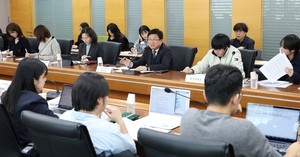
Private universities rush to hike tuition, drawing student backlash
Tensions between private universities and student groups are escalating after several institutions announced tuition hikes last week, following the government’s December decision to relax tuition regulations. Sogang University and Kookmin University said Saturday that they had decided to raise tuition by 2.5 percent and 2.8 percent, respectively, for the 2026 academic year. “We proposed a 2.5 percent increase to students, who accepted it on the condition that the funds be used to improve educati
Jan. 19, 2026 -
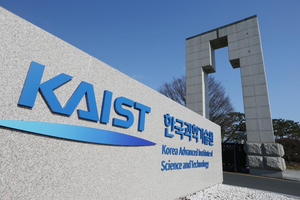
KAIST to host global AI philosophy symposium
The Korea Advanced Institute of Science and Technology said Monday it will host an international symposium Wednesday to celebrate the launch of a new research center for artificial intelligence and philosophy. The new research center will integrate philosophy and AI technology to diagnose problems facing humanity and propose a viable future vision and response strategy, KAIST said. The symposium is set to bring together experts to reflect on human values such as autonomy, freedom and dignity, as
Jan. 19, 2026 -
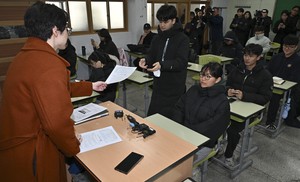
Are Korean students rethinking Seoul, STEM and medicine?
For more than two decades, getting accepted at top universities in Seoul, preferably in a STEM — science, technology, engineering and mathematics — or medical field, meant academic success for South Korean students and parents. But recent analyses of high school seniors who took the 2025 College Scholastic Ability Test, or Suneung, suggest a possible shift away from medicine and STEM fields, as well as universities in Seoul. On Jan. 4, Jongno Hagwon, a major college entrance preparatory academy,
Jan. 18, 2026 -
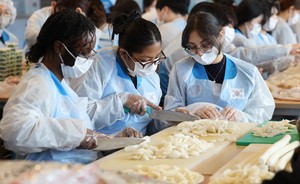
Korea’s foreign student push runs into visa wall
More than 1 in 10 student visa holders in South Korea were in the country illegally in 2024, according to a new study, raising concerns over whether the government’s drive to attract foreign students is translating into stable, long-term stays. The study said an unrealistic visa system played a key role in the number of students who overstayed or remained after their visas were canceled. A study published in the Korea Journal of International Migration found that 34,267 of Korea's 263,775 intern
Jan. 15, 2026 -
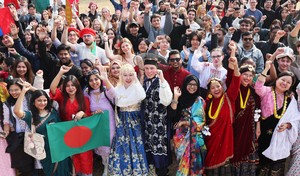
Korea opens state scholarships exclusively for refugees
The Ministry of Education on Thursday signed a memorandum of understanding with the United Nations High Commissioner for Refugees and the Ministry of Justice to establish a new selection process for state-funded scholarships exclusively for refugees. Under the agreement, the Education Ministry will create a new track under the Global Korea Scholarship program that will allow five students recommended by the UN's refugee agency to study in Korea each year. Applications will be reviewed by the stu
Jan. 15, 2026 -
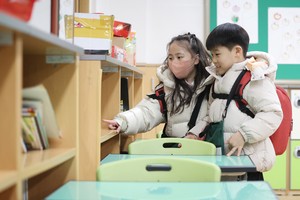
No. of 1st graders down 15 percent in two years, dropping below 300,000
The number of first graders in South Korea is set to fall more than 15 percent in just two years, dropping below 300,000 for the first time as the country’s population decline accelerates. According to a report released Tuesday by the Ministry of Education, elementary schools nationwide are expected to enroll 298,178 new students in March, when the academic year begins. That represents a 15.5 percent decline from 353,000 in 2024. The estimate was compiled using data from the Korea Educational De
Jan. 13, 2026 -

Korean researchers find way to remove nanoplastics from water in 10 minutes
Pusan National University said on Monday its researchers have developed a water-treatment method that removes microscopic plastic pollution in minutes by drawing the particles together with a magnetic field, offering a potential route to cleaner drinking water and wastewater systems. The team said its process eliminated more than 95 percent of micro- and nanoplastics within 10 minutes by using plate-shaped iron-oxide magnetic nanoparticles. The approach targets plastic fragments too small to be
Jan. 12, 2026 -
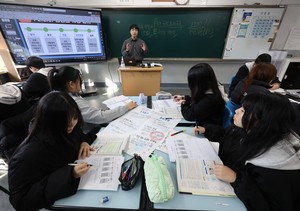
Nearly all Seoul students use generative AI as teachers warn of overreliance
Nearly 95 percent of middle and high school students in Seoul have experience using generative AI tools, a study revealed Sunday, and more than 90 percent of teachers have expressed concerns about students’ growing reliance on such technology. According to the July 2025 study by the Seoul Education Research and Information Institute, 94.7 percent of the 26,541 students surveyed had used generative AI, including OpenAI’s ChatGPT and Google’s Gemini. Specifically, 93.8 percent of middle school stu
Jan. 11, 2026 -
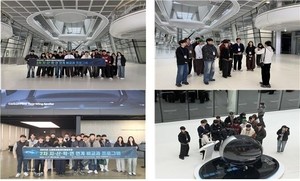
Kongju National University sees high satisfaction for industry-linked mobility course
Kongju National University said Thursday that participants reported high satisfaction with its extracurricular mobility engineering course, signaling a smooth start to its five-year industry-academia-research cooperation project. According to the university, 85 percent of participants said they would take part in a similar program again, indicating a high overall level of satisfaction. The course combined on-site field trips, special lectures by industry specialists, mentoring sessions, and idea
Jan. 8, 2026 -
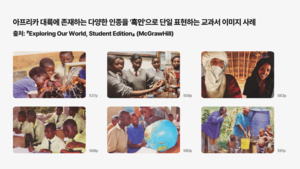
Korean civic group takes on Africa stereotypes in global textbooks
The Voluntary Agency Network of Korea, a South Korean internet-based civic group, said Wednesday that it is launching a campaign to correct what it describes as “stereotypical depictions of Africa” in international textbooks. The group said it investigated seven history and geography textbooks used in international schools worldwide, identifying what it characterized as negative portrayals of the African continent and urging publishers to revise them. The textbooks reviewed included titles from
Jan. 7, 2026 -
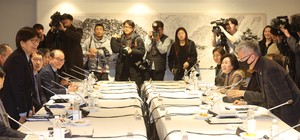
Korea revises doctor shortage estimate before quota decision
A government committee revising South Korea’s long-term doctor shortage estimates has again adjusted its figures just weeks before a politically sensitive decision on medical school enrollment, renewing criticism that the process is being rushed. The Ministry of Health and Welfare’s Physician Workforce Projection Committee said Tuesday that South Korea was expected to face a shortage of between 5,015 and 11,136 doctors by 2040, lowering the bottom end of its previous estimate by nearly 700. The
Jan. 7, 2026 -
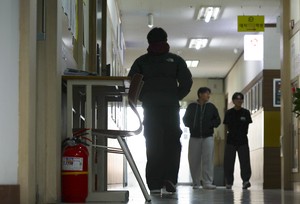
Half of students sleep under 6 hours a night: study
Nearly half of South Korean high school students are sleeping less than six hours a night, and almost 1 in 3 has contemplated suicide, according to a new government-backed study that points to relentless academic pressure as a central aggravating factor. According to a report released Wednesday by the National Youth Policy Institute, 46.7 percent of students attending regular high schools said they slept fewer than six hours per day in 2024, while 30.5 percent said they had thought about suicide
Jan. 7, 2026 -
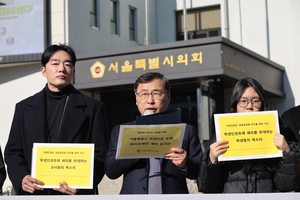
Student rights and teachers' authority at odds
Seoul’s education chief has moved to block the abolition of the city’s student human rights ordinance, setting up another round in a long-running legal and political fight over how schools should balance protecting students’ and teachers' rights. Jung Geun-sik, superintendent of education for Seoul, said Monday that he has formally requested the Seoul Metropolitan Council to reconsider its decision to repeal the Seoul Student Human Rights Ordinance, warning that the move violates the Constitutio
Jan. 6, 2026 -
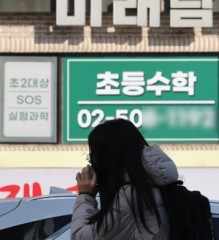
Elementary students fuel spike in private education spending
South Korea’s private education market has surged over the past decade, driven primarily by rising spending among households with elementary school students, government data show. According to data released by the Korean Statistical Information Service, total private education spending reached 29.2 trillion won ($20 billion) in 2024, up more than 60 percent from 18.2 trillion won in 2014, despite the student population declining by 18 percent over the same period. Elementary school households re
Jan. 5, 2026 -
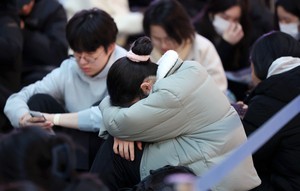
10 state-run universities reject 162 applicants over school bullying records
A total of 162 applicants with school bullying records were rejected by 10 of South Korea’s leading state-run universities during early admissions this year, data released by a ruling party lawmaker’s office showed. Citing figures from Democratic Party Rep. Jin Sun-mee, media reported Friday that about 90 percent of the 180 applicants with documented bullying records failed to gain admission to the public universities under the Presidential Council of the Korean Flagship National Universities. S
Jan. 2, 2026