-
Gender discrimination still most common health risk for Korea's young women
A government-run research institute has found that gender discrimination remains the most common social risk factor for health among young women, who also reported significantly higher levels of exposure than men to several other risk factors. The findings were released in February by the Korea Institute for Health and Social Affairs, which surveyed 1,000 people aged 19 to 34 nationwide between May 21 and June 11, including 520 men and 480 women. The study examined 11 social factors linked to po
March 2, 2026 -
Plan to reduce hospital refusals draws mixed response
The health care sector largely welcomed government plans to change the current emergency transfer system for ambulances, though doctors remained skeptical, saying more must be done to address shortages and legal issues. The Ministry of Health and Welfare announced Wednesday that it will launch a three-month pilot program in March across the Jeolla provinces and Gwangju, allowing ambulances to take emergency patients directly to designated hospitals according to the severity of their condition. T
Feb. 26, 2026 -
98-minute hospital search in Greater Seoul exposes shortage of maternity care
A mother safely gave birth to twins after emergency rescuers searched dozens of hospitals in Bucheon, Gyeonggi Province, as multiple facilities declined admission due to the absence of on-duty childbirth specialists. The story spread online after the parents posted a message of gratitude on the website of the Gyeonggi-do Fire Services earlier this month. While many commenters praised the dedication of the emergency workers, the incident has renewed concerns over South Korea’s strained childbirth
Feb. 20, 2026 -
S. Korea to add 3,342 medical school seats outside Seoul by 2031
The government said Tuesday it will add 3,342 medical school seats over five years from 2027 to 2031, as part of efforts to ease doctor shortages outside the Seoul metropolitan area. According to the Ministry of Health and Welfare, medical school quotas at universities outside Seoul will be expanded gradually, rising from 490 additional seats in the 2027 academic year to 613 in 2028 and 2029, before increasing to 813 in both 2030 and 2031. The incremental expansion is intended to limit pressure
Feb. 10, 2026 -
Study shows teen smoking rate spikes in high school
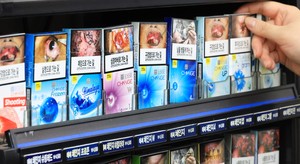
The number of Korean adolescents who have tried smoking rises steeply as they move through school, a government study indicates, with a sharp jump between middle school and high school. The cohort study tracks 5,051 students who were in sixth grade — the last year of elementary school — when the study began in 2019, with the latest data collected between March and October 2025. According to the agency on Thursday, its panel survey found that the proportion who had smoked among the cohort, now ag
Jan. 29, 2026 -
Weight-loss shots pile up in Seoul while high-risk regions go without
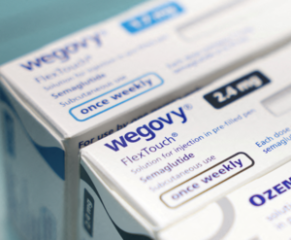
About two out of three glucagon-like peptide-1, or GLP-1, obesity treatment drugs supplied in Korea are distributed in the greater Seoul region, highlighting a supply imbalance that exceeds population concentration and raises concerns over access in other regions. According to data submitted by the Ministry of Health and Welfare on Wednesday, a total of 914,000 units of Wegovy and Mounjaro were supplied nationwide in November 2025. Of these, 601,000 units, or about 65.8 percent, were distributed
Jan. 21, 2026 -
Term limits debate slows abortion's path out of legal limbo
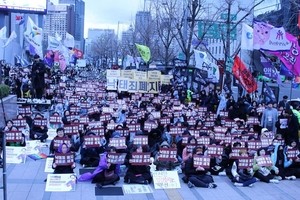
Debate is intensifying over abortion limits in South Korea, as lawmakers move to address a legal vacuum that has persisted since the Constitutional Court struck down the country’s abortion crime provision. Although the court ruled that a blanket criminal ban was unconstitutional, the National Assembly has yet to pass follow-up legislation, leaving the practice decriminalized but largely unregulated for nearly seven years. Critics say this prolonged uncertainty has left couples and patients witho
Jan. 20, 2026 -

Dubai chewy cookie craze raises health concerns, experts warn
A dessert known as the "Dubai chewy cookie," or locally as "dujjonku," has surged in popularity across South Korea, appearing not only in trendy cafes but even on menus at traditional Korean restaurants. But medical experts are cautioning consumers about potential health risks related to nutritional imbalance and excessive calorie intake. While the rich, chewy cookie has become a viral indulgence, the dessert is a highly concentrated combination of simple sugars and saturated fats — a nutritiona
Jan. 17, 2026 -
Court again rejects Korean insurer’s claim against tobacco firms
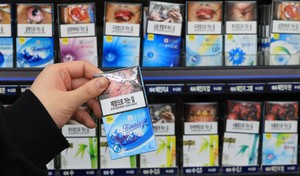
South Korea’s National Health Insurance Service suffered a second defeat in its long-running legal battle against cigarette-makers on Thursday, as an appellate court rejected its claim seeking compensation for smoking-related medical costs. The Seoul High Court dismissed the insurer’s lawsuit seeking 53.3 billion won ($36.2 million) from the country’s three major tobacco companies — KT&G, Philip Morris Korea and British American Tobacco Korea — upholding a lower court's ruling issued in 2020. Th
Jan. 15, 2026 -

Apples surpass soft drinks as top sugar source for Koreans
Apples have emerged as the single largest source of sugar intake among South Koreans, surpassing carbonated beverages, according to data released earlier this month by the Korea Disease Control and Prevention Agency. The agency found that Koreans consume an average of 3.93 grams of sugar per day from apples, accounting for 6.9 percent of total daily sugar intake. Sugar intake from carbonated beverages averaged 3.55 grams, or 6.2 percent, followed by milk at 3.4 grams, or 5.9 percent. The finding
Jan. 15, 2026 -
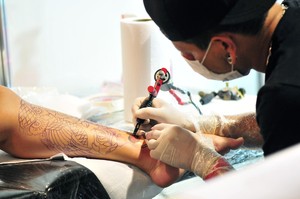
Korea to start state tattooist exam in 2027
South Korea will introduce its first state-administered examination for tattooists next year, providing a legal pathway for non-medical tattoo practitioners. The certification system is intended to standardize hygiene and safety practices and bring an end to decades of legal uncertainty and enforcement actions faced by tattooists operating without formal recognition. According to the Ministry of Health and Welfare on Wednesday, the government will begin issuing certifications to those who pass t
Jan. 14, 2026 -
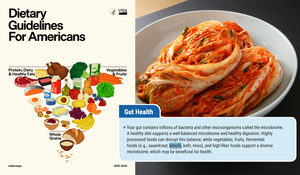
US dietary guideline recommends kimchi for 1st time, as 'real food' is emphasized
Kimchi has been included in the United States government’s official dietary guidance for the first time as part of a broader push to encourage Americans to move away from ultra-processed foods and return to what officials describe as “real food.” The 2025-2030 Dietary Guidelines for Americans, released Wednesday by the Trump administration under the "Make America Healthy Again" initiative, recommend fermented foods such as kimchi and miso for their potential benefits to gut health. The guideline
Jan. 9, 2026 -
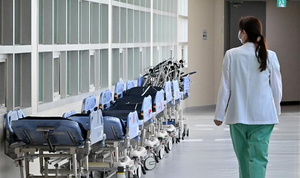
1 in 5 Korean adults has multiple chronic diseases: KDCA
One in five South Korean adults has at least two chronic diseases among diabetes, high blood pressure and high cholesterol, according to a study released Thursday by the Korea Disease Control and Prevention Agency. The proportion of adults with at least two chronic conditions nearly doubled over the past 12 years, rising from 11.5 percent in 2013 to 19.7 percent in 2025. About 10 percent of adults had all three conditions. Meanwhile, 26.4 percent of adults had one chronic disease, based on the r
Jan. 8, 2026 -
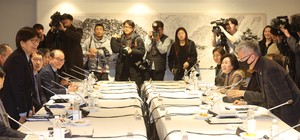
Korea revises doctor shortage estimate before quota decision
A government committee revising South Korea’s long-term doctor shortage estimates has again adjusted its figures just weeks before a politically sensitive decision on medical school enrollment, renewing criticism that the process is being rushed. The Ministry of Health and Welfare’s Physician Workforce Projection Committee said Tuesday that South Korea was expected to face a shortage of between 5,015 and 11,136 doctors by 2040, lowering the bottom end of its previous estimate by nearly 700. The
Jan. 7, 2026 -
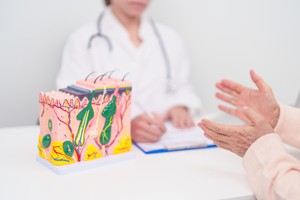
Facelifts and facials help Korean doctors go global
South Korean medical professionals are expanding overseas rapidly, led by dermatology and plastic surgery, government data showed Tuesday. Overseas ventures have increased by an average of 20.7 percent annually over the past nine years. According to the Korea Health Industry Development Institute, a total of 249 cases of overseas medical expansion were reported between 2016 and 2024, following the implementation of the Medical Overseas Expansion Act. Under the law, operators of medical instituti
Jan. 6, 2026