Period drama has turned chapter of medieval history into popular phenomenon. Its politics are stubbornly present
In 1984, a Korean television drama called "Apricot in the Snow" aired what can only be described as a creative betrayal of the historical record.
Its subject was an incident known to Koreans as Gyeyujeongnan, or the Purge of the Gyeyu Year — a 1453 coup in which Grand Prince Suyang seized control of the court, deposed his twelve-year-old nephew Danjong, banished him to a remote mountain village, and eventually had him killed.
In the TV drama's telling, Suyang was a hero born out of circumstance. His victims, the loyalists who died defending the boy king, were cast as self-serving opportunists. In one scene, a frail and spineless Danjong hands the royal seal to his uncle, who accepts it with obvious reluctance, as if burdened by duty.
This was not a product of creative license, but of political coercion. Korea was then under the authoritarian grip of Chun Doo-hwan, a military strongman who had seized power through a coup in 1979, an event whose parallels with the drama's subject matter were hard to miss.
The purpose of the revision was to rehabilitate the usurper, because the man in power was exactly that. History has always been written by those who hold power; in this case, they also controlled what the scripts were permitted to say.
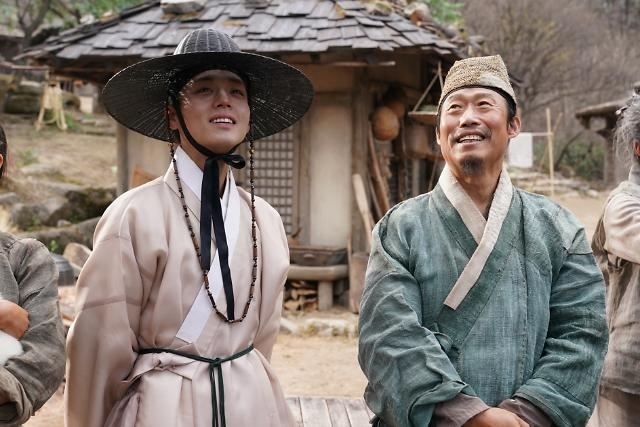
Forty years on, with "The King's Warden" crossing 12 million tickets sold domestically and becoming a cultural phenomenon in the process, the inversion is more or less complete. For all its crowd-pleasing instincts and comic warmth, the film is, at its core, political in nature: a story about illegitimate power and the people crushed beneath it, told through the eyes of those whom history barely bothered to record.
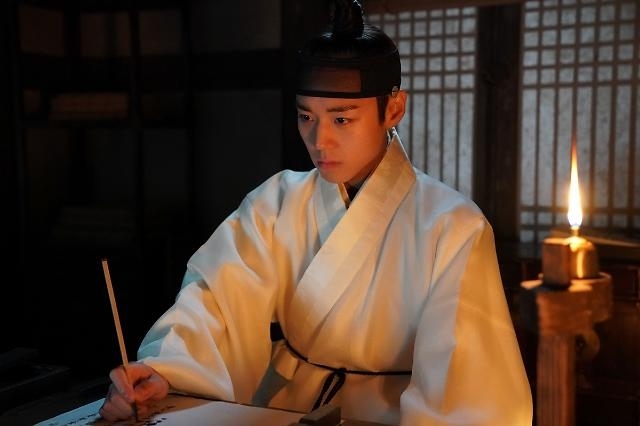
Though Sejo appears nowhere onscreen, his enforcer, kingmaker Han Myeong-hoe (Yoo Ji-tae), operates as the film's looming villain, dispensing threats and surveillance from a remove. At the center of the tragedy is Danjong (Park Ji-hoon), stripped of his title, confined to a natural prison encircled by a river on three sides. Restoring the deposed king to courage and dignity is village chief Um Heung-do (Yoo Hae-jin), who was assigned to watch over him and ends up, against every calculation of self-interest, taking his side.
The historical record offers little to work with. There is no evidence of any meaningful contact between Danjong and the local population; the society's rigid caste system alone would have made it unthinkable anyhow. Director Jang Hang-jun took a few lines from the chronicles and built a story around them, filling in, as he put it at a press event, "all those gaps between the words."
Those gaps are precisely where the film's politics operate, and where they hit hardest. What "The King's Warden" understands, more shrewdly than it lets on, is that the political instincts of Korean viewers do not run toward rarefied principles of loyalty and legitimacy. They run toward injustice made personal and immediate, by way of the powerless boy king robbed of his rights by older men, and the ordinary people who find themselves on his side.
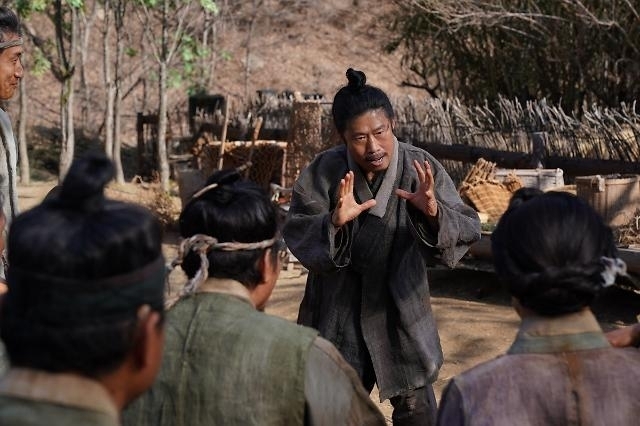
The townspeople and deposed king are made to mirror each other, both marginal and subject to the whims of whoever holds authority. When Danjong finally accepts the meal the villagers have prepared for him, ending a long refusal born of heartbreak, the film's real drama begins. From there, a king becomes a trusted friend to the village chief, a beloved teacher to the town's children, a figure the whole community rallies around. A chapter from the history books becomes a deeply human one.
Jang has said that the success of "12.12: The Day" (2023) — Kim Sung-su's dramatization of Chun Doo-hwan's 1979 coup — shaped his sense of what audiences were hungry for. That film sold over 13 million tickets on the strength of a very similar appeal: the spectacle of injustice in progress, rendered visceral and immediate through the sacrifice of a hero at the center, with the audience already knowing he loses.
"The King's Warden" earns its own version of that same urgency.
The question at the heart of Sejo's rise to power — whether a coup is legitimized by its success — carries much weight in a country with a living memory of military dictatorships, and where, as recently as late 2024, a sitting president attempted to declare martial law to punish his political opponents. Five centuries collapse surprisingly fast when the rhyme is close enough.
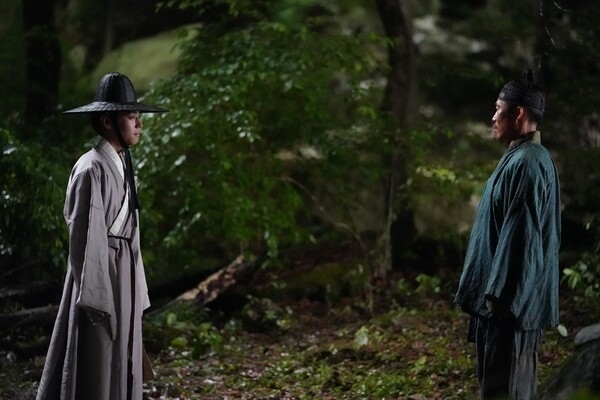
As it happens, that is more or less the proven formula of Korean period drama — a formula refined over two decades into a reliable machine.
The genre's landmark works have tended to place their outsider figures at the center and let the collision with power do the unraveling. Lee Joon-ik's "The King and the Clown" (2005) staged a Shakespearean tragedy built around lowly street clowns exposing the corruption and insecurity of royal power, with a deftly handled streak of LGBTQ coding woven through. "Masquerade" (2012) planted a clown in the king's place, in the tradition of "The Prince and the Pauper" and "Dave," and let him govern more compassionately than the king ever managed. "The Face Reader" (2013) sent a small-town physiognomist into the courts, only to have him undone by the very intrigue he had been recruited to untangle.
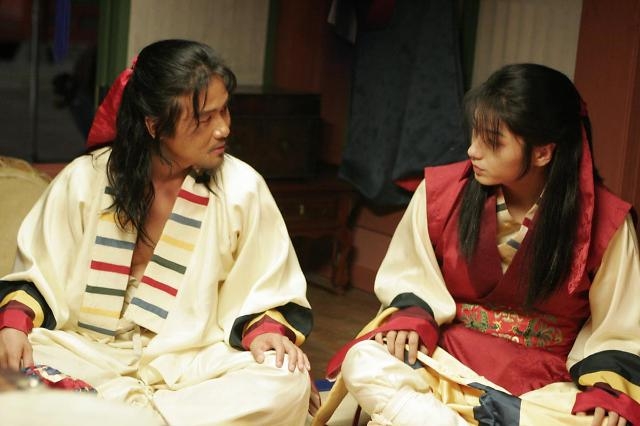
The device shifts from film to film but the underlying structure largely remains the same: Place a figure of low standing near the seat of power, let that proximity generate friction and then heat, and throw in just enough melodrama to make sure everyone knows who the villains are.
This playbook, for all its effectiveness, tends to flatten the very figures it purports to elevate. The commoner in the Korean period drama follows a stock type almost without exception: crass, wily, street-smart, primed for a moral awakening that arrives more or less on cue.
What passes for class consciousness here is really just redemption dressed in rougher clothes, and the working people of the medieval kingdom end up as vessels for nobility's better instincts rather than characters in their own right.
A rare exception might be Lee Joon-ik's "The Book of Fish" (2021), which portrayed its lowly born protagonist with genuine nuance. Byun Yo-han’s Chang-dae is at once an idealist and a conformist, a man who strains against the caste system while remaining bound by it, never quite resolving into either.
The film swept the awards season, but sold just some 330,000 tickets — measly even by pandemic standards — and largely vanished from popular memory.
The market has spoken clearly and repeatedly on this point. Viewers are not looking for films that complicate their sympathies; they want ones that confirm and inflame them.
The biggest Korean films of the past year bear this out across genres: "My Daughter Is a Zombie," a family comedy that substitutes zombie apocalypse for family melodrama and arrives at warm feelings anyway; "Once We Were Us," a heartbreak romance assembled from the most familiar parts of the genre, which somehow overtook "Avatar" in daily admissions during the New Year's holiday window.
In the case of "The King's Warden," virality did what critical reception could not. Nobody expected the film to break records — early reviews were decent but unimpressive, and Jang himself joked before the release that he would get plastic surgery and change his name if the film crossed 10 million. (Unsurprisingly, he later walked that back.) What spread online was not praise exactly, but something closer to curiosity — that particular energy able to spread through social media that makes holdouts feel they are missing out.
Park Ji-hoon, a popular K-pop idol whose fan base amplified the film across TikTok and Instagram, helped drive a younger generation into theaters. Memes about the film have accumulated tens of thousands of likes. Review sections on navigation apps for Sejo's royal tomb filled with invective until administrators were forced to shut them down.
Danjong's grave, meanwhile, became a site of something resembling collective mourning, with comments offering the long-dead king their belated sympathies.
Everyone is their own film critic now, and their verdicts arrive in the form of memes and likes.
Whether "The King's Warden" is a great film is, at this point, almost beside the point. The numbers have proved it a damn effective one, and in a market that has spent the better part of several years in free fall, effective is exactly what was needed.
moonkihoon@heraldcorp.com